Introduction to Power-Based Training
Power meters have revolutionized cycling training, transforming it from an art based on perceived exertion and heart rate into a precise science. Unlike any other metric, power provides an immediate, objective measurement of exactly how hard you're working, unaffected by temperature, fatigue, caffeine, altitude, or any other variable that influences heart rate.
Since Dr. Andrew Coggan and Hunter Allen published "Training and Racing with a Power Meter" in 2006, power-based training has become the gold standard for serious cyclists. Today, professional teams, age-group triathletes, and recreational riders alike use power data to structure training, execute race strategies, and track fitness improvements with unprecedented precision.
This comprehensive guide will teach you everything you need to know about training with power: understanding what power measures, choosing the right equipment, testing and setting zones, executing power-based workouts, and analyzing your data to continuously improve.
Why Power Is Superior to Other Metrics
- Instant feedback: Power responds immediately to changes in effort, unlike heart rate which lags 30-60 seconds
- Objective measurement: 200 watts is 200 watts regardless of conditions, time of day, or fatigue level
- Precise intensity control: Train at exact intensities to target specific energy systems
- Quantifiable progress: Track fitness gains through measurable metrics like FTP and power duration curves
Understanding Power: The Physics
Power in cycling is measured in watts, representing the rate of energy expenditure. Specifically, one watt equals one joule of energy per second. When you push on the pedals, you're doing work against various resistive forces, and your power meter measures how quickly that work is performed.
The Physics of Cycling Power
Your power output overcomes several resistive forces: aerodynamic drag (which increases with the cube of velocity), rolling resistance, gravity when climbing, and drivetrain friction. Understanding these forces helps explain why power requirements change so dramatically with speed and terrain.
Power Requirements by Terrain and Speed
| Condition | Speed | Approx. Power (75kg rider) |
|---|---|---|
| Flat road, no wind | 25 km/h | 100 watts |
| Flat road, no wind | 32 km/h | 175 watts |
| Flat road, no wind | 40 km/h | 300 watts |
| 5% climb | 16 km/h | 250 watts |
| 10% climb | 10 km/h | 300 watts |
Power-to-Weight Ratio
While absolute power matters on flat terrain and in time trials, power-to-weight ratio (expressed as watts per kilogram, or W/kg) is crucial for climbing and acceleration. A 60kg rider producing 300 watts has a W/kg of 5.0, while an 80kg rider at 300 watts produces only 3.75 W/kg—a significant difference on climbs.
Reference: W/kg at FTP by Category
- Cat 5/Beginner: 2.0-2.5 W/kg
- Cat 4: 2.5-3.0 W/kg
- Cat 3: 3.0-3.7 W/kg
- Cat 2: 3.7-4.2 W/kg
- Cat 1: 4.2-4.7 W/kg
- Pro: 4.7-6.0+ W/kg
Power Meter Types: Choosing Your Equipment
Power meters measure the force applied to the pedals (or other components) and the angular velocity of the crank to calculate power. Different designs measure at different locations in the drivetrain, each with distinct advantages and limitations.
Crank-Based Power Meters
Spider-based and crank arm power meters are among the most accurate and durable options. Spider-based units (like Quarq and SRM) measure torque at the crankset's spider, capturing total power from both legs. Single-sided crank arm meters (like Stages) measure one leg and double the value, offering a more affordable entry point at the cost of potentially less accurate left/right data.
Pedal-Based Power Meters
Pedal power meters (like Garmin Rally and Favero Assioma) offer easy installation and the ability to move between bikes quickly. They measure force at the pedal spindle and provide true left/right power balance data. Modern pedal-based meters have become increasingly accurate and reliable, making them a popular choice.
Hub-Based Power Meters
Rear hub power meters (like PowerTap) were among the earliest designs and remain accurate, though they measure power after drivetrain losses. They're wheel-specific, making them less convenient for those with multiple wheelsets but excellent for dedicated training wheels.
Power Meter Comparison
| Type | Accuracy | L/R Balance | Price Range |
|---|---|---|---|
| Spider (Quarq, SRM) | ±1-1.5% | Optional | $800-2500 |
| Dual Crank Arm | ±1-2% | Yes | $700-1100 |
| Single Crank Arm | ±2% (estimated) | No | $300-500 |
| Dual Pedal | ±1-2% | Yes | $500-1100 |
| Hub | ±1.5% | No | $400-800 |
FTP Testing: Establishing Your Baseline
Functional Threshold Power (FTP) represents the maximum power you can sustain in a quasi-steady state for approximately one hour. It serves as the anchor point for all power-based training zones and is the most important metric for structuring your training.
The Classic 20-Minute Test Protocol
The 20-minute test remains the gold standard for field-based FTP assessment. The protocol includes a thorough warm-up, a 5-minute clearing effort, recovery, and then a 20-minute all-out effort. Your FTP is calculated as 95% of your 20-minute average power.
20-Minute FTP Test Protocol
- 20-minute warm-up: gradually increase from Zone 1 to Zone 3
- 3 x 1-minute fast spinning (100+ rpm) with 1-minute recovery
- 5-minute recovery spin
- 5-minute all-out effort (clears lactate, prevents overpacing)
- 10-minute easy recovery spin
- 20-minute all-out test effort
- 10-15 minute cool-down
- Calculate: FTP = 20-min average power × 0.95
Ramp Test Protocol
The ramp test offers a less fatiguing alternative that's easier to execute mentally. Power increases every minute by 20 watts (or 6% for some protocols) until exhaustion. FTP is estimated as 75% of your best 1-minute power achieved during the test.
Testing Best Practices
- Test in consistent conditions (same location, time of day, equipment)
- Arrive well-rested: no hard efforts for 2-3 days prior
- Proper nutrition: normal meal 3-4 hours before, light snack if needed
- Caffeine is acceptable but should be consistent between tests
- Record conditions (temperature, wind, road surface) for comparison
- Retest every 6-8 weeks or when training zones feel incorrect
Pro Tip: Pacing the 20-Minute Test
Most athletes start too hard and fade. For your first test, aim for negative splits: start 5-10 watts below your target and increase gradually. You should be able to lift your effort in the final 3-5 minutes. If you're dying with 10 minutes to go, you started too hard.
Power Zones: Training at the Right Intensity
Power zones divide your output into discrete training ranges, each targeting specific physiological adaptations. The most widely used system, developed by Andrew Coggan, defines seven zones based on percentage of FTP.
The 7 Power Training Zones
| Zone | Name | % of FTP | Training Purpose |
|---|---|---|---|
| 1 | Active Recovery | <55% | Recovery, warm-up, cool-down |
| 2 | Endurance | 55-75% | Aerobic base, fat oxidation |
| 3 | Tempo | 76-90% | Muscular endurance, efficiency |
| 4 | Threshold | 91-105% | FTP improvement, lactate clearance |
| 5 | VO2max | 106-120% | Maximal aerobic capacity |
| 6 | Anaerobic | 121-150% | Anaerobic capacity, repeatability |
| 7 | Neuromuscular | >150% | Peak power, sprinting |
Zone 2: The Foundation
Zone 2 training (55-75% FTP) should comprise 75-80% of your training time. This intensity optimizes fat oxidation, builds mitochondrial density, and increases capillarization—adaptations that improve your ability to sustain power at higher intensities. It feels easy, and that's the point.
Sweet Spot Training
Sweet spot (88-94% FTP) represents the intersection of high training stress and manageable recovery demand. It's an efficient way to build FTP for time-crunched athletes, though it shouldn't replace proper Zone 2 base work or high-intensity intervals entirely.
Zone 5: VO2max Development
VO2max intervals (106-120% FTP) push your cardiovascular system to maximum oxygen uptake. These 3-5 minute efforts are brutal but incredibly effective at raising your aerobic ceiling. Most athletes can handle 15-25 minutes of accumulated VO2max work per session.
Key Power Metrics: Beyond Basic Watts
While average power provides useful information, sophisticated power analysis requires understanding several derived metrics that help quantify training load, variability, and efficiency.
Normalized Power (NP)
Normalized Power accounts for the physiological cost of variable power output. A ride averaging 200 watts with huge surges and recoveries is much harder than a steady 200-watt effort. NP uses a weighted algorithm to better represent the metabolic cost of variable riding.
Intensity Factor (IF)
IF is simply NP divided by FTP, expressing workout intensity as a ratio. A recovery ride might be 0.55 IF, while a race could be 0.95+ IF. This metric allows comparison across different workout types and durations.
Training Stress Score (TSS)
TSS combines intensity and duration into a single training load metric. By definition, one hour at FTP equals 100 TSS. A 2-hour endurance ride at 0.65 IF produces roughly 85 TSS, while a 90-minute race at 0.90 IF generates about 120 TSS.
TSS Formula and Guidelines
TSS = (seconds × NP × IF) / (FTP × 3600) × 100
- <150 TSS: Recovered within 24 hours
- 150-300 TSS: Some residual fatigue next day
- 300-450 TSS: Significant fatigue, 2 days to recover
- >450 TSS: Very hard effort, several days recovery needed
Variability Index (VI)
VI is NP divided by average power and indicates how variable your effort was. A VI of 1.0 means perfectly steady; 1.05-1.10 is typical for variable outdoor riding; values above 1.15 suggest very inconsistent pacing that may indicate poor efficiency or highly technical terrain.
Power Duration Curve
Your power duration curve plots best power for every duration from 1 second to several hours. It reveals your physiological strengths and weaknesses: a sharp drop at 1-5 minutes suggests limited VO2max development, while a curve that holds well past 20 minutes indicates strong endurance.
Power-Based Workouts: Training by the Numbers
With your FTP and zones established, you can now execute workouts with unprecedented precision. Here are essential power-based sessions for developing every aspect of your cycling fitness.
Endurance Foundation Workout
Duration: 2-4 hours | Zone: 2 (55-75% FTP)
Maintain steady Zone 2 power throughout. Focus on consistent cadence (85-95 rpm) and proper form. Avoid the temptation to push into Zone 3 on climbs or chase other riders. These rides build your aerobic engine and teach efficient fat metabolism.
Sweet Spot Intervals
Duration: 1.5-2 hours | Intervals: 2-4 × 15-20 minutes @ 88-94% FTP
- 15-minute warm-up building to Zone 3
- 15-20 minute interval at 88-94% FTP
- 5-10 minute recovery at Zone 1-2
- Repeat 2-4 times
- 10-minute cool-down
Threshold Builders
Duration: 1.5-2 hours | Intervals: 2-3 × 10-20 minutes @ 95-105% FTP
These workouts directly target FTP improvement. Start with 2 × 10 minutes and progress to 3 × 15 or 2 × 20 minutes over several weeks. Recovery between intervals should be equal to or slightly less than work duration.
VO2max Intervals
Duration: 1.5 hours | Intervals: 5-8 × 3-5 minutes @ 106-120% FTP
- 20-minute warm-up including 2 × 1-minute efforts
- 5 × 4-minute intervals at 106-115% FTP
- 3-4 minute recovery between intervals
- 15-minute cool-down
Target cumulative time of 15-25 minutes in Zone 5
Anaerobic Capacity Efforts
Duration: 1.25 hours | Intervals: 8-12 × 30-60 seconds @ 130-150% FTP
These brutal intervals develop anaerobic capacity and repeatability for attacks, bridging gaps, and punchy terrain. Recovery should be 3-5 times the interval duration. Expect 8-15 minutes of accumulated work.
Over-Under Intervals
Duration: 1.5-2 hours | Intervals: 3-4 × 12 minutes alternating
- 2 minutes at 95% FTP (under)
- 1 minute at 105% FTP (over)
- Repeat 4 times per 12-minute block
- 8 minutes recovery between blocks
Excellent for developing lactate clearance at race pace
Race Pacing: Executing with Power
Power meters transform race pacing from guesswork into strategy. Whether you're targeting a time trial PR, managing effort through a hilly race, or pacing the bike leg of a triathlon, power provides the objective feedback needed to execute optimal strategies.
Time Trial Pacing
For events lasting 20-60 minutes, target an IF of 0.95-1.05 depending on duration. Start conservatively (92-95% FTP) for the first quarter of the race, settle into target power (95-100% FTP) for the middle half, then empty the tank in the final quarter if you have anything left.
Time Trial Power Targets by Duration
| Duration | Target % FTP | Target IF |
|---|---|---|
| 10 km (12-15 min) | 105-110% | 1.05-1.10 |
| 25 km (30-40 min) | 98-105% | 0.98-1.05 |
| 40 km (50-65 min) | 95-100% | 0.95-1.00 |
| 100 km (2+ hours) | 85-92% | 0.85-0.92 |
Triathlon Bike Pacing
In triathlon, you must preserve energy for the run. Target IF of 0.70-0.75 for Ironman (avoid exceeding 0.78), 0.80-0.85 for 70.3, and 0.85-0.92 for Olympic distance. Keep Variability Index under 1.05 to minimize neuromuscular stress.
Road Race Strategy
Road races are too tactical for strict power targets, but power data helps with strategic decisions. Know your numbers: if your 5-minute power is 340 watts and the group surges at 380 watts, you know the gap will open. Use power to decide when to bridge, when to let moves go, and how much to invest in efforts.
Race Day Power Rules
- Rule of Three: Limit efforts above 120% FTP to three per race; save them for critical moments
- Match Rule: Every "match" you burn above threshold takes 5+ minutes to recover—spend wisely
- First Hour: Stay below 85% FTP for the first hour unless race dynamics demand otherwise
- Negative Split: When possible, save your best effort for the final third
Data Analysis: Extracting Insights
The true value of power training extends beyond real-time pacing to post-ride analysis. Proper data analysis reveals patterns, tracks progress, and identifies areas for improvement that would be invisible with other metrics.
Chronic Training Load (CTL)
CTL represents your fitness as an exponentially weighted average of TSS over approximately 42 days. It tells you how much training your body has absorbed and adapted to. During build phases, CTL increases; during taper, it decreases as freshness increases.
Acute Training Load (ATL)
ATL is fatigue, calculated as a 7-day exponentially weighted TSS average. High ATL indicates recent hard training and accumulated fatigue. ATL rises faster than CTL during hard blocks and drops faster during rest.
Training Stress Balance (TSB)
TSB = CTL - ATL, representing "form" or freshness. Negative TSB means you're carrying fatigue; positive TSB means you're fresh. Race day targets typically fall between +10 and +25, balancing fitness retention with accumulated freshness.
TSB Guidelines for Racing
- -30 to -20: Heavy training block, high fatigue
- -20 to -10: Moderate fatigue, can perform but not peak
- -10 to +5: Fresh enough for solid performance
- +5 to +15: Fresh, good for most races
- +15 to +25: Peak freshness, ideal for A-race
- >+25: Potentially detrained if sustained
Analyzing the Power Duration Curve
Compare your power curve to previous periods, target values, or competitors to identify strengths and weaknesses. A curve that drops sharply after 30 seconds but holds well after 5 minutes suggests diesel-like fitness that will excel in time trials but struggle with attacks.
Common Power Training Mistakes
Power data is a powerful tool, but it's easy to misuse. Here are the most common mistakes athletes make when training with power and how to avoid them.
Mistake 1: Chasing Numbers Over Adaptation
Some athletes become so focused on hitting power targets that they ignore other crucial signals. If you're sick, fatigued, or under-recovered, forcing power targets will deepen the hole. Learn to recognize when the numbers need to give way to how you feel.
Mistake 2: Neglecting Zone 2
Endurance zone feels "too easy," so many athletes push into Zone 3 or skip these rides entirely. This leads to chronic fatigue and stunted aerobic development. Trust the science: most of your riding should be genuinely easy.
Mistake 3: Testing Too Frequently
An FTP test is a significant physical and mental effort. Testing every week or two doesn't allow time for adaptation and adds unnecessary fatigue. Every 6-8 weeks is sufficient unless something clearly seems off.
Mistake 4: Ignoring Cadence
Power doesn't care how you produce it, but your muscles do. High-power, low-cadence grinding creates different stress than high-cadence spinning. Most athletes benefit from developing cadence versatility: 75-85 rpm for strength, 90-100 rpm for efficiency, 100+ rpm for neuromuscular work.
Mistake 5: Power Obsession During Races
Power guides pacing, but racing requires adaptability. The peloton doesn't care about your target watts. Use power as a guardrail—don't exceed sustainable limits—but let race tactics drive your decisions.
Warning Signs You're Over-Relying on Power
- Anxiety when your power meter battery dies
- Unable to train or race without power data
- Ignoring all other feedback (RPE, heart rate, breathing)
- Testing FTP more than once a month
- Comparing every ride to previous efforts obsessively
Recommended Gear for Power Training
Quality equipment ensures accurate data and a frustration-free training experience. Here are our top recommendations for power training equipment.
Essential Reading
Training and Racing with a Power Meter
Hunter Allen & Andrew Coggan - The definitive guide to power-based training
View Product →The Cyclist's Training Bible
Joe Friel - Comprehensive training methodology incorporating power
View Product →Recommended Power Meters
Garmin Rally RS200 Dual-Sensing Power Meter Pedals
Dual-sided pedal power meter with cycling dynamics
Check Backcountry → View Product →Favero Assioma DUO Power Meter Pedals
Accurate, rechargeable dual-sided pedal system
Check Backcountry → View Product →Stages Cycling Gen 3 Power Meter
Single-sided crank arm power meter - excellent value
View Product →Cycling Computers for Power
Garmin Edge 840
Comprehensive power display with training metrics and maps
Check Backcountry → View Product →Hammerhead Karoo 3
Large color display with advanced power analytics
Check Backcountry → View Product →Display and train with your power data
A power meter is only as useful as the head unit and app reading it. Compare the best bike computers for 2026 and the best indoor cycling apps for structured power workouts.
Frequently Asked Questions
What is FTP and how do I test it?
FTP (Functional Threshold Power) is the maximum power you can sustain for approximately one hour. The most common test is a 20-minute all-out effort, with FTP calculated as 95% of your average power. Other methods include ramp tests and full 60-minute efforts.
How many power zones should I use for training?
Most coaches use 7 power zones based on percentage of FTP: Active Recovery (<55%), Endurance (55-75%), Tempo (76-90%), Threshold (91-105%), VO2max (106-120%), Anaerobic (121-150%), and Neuromuscular (>150%). Each zone targets specific physiological adaptations.
How often should I retest my FTP?
Retest FTP every 6-8 weeks during structured training blocks, or whenever you notice workouts becoming significantly easier or harder than prescribed. Some athletes prefer testing at the start of each new training phase.
What is Training Stress Score (TSS)?
TSS quantifies training load by combining intensity (relative to FTP) and duration. A score of 100 represents one hour at FTP. TSS helps manage training load and recovery, with weekly totals typically ranging from 300-700+ depending on training phase and athlete level.
Should I use power or heart rate for training?
Power provides instant, objective feedback unaffected by external factors, making it superior for interval training and pacing. Heart rate shows cardiovascular response but lags behind effort. Use both: power for intensity prescription and heart rate for monitoring fatigue and adaptation.
Can I improve my power-to-weight ratio by losing weight?
Yes, if weight loss doesn't compromise power output. Gradual weight loss of 0.25-0.5 kg per week typically preserves power while improving W/kg. Aggressive dieting often reduces power faster than weight, actually worsening W/kg. Focus on body composition rather than just scale weight.
How do I use power for pacing in a triathlon?
For Ironman, target 68-75% FTP (0.70-0.75 IF); for 70.3, target 80-85% FTP (0.80-0.85 IF); for Olympic, target 85-92% FTP (0.85-0.92 IF). Keep variability index under 1.05 and avoid spikes over 105% FTP to preserve your run legs.
Start Training Smarter with Power
Power training removes the guesswork from cycling, allowing you to train at precise intensities, track progress objectively, and execute optimal race strategies. Whether you're targeting your first century ride or chasing a podium finish, power data provides the roadmap to get there.
Start by establishing your FTP, learning your zones, and committing to structured workouts that target specific adaptations. The numbers will guide your training, and the results will speak for themselves. Every watt you gain is one you'll keep for life.
Related Articles
📊 Power Up Your Cycling
Use our free calculators to optimize performance:
Featured at Backcountry — 15% off first order
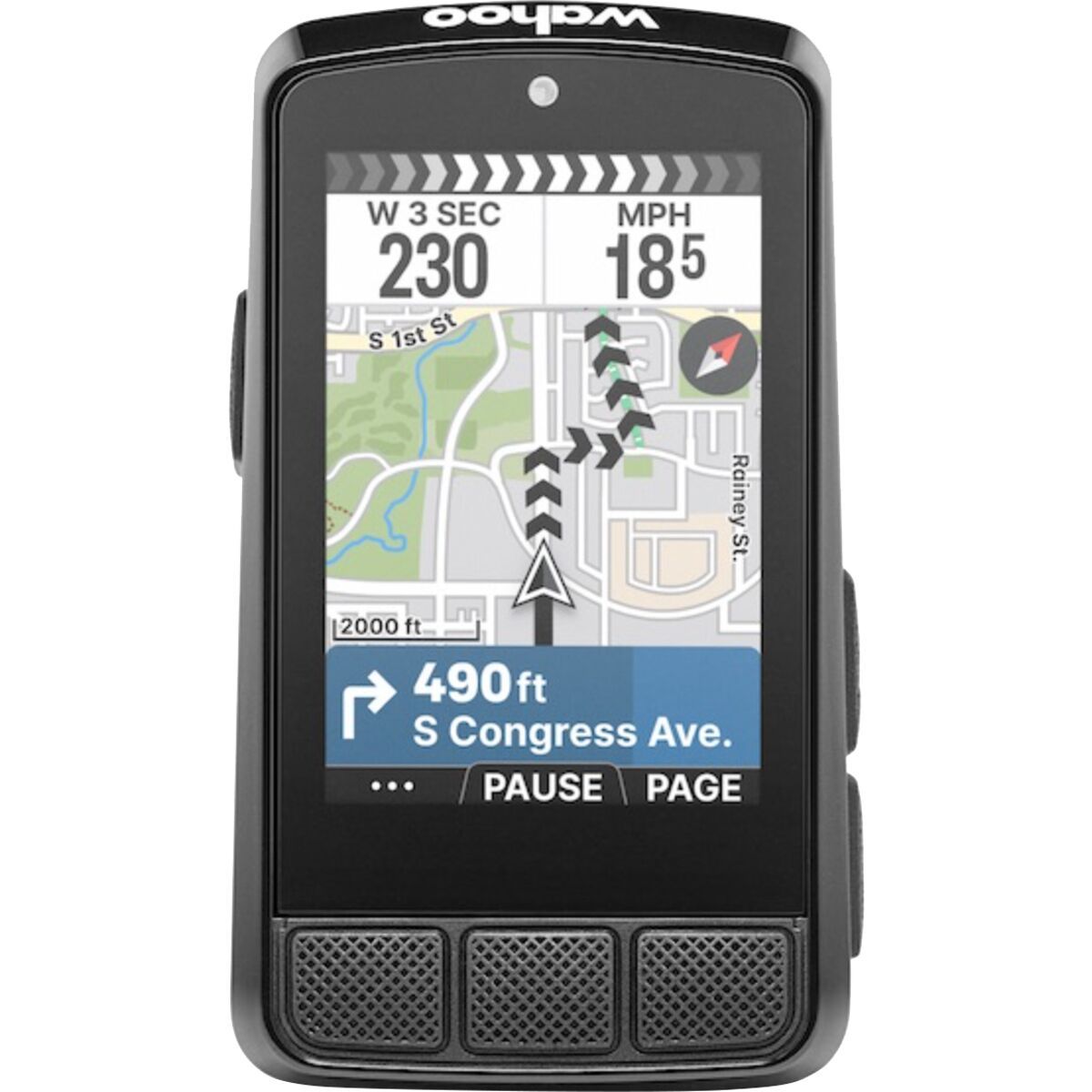
Wahoo ELEMNT BOLT 3
Display real-time watts from any power meter on Wahoo's premium head unit.