Cycling Calculators
FTP, power zones, W/kg power profile, gearing, climb pacing, cadence and bike fit, each built from your own numbers. Updated 2026.
FTP Calculator
Determine your Functional Threshold Power from test results and establish power training zones.
✓ Power zone calculation
✓ Training recommendations
Power-to-Weight Ratio
Calculate your power-to-weight ratio for cycling performance assessment and climbing analysis.
✓ Performance benchmarks
✓ Climbing predictions
Bike Gearing Calculator
Calculate gear ratios and development for optimal performance across different terrain and cadence.
✓ Development calculations
✓ Cadence optimization
Climb Time Calculator
Predict how long any climb will take based on gradient, distance, weight, and power. Includes VAM and famous-climb presets.
✓ VAM (meters per hour)
✓ Alpe d'Huez, Mont Ventoux presets
Chain Length Calculator
Get the correct chain length for any road, gravel, or MTB drivetrain. Uses the Park Tool big-big formula.
✓ Clutch derailleur adjustment
✓ Inches + mm output
Drafting Power Calculator
How many watts do you save drafting behind a wheel, in a paceline, or mid-pack? Based on published CFD studies.
✓ Watts + kJ saved
✓ Peloton, paceline, echelon
Cadence Speed Calculator
Find your speed based on cadence and gear selection for efficient pedaling analysis.
✓ Cadence optimization
✓ Gear selection guidance
Watts to Calories
Convert power output to calories burned during cycling for nutrition and training planning.
✓ Accurate calorie estimates
✓ Nutrition planning
FTP Improvement Calculator
Track FTP gains over time and predict future improvements based on training consistency.
✓ Goal setting
✓ Training recommendations
Bike Fit Pain Guide
Interactive diagnosis tool for cycling pain. Click where it hurts to find the adjustment that fixes it.
✓ Step-by-step fixes
✓ Bike fit adjustments
Pace Band & Race Card
Build race cards with split times and nutrition reminders. Printable PDF for bike top tubes.
✓ Top tube sized PDF
✓ Cycling & triathlon
Cycling Calorie Calculator
Calories burned cycling from weight, duration or distance, and intensity.
✓ Duration or distance
✓ Intensity adjusted
Saddle Height Calculator
Find your bike seat height from inseam using the LeMond method.
✓ Inseam based
✓ Fit comfort
Bike Frame Size Calculator
Frame size from height and inseam for road, gravel, and mountain bikes.
✓ Mountain bikes
✓ Height and inseam
Training Stress Calculator
TSS, rTSS, and hrTSS for cycling and running sessions.
✓ hrTSS option
✓ Load tracking
Power-Based Training
Precise Measurement
Power meters provide the most accurate and immediate feedback for training intensity, and a cycling computer set up with the right data fields puts those numbers in front of you as you ride.
Targeted Training
Train in specific power zones to target different physiological adaptations, and add explosive work such as plyometric training away from the bike.
Performance Tracking
Monitor FTP improvements and track power-to-weight ratio gains over time. Triathletes can do the same for the run leg with running gait analysis tools.
Cycling Training Tips
⚡ Power Consistency
Focus on maintaining target wattage rather than speed for consistent training stimulus.
🔄 Cadence Range
Practice different cadences (80-110 rpm) to improve efficiency and power delivery.
⚖️ Weight Management
Monitor power-to-weight ratio as it's crucial for climbing and overall performance.
🔧 Equipment Setup
Optimize gearing for your local terrain and preferred cadence ranges.
📚 Training Resources
Learn how to use these calculators effectively with our comprehensive training guides
Complete FTP Training Guide
Power-based training for cycling performance.
FTP Testing Guide
Accurately test your Functional Threshold Power.
Power-to-Weight Ratio
Why this ratio matters more than absolute power.
Gear Inches Chart
Look up gear inches for every chainring and cog combo.
Tire Pressure by Rider Weight
Recommended PSI for road, gravel, and MTB tires.
Best Bike Lights 2026
Top-rated front and rear lights for every rider.
Best Water Bottles for Cycling
Bike cage bottles and hydration systems researched.
Best Bike Computers 2026
GPS computers for training and navigation.
Access all related calculators, guides, and training plans in one place
Frequently Asked Questions
Is there a cycling power profile calculator?
Yes. The power-to-weight ratio calculator turns your FTP and body weight into W/kg and places it on the category chart (recreational, competitive, Cat 1/2, pro), which is what a power profile means for threshold power. For 5-second, 1-minute and 5-minute power, enter each best effort and compare the ratios; the power zones calculator then builds all 7 zones from your FTP.
Which tool is the cycling pacing calculator?
For climbs, the climb time calculator takes gradient, distance, weight and watts and returns your time and VAM, so you can pick a sustainable power for the ascent. For flat time trials and group rides, the cadence speed calculator gives speed from gear and cadence, and the drafting calculator shows how many watts a wheel saves. A printable pace band comes from the pace band generator.
Do you have a normalized power calculator?
Normalized power needs second-by-second data (a 30-second rolling average raised to the fourth power, averaged, then the fourth root), so it is calculated by your head unit or by Strava, TrainingPeaks and Zwift after the ride rather than by a form. Where it matters here: the FTP calculator accepts normalized power from a criterium to estimate FTP (88 to 92 percent of NP), and the training stress calculator uses NP and FTP to give TSS and intensity factor.
Where is the bike pace chart?
The cadence speed calculator doubles as a bike pace chart: pick a gear and it lists speed at every cadence from 60 to 120 rpm. For race pacing by distance, 20 mph covers a 40K time trial in 1:14:34 and a century in 5 hours; 15 mph takes 1:39:25 and 6:40. Cycling metrics such as W/kg, TSS and VAM each have their own calculator above.
Which smart trainer or bike should I pair these calculators with?
Any trainer that broadcasts power works, and the power accuracy decides how useful the zones are: a direct-drive trainer reads within 1 to 2 percent, a Peloton within 10 to 20. Our indoor cycling trainer vs Peloton comparison chart lays out the trade-offs, and the best smart trainers guide ranks the current lineup.
Explore More Training Tools
Featured at Backcountry: 15% off first order
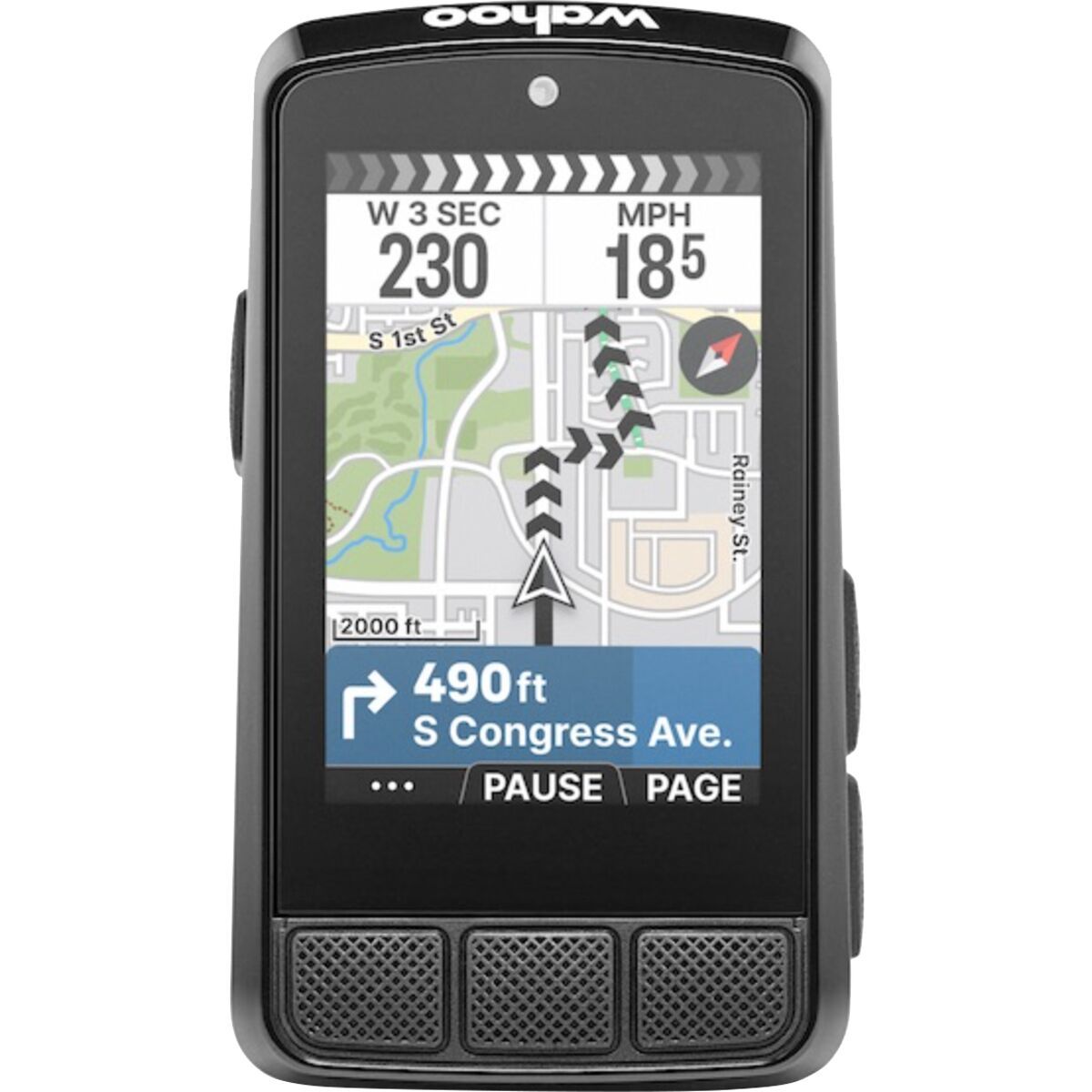
Wahoo ELEMNT BOLT 3
Track your rides with Wahoo's compact GPS bike computer, a favorite in owner reviews for its simple setup.