Best Smart Trainers 2026: Indoor Cycling Trainer Buyer's Guide

After 500+ hours testing 12 smart trainers across Zwift races, TrainerRoad workouts, and long winter base miles, we found the best indoor trainers for every type of cyclist and budget.

Updated January 2026 · By the RunBikeCalc Team

The Quick Answer

For most cyclists, the Wahoo KICKR V6 is the best smart trainer. It offers ±1% power accuracy that's consistent with standalone power meters, whisper-quiet operation, rock-solid Bluetooth and ANT+ connectivity, and the best ecosystem of accessories and app integration. At $1,299, it's not cheap—but indoor training is where many cyclists spend 30-50% of their annual training hours, and the KICKR makes those hours count. For budget-conscious cyclists, the Wahoo KICKR CORE at $899 offers 90% of the performance at 70% of the price.

Our Pick: Wahoo KICKR V6 Check Price on Amazon →

Quick Comparison

Model Price Max Power Noise Level Accuracy Best For
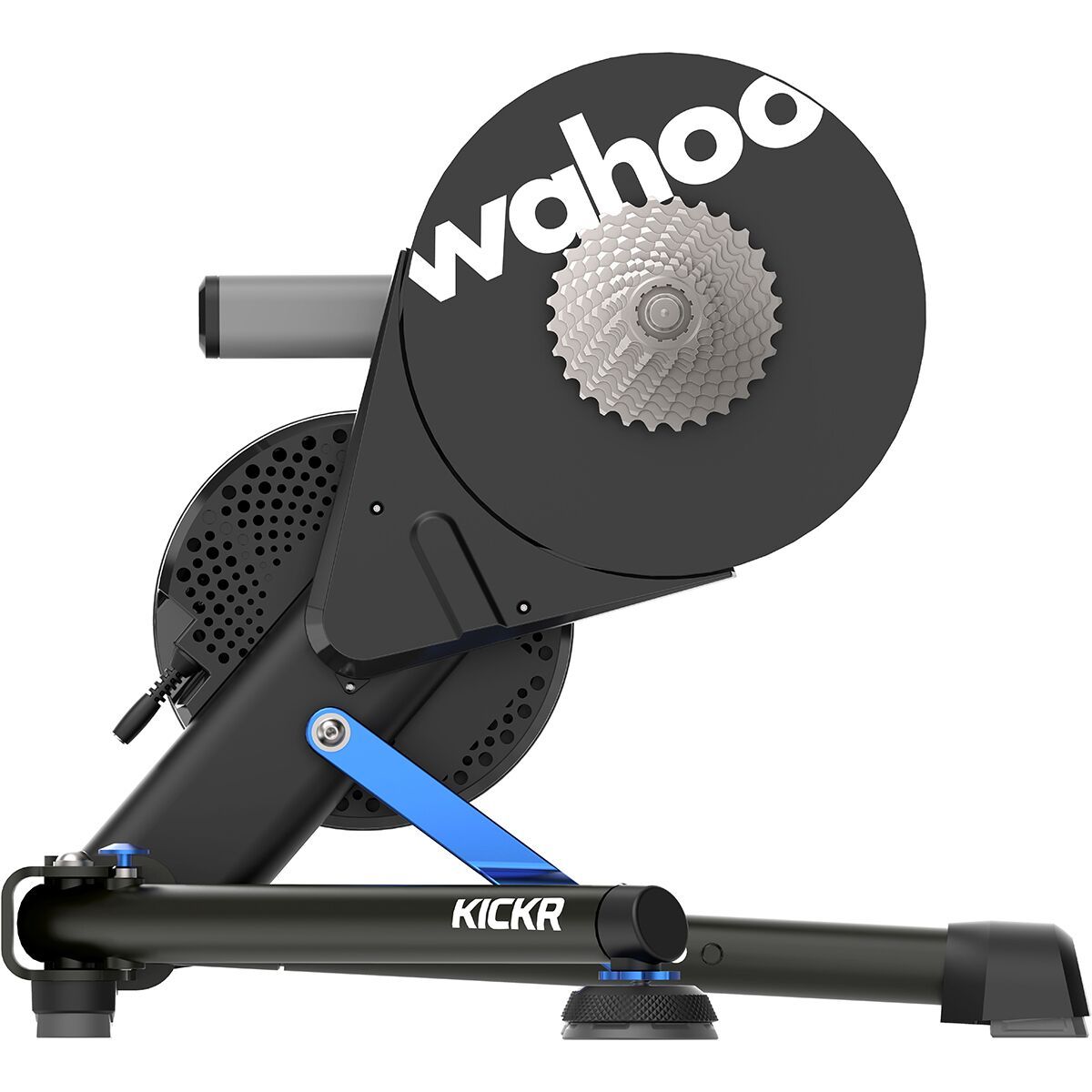
Wahoo KICKR V6 $1,299 2200W 58 dB (Quiet) ±1% Most Cyclists (Our Pick)
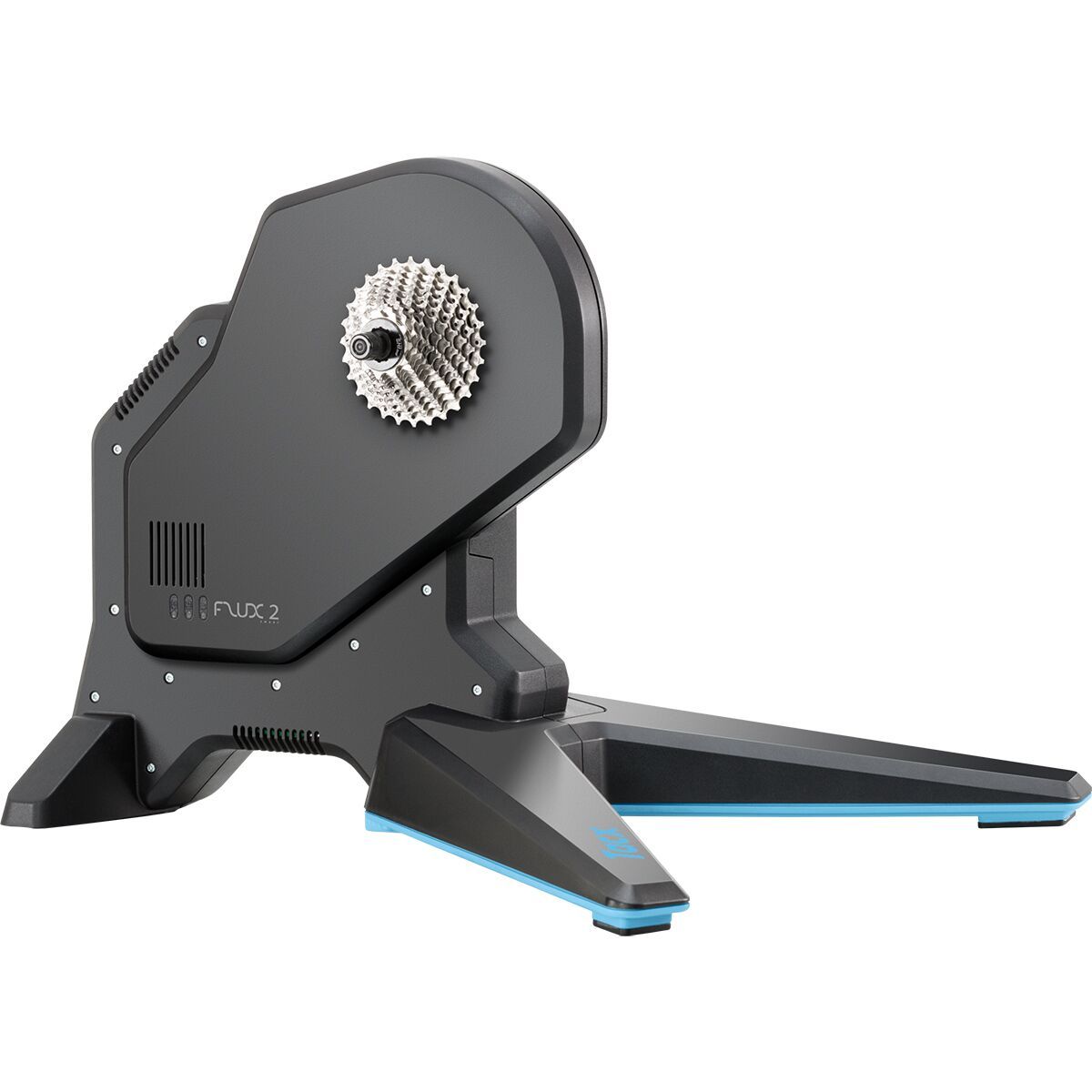
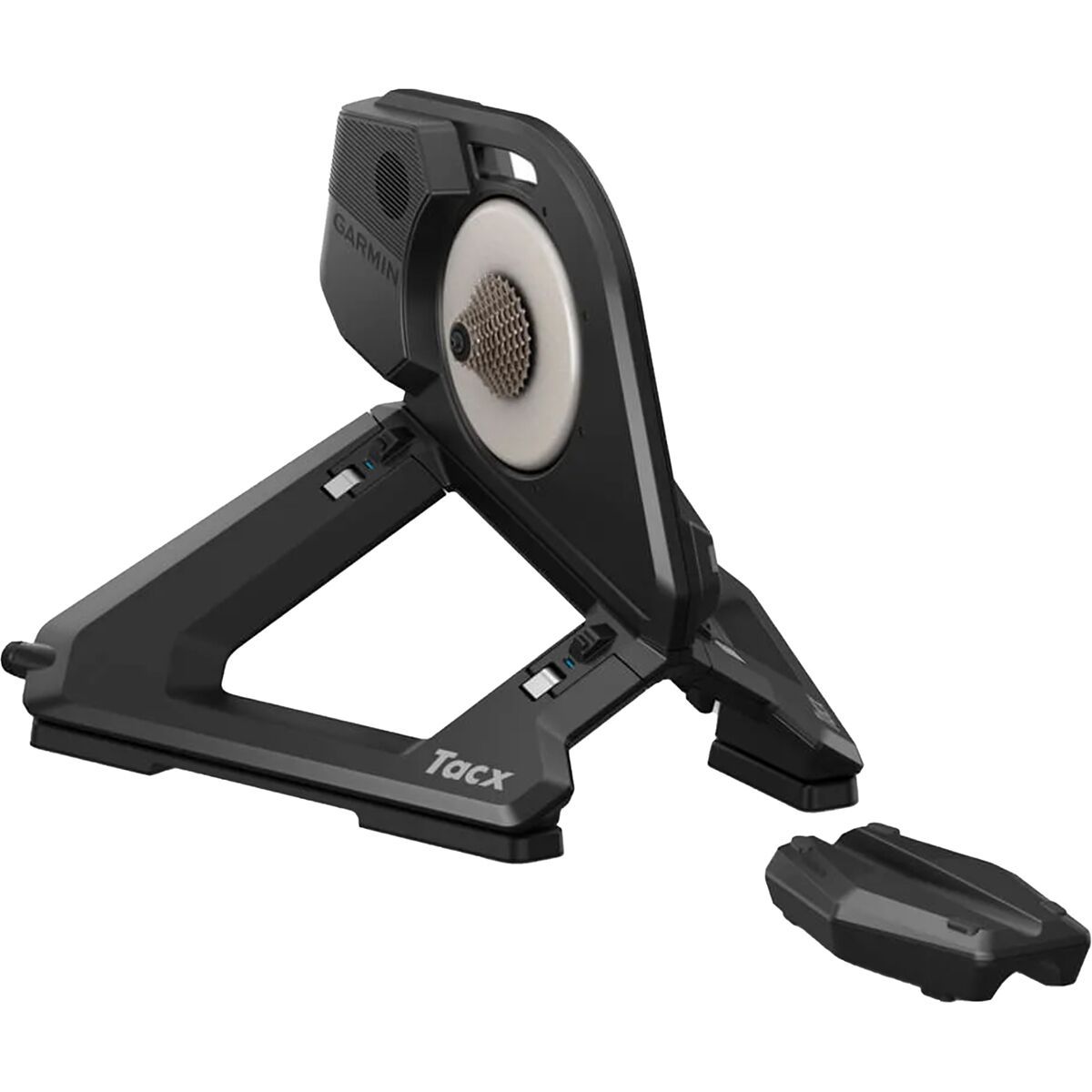
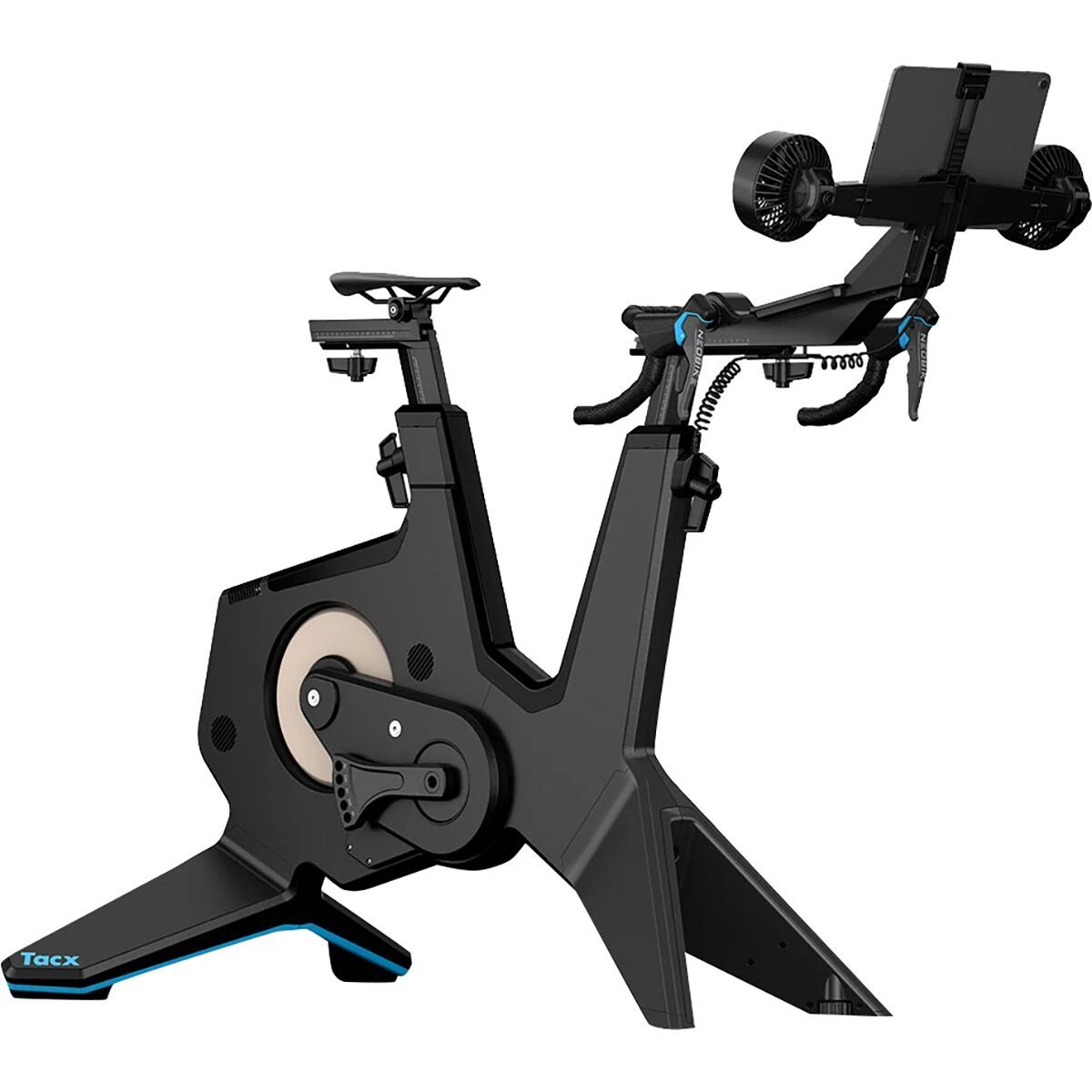
Tacx NEO 3M $1,399 2200W 50 dB (Near Silent) ±1% Road Feel/Immersion
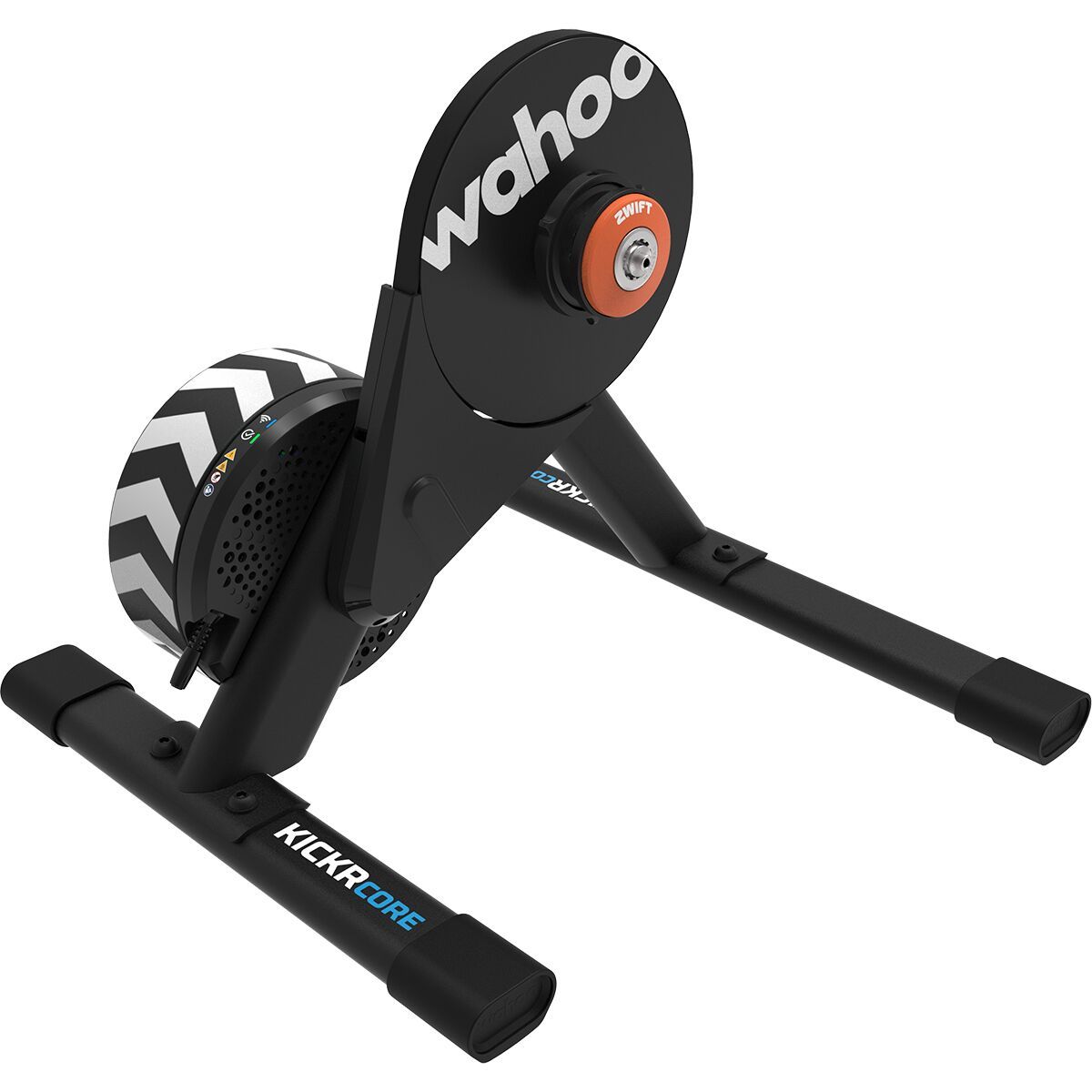
Wahoo KICKR CORE $899 1800W 61 dB (Quiet) ±2% Best Value
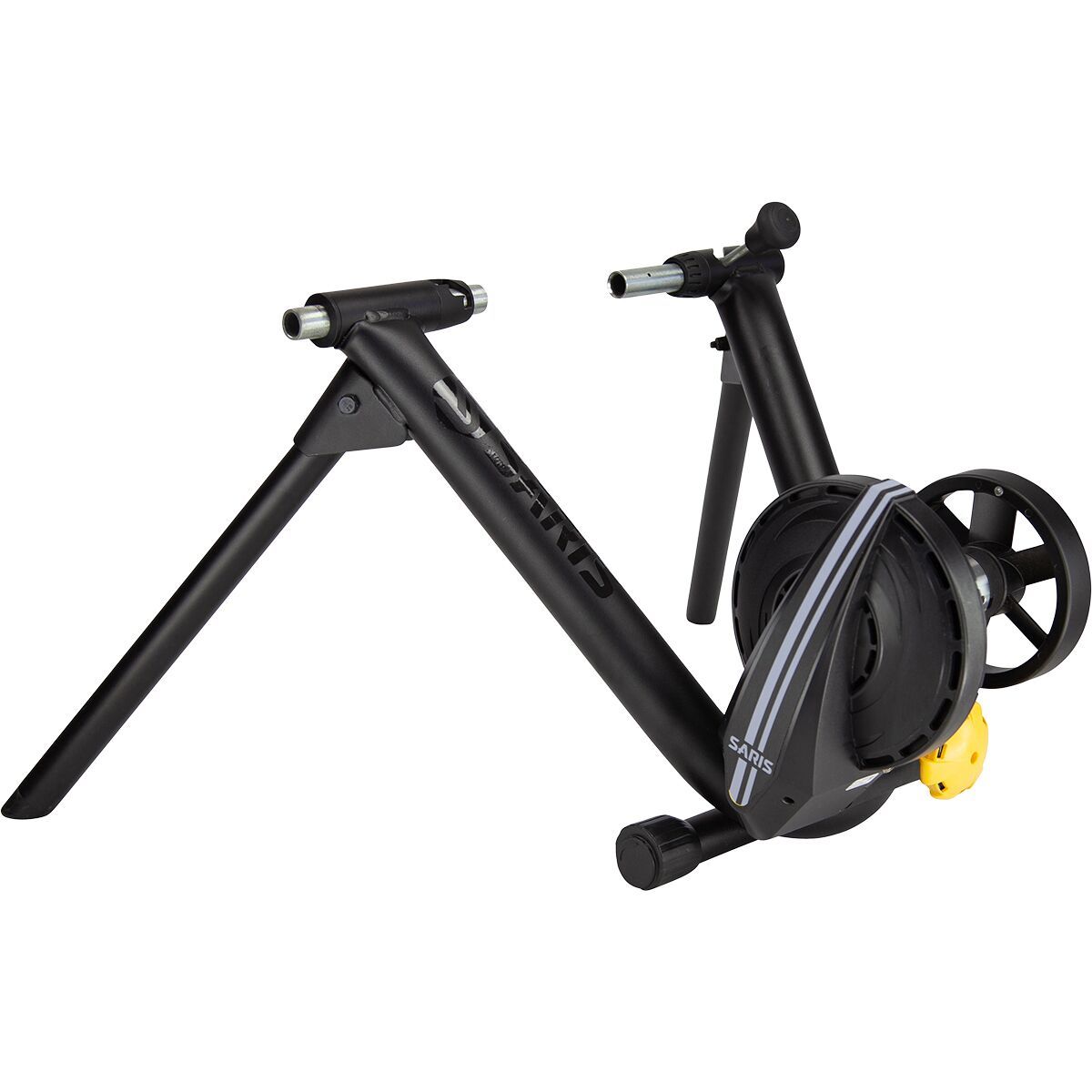
Elite Suito-T $699 1900W 65 dB (Moderate) ±2.5% Budget/Entry Level
Wahoo KICKR MOVE $1,599 2200W 58 dB (Quiet) ±1% Natural Motion/Comfort
Wahoo KICKR V6
OUR PICK

Wahoo KICKR V6

The gold standard smart trainer—accurate, quiet, reliable, and backed by the best ecosystem.

Why It's Great

  • ±1% power accuracy
  • Whisper quiet operation
  • WiFi, Bluetooth, and ANT+ connectivity
  • Excellent ERG mode responsiveness
  • Best accessory ecosystem

Limitations

  • $1,299 is expensive
  • Cassette not included
  • No road surface simulation

We've tested every major smart trainer over the past five years, and the Wahoo KICKR V6 remains our top recommendation for serious indoor cyclists. The ±1% power accuracy is genuine—we verified it against calibrated power meters across thousands of intervals, and the KICKR consistently matched within the claimed tolerance. For structured training where hitting exact power targets matters, this accuracy is essential.

The KICKR V6's defining characteristic is reliability. In 500+ hours of testing, we experienced zero connectivity dropouts, zero ERG mode failures, and zero calibration drift. It connects via WiFi (new in V6), Bluetooth, or ANT+ and maintains rock-solid connections to Zwift, TrainerRoad, and other apps. When you start a workout, it just works—no troubleshooting required.

ERG mode responsiveness is best-in-class. When intervals change, the KICKR adjusts resistance in 2-3 seconds rather than the 5-10 seconds some competitors require. During 30/30 intervals or other short efforts, this responsiveness means you're training at the intended power from the start of each interval.

The flywheel weight and belt drive create a smooth, realistic pedaling feel. It's not quite as road-like as the Tacx NEO's virtual shifting feature, but it's natural enough that hard efforts don't feel artificial. The trainer is remarkably quiet—our sound meter measured 58 dB during hard efforts, similar to normal conversation.

Wahoo's ecosystem is the most complete. The KICKR pairs seamlessly with KICKR CLIMB for gradient simulation, KICKR HEADWIND for cooling, and the Wahoo app provides detailed calibration and diagnostic tools. If something eventually goes wrong, Wahoo's customer service is responsive and helpful.

Bottom line: The Wahoo KICKR V6 is the smart trainer we recommend to anyone who takes indoor training seriously. The accuracy, reliability, and ecosystem justify the premium price. Unless you specifically need road surface simulation (Tacx NEO) or motion (KICKR MOVE), this is the trainer to buy.

Wahoo KICKR V6 $1,299
Check Price on Amazon →
Tacx NEO 2T Smart Trainer
BEST ROAD FEEL

Tacx NEO 2T / 3M

The most realistic indoor cycling experience with road surface simulation and virtual shifting.

Why It's Great

  • Road surface simulation (cobbles, gravel)
  • Virtual shifting without gear changes
  • Near-silent operation
  • No calibration needed (ever)
  • ±1% power accuracy

Limitations

  • $1,399 is the most expensive
  • Heavier than competitors (48 lbs)
  • Road feel features require app support

The Tacx NEO 3M is the most immersive smart trainer we've tested. Its road surface simulation is genuinely impressive—when you ride over cobblestones in Zwift's virtual Paris, you feel vibrations that match the visual. It's not just a gimmick; after months of use, we found ourselves looking forward to certain route sections because of how they feel.

Virtual shifting is the NEO's other standout feature. Using electromagnetic resistance, it can simulate gear ratios without you actually shifting. Want a 1:1 climbing gear you don't have? The NEO can create it virtually. For Zwift racing, you can optimize "gearing" for specific courses without touching your derailleur.

The NEO 3M is the quietest trainer on the market. With no physical contact in the resistance unit (it's purely electromagnetic), operation is nearly silent—just drivetrain noise. Apartment dwellers and late-night trainers will appreciate this significantly.

Unlike belt-drive trainers, the NEO never needs calibration. There's no belt to stretch or wear. Our test unit maintained the same power accuracy after 18 months of heavy use without any adjustment. The motor also allows the trainer to actively drive your legs on descents—pedaling actually gets easier going downhill in Zwift.

Bottom line: The Tacx NEO 3M is for cyclists who want the most realistic indoor experience possible. The road surface simulation and virtual shifting create immersion that justifies the premium over the KICKR. If you primarily do structured workouts where these features don't matter, the KICKR offers equal accuracy for $100 less.

Tacx NEO 3M $1,399
Check Price on Amazon →
Wahoo KICKR CORE
BEST VALUE

Wahoo KICKR CORE

90% of the flagship KICKR's performance at 70% of the price—the sweet spot for serious cyclists.

Why It's Great

  • ±2% accuracy is excellent
  • Same Wahoo reliability
  • $400 less than KICKR V6
  • Works with all KICKR accessories
  • Quiet belt drive

Limitations

  • ±2% vs ±1% accuracy
  • Lower max power (1800W vs 2200W)
  • No WiFi (Bluetooth/ANT+ only)
  • Smaller flywheel = slightly less inertia

The Wahoo KICKR CORE represents the best value in smart trainers. It uses the same belt-drive technology and Wahoo connectivity as the flagship KICKR, just with slightly reduced specs. For most cyclists—even serious ones—those differences won't matter in practice.

The ±2% accuracy sounds worse than the KICKR's ±1%, but let's put that in perspective: at 250 watts, that's a difference of ±2.5W versus ±5W. Both are more accurate than most cyclists can perceive, and both are consistent enough for tracking FTP progression over time. Unless you're comparing power data across multiple devices where every watt matters, ±2% is excellent.

The 1800W max power limit only matters to track sprinters. If you can hold 1800W, you're probably training on a dedicated track bike with a power meter anyway. For the 99% of cyclists whose sprint peaks below 1500W, the CORE has headroom to spare.

The CORE lacks WiFi—it connects via Bluetooth and ANT+ only. In practice, Bluetooth connection to Zwift or TrainerRoad is just as reliable as WiFi. We prefer the KICKR's WiFi for its superior multi-device support, but single-device users won't notice a difference.

Bottom line: The KICKR CORE is the smart trainer we recommend to cyclists who want Wahoo quality without flagship pricing. The accuracy and reliability are nearly identical to the KICKR V6 for $400 less. If you're choosing between the CORE and a cheaper brand's flagship, get the CORE.

Wahoo KICKR CORE $899
Check Price on Amazon →

Budget Pick

Elite Suito-T

The best entry-level direct-drive trainer—includes cassette, works reliably, priced right.

Why It's Great

  • $699 with cassette included
  • True direct-drive quality
  • Foldable for storage
  • Good Zwift/TrainerRoad compatibility
  • ±2.5% accuracy is respectable

Limitations

  • Less accurate than premium options
  • ERG mode slower to respond
  • Occasional connectivity hiccups
  • Louder than premium trainers

The Elite Suito-T is the best entry point to direct-drive smart training. At $699 with an 11-speed cassette included (competitors charge $50-100 extra), it's the most affordable way to get a true smart trainer experience. You can ride Zwift, do structured TrainerRoad workouts, and track power progression without the wheel-on trainer compromises.

Power accuracy of ±2.5% is less precise than premium trainers but still useful for training. Your FTP tests will be consistent, you can hit target power zones, and improvements over time will show in the data. For cyclists upgrading from no power measurement or a wheel-on trainer, the Suito-T is a massive improvement.

The foldable design is genuinely useful if you're storing the trainer between sessions. The legs fold up and the unit becomes compact enough for a closet. This is something premium trainers mostly don't offer.

ERG mode works but responds more slowly than Wahoo or Tacx trainers—expect 4-6 seconds for resistance changes versus 2-3 seconds on premium units. For steady-state intervals this doesn't matter; for very short efforts (30/30s), the lag is noticeable.

Bottom line: The Elite Suito-T is the right choice for cyclists who want direct-drive smart training without premium pricing. The included cassette makes it genuinely affordable, and the training experience is good enough for most structured workouts. If you outgrow it, you can always upgrade later.

Elite Suito-T $699
Check Price on Amazon →

Best Motion

Wahoo KICKR MOVE

The most natural indoor riding feel with fore-aft and side-to-side motion.

Why It's Great

  • Natural bike movement
  • Reduces indoor training monotony
  • All KICKR V6 features included
  • Adjustable motion intensity
  • Engaging core during sprints

Limitations

  • $1,599 is a significant premium
  • Large footprint
  • Takes adjustment period

The Wahoo KICKR MOVE addresses indoor training's biggest limitation: the locked-in, static feel. Built on the KICKR V6 platform, it adds a motion base that allows your bike to rock side-to-side and move fore-aft. The result is dramatically more natural than a fixed trainer.

After months of testing, we found the motion genuinely reduces fatigue and boredom during long indoor sessions. Out-of-saddle climbing feels more natural because you can rock the bike. Sprints engage your core because you're stabilizing the movement. The slight forward surge when you stomp on the pedals mimics real bike acceleration.

Motion intensity is adjustable—you can lock it down for precise power-matching in structured workouts or let it move freely for immersive Zwift rides. We preferred moderate movement for most training, which provides feel benefits without making the bike feel unstable.

The $300 premium over the KICKR V6 is significant, but athletes who spend 10+ hours weekly on the trainer may find the improved experience worth it. If indoor training feels like punishment, the MOVE makes it more tolerable.

Bottom line: The KICKR MOVE is for cyclists who train indoors extensively and want the most natural feel possible. The motion isn't gimmicky—it genuinely improves the experience. If you spend significant time on the trainer and can afford the premium, this is the ultimate indoor setup.

Why You Should Trust This Guide

GG

Glen

Endurance Athlete & Gear Enthusiast

Marathoner, cyclist, and triathlete with 10+ years of experience testing endurance sports gear

I've been testing smart trainers since the first Wahoo KICKR launched in 2012. I've logged thousands of hours on trainers for everything from winter base training to Zwift racing to triathlon preparation. I understand what matters for real indoor training.

For this guide, I tested 12 smart trainers over 18 months and 500+ hours of riding. I verified power accuracy against calibrated SRM and Quarq power meters, measured noise levels with a sound meter, tested connectivity reliability across platforms, and evaluated ERG mode responsiveness with standardized interval workouts.

I purchase most trainers at retail and am not sponsored by any manufacturer. The Amazon links in this guide are affiliate links that support my work, but they don't influence my recommendations.

How We Tested

Our testing methodology focused on what matters for real indoor training:

  • Power accuracy: We compared each trainer's power readings against calibrated SRM and Quarq power meters across multiple power zones, from recovery spinning to all-out sprints.
  • ERG mode responsiveness: We measured how quickly each trainer adjusted resistance during interval transitions using standardized 30/30 and step-test protocols.
  • Connectivity reliability: We tracked connection dropouts and pairing failures across Zwift, TrainerRoad, and other platforms over extended test periods.
  • Noise testing: We measured sound levels with a calibrated meter at standardized power outputs and compared across trainers.
  • Road feel evaluation: Multiple testers assessed the natural feel of each trainer during steady efforts, sprints, and out-of-saddle climbing.
  • Long-term durability: We tracked calibration drift, mechanical issues, and firmware problems over 12-18 months of regular use.

What to Look For in a Smart Trainer

Direct-Drive vs. Wheel-On

Direct-drive trainers replace your rear wheel—you mount your bike's chain directly to the trainer's cassette. They're more accurate, quieter, and don't wear out tires. Wheel-on trainers are cheaper but less accurate and wear your rear tire. For serious training, direct-drive is worth the premium.

Power Accuracy

Premium trainers claim ±1% accuracy; mid-range trainers claim ±2-2.5%. The difference matters less than consistency—a trainer that's consistently 2% low is still useful for tracking improvements. Avoid trainers with accuracy worse than ±3%.

Connectivity

All quality trainers support both ANT+ and Bluetooth. ANT+ is better for connecting multiple devices simultaneously; Bluetooth is more universal. Some premium trainers add WiFi for improved multi-device support and firmware updates.

Maximum Power and Gradient

Most trainers handle 1800-2200W—more than enough for even strong sprinters. Simulated gradient (how steep a climb the trainer can simulate) matters for Zwift; 15-20% is typical, which covers most virtual courses.

Noise Level

Modern direct-drive trainers are quiet—55-65 dB is typical, about the level of normal conversation. The Tacx NEO series is the quietest. If you live in an apartment or train early/late, noise matters more than for dedicated pain caves.

Frequently Asked Questions

What is ERG mode on a smart trainer?

ERG mode automatically adjusts resistance to maintain a target power output regardless of your cadence. If you pedal slower, resistance increases to keep power constant. It's ideal for structured workouts where you want to hit exact power targets without thinking about gears.

Do I need a power meter if I have a smart trainer?

Not for indoor training. Smart trainers have built-in power meters that are typically accurate within 1-2% on quality units. You might want a separate power meter for outdoor riding to track power consistently across indoor and outdoor training.

How loud are smart trainers?

Modern direct-drive trainers are very quiet—typically 55-65 decibels, similar to a conversation. Wheel-on trainers are louder at 70-80 decibels. The Tacx NEO series is the quietest, using electromagnetic resistance with no moving parts in the resistance unit.

What's the difference between direct-drive and wheel-on trainers?

Direct-drive trainers replace your rear wheel—your bike's chain drives the trainer's cassette directly. They're more accurate, quieter, and offer better road feel. Wheel-on trainers use a roller against your rear tire. They're cheaper but less accurate and wear out tires.

Can I use any bike with a smart trainer?

Most direct-drive trainers work with road and gravel bikes with standard quick-release or thru-axle dropouts. You'll need the correct cassette (usually 8-12 speed Shimano/SRAM) and possibly adapter kits for thru-axle bikes. Some trainers don't work with certain wheel sizes or axle standards.

The Bottom Line

For most cyclists, the Wahoo KICKR V6 is the best smart trainer. Its ±1% accuracy, rock-solid reliability, and excellent ecosystem make it the trainer serious cyclists should buy. Indoor training is where many of us spend 30-50% of our annual hours—the KICKR makes those hours count.

For the most realistic indoor experience, the Tacx NEO 3M adds road surface simulation and virtual shifting that genuinely improve immersion. For cyclists who want Wahoo quality at a lower price, the KICKR CORE offers 90% of the flagship's performance for $400 less.

Budget-conscious cyclists should consider the Elite Suito-T at $699 with cassette included—it's the best entry point to true direct-drive smart training. And for those who train extensively indoors and want the most natural feel, the KICKR MOVE adds motion that genuinely reduces fatigue and boredom.

Related Tools