Blog / Running Nutrition
GU vs Maurten: Which Energy Gel Is Better for Runners?
A head-to-head comparison of the two most popular marathon gels — covering price, stomach tolerance, energy delivery, and who should use which
Quick Verdict
GU is the better value for most runners. At around $1.40 per gel, it delivers reliable energy, 22g of carbs, proven caffeine options, and dozens of flavors. It works well for training and racing for the vast majority of athletes. Maurten is worth it if you have a sensitive stomach. Its hydrogel technology genuinely reduces GI distress during high-intensity efforts — but you will pay 2.5-3x more per gel for that benefit.
GU vs Maurten: Side by Side
GU vs Maurten: Full Comparison Table
| Factor | GU Energy Gel | Maurten Gel 100 | Winner |
|---|---|---|---|
| Price per gel | ~$1.40 | ~$3.75 | GU |
| Calories | 100 kcal | 100 kcal | Tie |
| Carbohydrates | 22g | 25g | Maurten (slight) |
| Carb ratio (glucose:fructose) | ~2:1 maltodextrin:fructose | ~0.8:1 maltodextrin:fructose | Context-dependent |
| Caffeine options | Yes (20mg or 40mg) | No | GU |
| Stomach tolerance | Good for most runners | Excellent (hydrogel) | Maurten |
| Taste / flavors | 30+ flavors, sweet/savory | Nearly tasteless | GU (preference) |
| Texture | Thick gel, sweet | Thin, smooth hydrogel | Maurten |
| Used by elite runners | Yes (many sponsorships) | Yes (Kipchoge, Nike athletes) | Tie |
| Best for | Training + racing, most runners | Race day, sensitive stomachs | Depends on runner |
Why You Should Trust This Comparison
Glen
Endurance Athlete & Gear Enthusiast
Marathoner, cyclist, and triathlete with 10+ years testing endurance sports nutrition
I have used both GU and Maurten across dozens of races and hundreds of long training runs. This comparison is based on personal fueling experience across half marathons, marathons, and ultramarathon-length training days — not just reading spec sheets.
I have stomach issues during racing. I know what it feels like to bonk at mile 20 and what it feels like when a gel sits wrong during a track workout. That personal context shapes every opinion in this article. I also reviewed published sports nutrition research on hydrogel technology and dual-source carbohydrate delivery, which is what Maurten's marketing claims are actually grounded in.
Neither brand sponsored this article. These are my honest assessments based on real use.
Which Is Easier on Your Stomach?
Winner: Maurten — but only if you actually have stomach problems
This is the main reason Maurten exists and the only reason to pay its premium price. Maurten uses a patented hydrogel technology: sodium alginate and pectin form a gel around the carbohydrates at stomach pH, which slows gastric emptying and reduces osmotic stress on the gut. In plain terms, the carbs get into a protective coating before they hit your intestines, which reduces the irritation that causes nausea, cramping, and GI distress during hard exercise.
A 2019 study published in the International Journal of Sports Physiology and Performance found that hydrogel-encapsulated carbohydrates resulted in fewer GI symptoms compared to standard carbohydrate solutions during high-intensity cycling. That research was conducted using the same technology Maurten is built on.
GU Energy Gel uses maltodextrin and fructose — the same dual-source carbohydrate approach recommended by sports nutrition research for oxidation rates up to 60-90g of carbs per hour. It works well for the majority of runners who don't experience significant GI issues during training and racing. The thicker consistency can be harder to take at race pace, and the sweetness becomes harder to tolerate in mile 20 of a marathon.
GU: Stomach Performance
- • Works well for most runners
- • Can cause issues at high intake rates
- • Sweetness fatigue in long races
- • Needs water to digest comfortably
Maurten: Stomach Performance
- • Hydrogel reduces GI irritation
- • Clinical support for sensitive guts
- • Can take without as much water
- • Neutral taste reduces palatability fatigue
The bottom line on stomach tolerance: if you regularly get nauseous, crampy, or need bathroom stops during racing, Maurten is worth testing. If you have no GI issues on GU, there is no evidence Maurten will make you meaningfully faster or healthier. See our complete guide to endurance nutrition for more on managing fueling around gut sensitivity.
Which Delivers Energy Faster?
Winner: Essentially a tie — GU edges ahead with caffeine options
Both GU and Maurten use dual-source carbohydrate delivery: a combination of maltodextrin (which uses the SGLT1 transporter) and fructose (which uses the GLUT5 transporter). Using both transporters simultaneously is how the body can oxidize carbohydrates at rates above 60g per hour — a well-established finding in sports nutrition research. On carbohydrate delivery speed and efficiency, the two products are functionally comparable.
Where GU has a meaningful edge: caffeine. GU offers multiple flavors with either 20mg or 40mg of caffeine per gel. Jet Blackberry provides 40mg — equivalent to half an espresso — which is enough to produce a measurable performance effect during the later miles of a marathon. Caffeine is one of the most researched and reliably effective ergogenic aids in endurance sports, with studies showing improvements in time-to-exhaustion, perceived effort, and late-race performance.
Maurten offers no caffeine in any of its gel products. If you want caffeine in your race-day fueling protocol and you choose Maurten, you need to source it separately through caffeine tablets, caffeinated chews, or coffee. This is workable but adds friction to your fueling plan.
Practical tip: Use our race nutrition calculator to plan exactly how many gels you need per hour and where to place caffeine for maximum effect during your race.
For pure carbohydrate delivery rate, there is no meaningful difference between GU and Maurten that a recreational or competitive amateur runner would detect. The hydrogel mechanism may actually slow initial delivery slightly — its benefit is digestive comfort, not speed of absorption.
Which Tastes Better?
Winner: GU — by a wide margin for variety, though Maurten wins for neutrality late in races
GU offers over 30 flavors, including both sweet and savory options. Salted Caramel, Chocolate Outrage, Strawberry Banana, Tri Berry, and Jet Blackberry are among the most popular. GU also offers the Roctane formula — a higher-amino-acid version with more sodium and additional BCAAs for ultra-distance events. There is almost certainly a GU flavor you will enjoy, especially during training.
Maurten gels are nearly flavorless. The texture is thin and smooth — more like a slightly viscous liquid than a traditional gel. Many runners describe it as "mediciney" or "neutral." This is a deliberate design choice: Maurten is engineered for performance, not pleasure. For early miles of a race, some runners find the lack of taste off-putting. For miles 20-26, when sweet flavors trigger nausea, Maurten's neutrality can actually be an advantage.
For training runs — where taste compliance over weeks and months matters — GU is significantly more enjoyable. Flavor fatigue is a real phenomenon in nutrition; if you dread your gel because it tastes bad, you will under-fuel. GU's variety makes it easier to hit your fueling targets consistently through a training cycle.
Popular GU Flavors Ranked by Runner Feedback
- Salted Caramel (savory-sweet balance)
- Jet Blackberry (40mg caffeine, berry flavor)
- Chocolate Outrage (rich, 20mg caffeine)
- Strawberry Banana (mild, crowd-pleasing)
- Vanilla Bean (classic, subtle)
Taste is personal, but for most runners, GU's flavor variety wins across a full training season. Maurten's near-tastelessness becomes a genuine advantage only when sweet-tolerance collapses in the later stages of a long race.
Which Is Better for Marathons?
Answer: GU for budget-conscious runners, Maurten for those who've had race-day GI problems
A standard marathon fueling strategy uses 5-7 gels over 26.2 miles, typically starting around mile 6 and repeating every 30-45 minutes. At that cadence, the cost difference between GU and Maurten is approximately $7-10 per race with GU versus $19-26 per race with Maurten. Over a full marathon training cycle (multiple long runs plus race day), the annual cost difference can reach $100-200 for committed runners.
For runners who have bonked, cramped, or dropped out of races due to GI distress, Maurten's hydrogel technology can be the difference between a successful race and a DNF. Eliud Kipchoge used Maurten during his Breaking2 project and subsequent sub-2-hour marathon. The elite adoption is partly sponsorship, partly genuine performance infrastructure — at the level where every second counts, GI stability is worth the cost.
For the 3:30-5:00 marathon runner, the honest answer is that GU will get you to the finish line just as effectively as Maurten if your gut handles it. Train your gut by practicing race-pace fueling on your long runs. Use GU during training. If you consistently experience GI issues despite proper training and hydration, switch to Maurten for race day.
Read our complete long run fueling guide for a detailed breakdown of gel timing, hydration strategy, and how to train your gut for race day.
One practical approach: train with GU for cost efficiency and gut-training benefits, then race with Maurten on A-priority events. Many runners find this hybrid approach gives them the best of both products.
Is Maurten Worth 3x the Price?
Short answer: Only if you have GI issues or are racing a goal event
Let's be direct about the math. A box of 24 GU gels costs approximately $33-36, landing at roughly $1.40-1.50 per gel. A box of 12 Maurten Gel 100 packets costs approximately $45, landing at roughly $3.75 per gel. For a runner using 6 gels per marathon and doing one race plus 12 long training runs in a year, the annual cost difference is approximately $120-160.
That is real money. Maurten is priced at the absolute premium end of the sports nutrition market. The company's argument is that the technology is patented and the research is solid — and that argument holds for the specific use case of GI-sensitive athletes. For runners without stomach problems, it is spending $3.75 to solve a problem you don't have.
There is also the question of what Maurten does not have. No caffeine. No amino acids (unlike GU Roctane). No sodium beyond trace amounts in Gel 160. Maurten is a one-dimensional product built to solve one problem extremely well. If that problem isn't your problem, GU is the better overall package at a fraction of the price.
Annual cost: GU
- • 1 marathon: ~$9 in gels
- • 12 long runs (4 gels each): ~$67
- • Regular training: ~$100-120/year
- • Estimated annual total: ~$110-130
Annual cost: Maurten
- • 1 marathon: ~$23 in gels
- • 12 long runs (4 gels each): ~$180
- • Regular training: ~$270-300/year
- • Estimated annual total: ~$295-325
Maurten is worth the premium if: you have a sensitive stomach, you are racing a major goal event, or you are already spending at the high end of your gear budget and cost is not the constraint. For everyone else, GU is a better investment. See our best energy gels and chews comparison for additional alternatives at different price points.
Who Should Buy GU Energy Gel
GU Energy Gel
The original endurance gel. Proven, affordable, available everywhere, and available with caffeine.
Buy GU if you:
- + Have no significant GI issues during training or racing
- + Want caffeinated gel options to boost late-race performance
- + Train at high volume and need cost-efficient fueling
- + Prefer varied flavors to stay consistent with nutrition
- + Are newer to running or still dialing in your fueling strategy
- + Want easy access at any race expo, running store, or online retailer
- + Need the Roctane formula for ultra-distance training with amino acids
Who Should Buy Maurten
Maurten Gel 100
Hydrogel technology for GI-sensitive runners. The premium choice for athletes where stomach stability is paramount.
Buy Maurten if you:
- + Regularly experience nausea, cramping, or GI distress during races
- + Have struggled to fuel adequately on other gels due to stomach sensitivity
- + Are racing a major goal event and want every possible advantage
- + Prefer neutral taste and find sweet gels intolerable late in races
- + Want to fuel similarly to how elite Nike-sponsored marathon runners fuel
- + Prefer the thinner gel texture to standard gel consistency
- + Budget is not a primary constraint in your gear decisions
Related Nutrition Resources
Frequently Asked Questions
Is Maurten better than GU for running?
Maurten is better for runners with sensitive stomachs because its hydrogel technology reduces GI distress. GU is better for most runners on value, flavor variety, and caffeine options. For most recreational runners, GU delivers everything needed at one-third the price.
How much does Maurten gel cost compared to GU?
Maurten Gel 100 costs approximately $3.75 per gel. GU Energy Gel costs approximately $1.30-1.50 per gel. Maurten is roughly 2.5-3x more expensive than GU per serving.
Does Maurten cause less GI distress than GU?
Yes, in most runners' experience and in available research, Maurten's hydrogel technology causes less GI distress than traditional gels including GU. The hydrogel encapsulates carbohydrates and reduces gut irritation during high-intensity exercise. This benefit is most pronounced in runners who already struggle with stomach issues during racing.
Which energy gel do elite marathon runners use?
Many elite marathon runners sponsored by Nike use Maurten, including Eliud Kipchoge during his sub-2-hour marathon attempts. However, GU also sponsors many elite athletes. The choice at the elite level often comes down to sponsorship deals as much as product preference.
How many carbs are in GU vs Maurten gel?
GU Energy Gel contains 22g of carbohydrates per 32g gel. Maurten Gel 100 contains 25g of carbohydrates per 40g gel. Maurten Gel 160 contains 40g of carbohydrates per 60g gel and is designed to be taken as a larger single dose for less frequent fueling.
Does GU Energy Gel have caffeine?
Yes. GU offers multiple caffeinated flavors with either 20mg or 40mg of caffeine per gel. Popular caffeinated flavors include Jet Blackberry (40mg), Chocolate Outrage (20mg), and Salted Watermelon (20mg). Maurten does not offer caffeine in any of its gel products.
Can you use GU gels for a marathon?
Yes. GU gels are an excellent choice for marathon fueling. Take one gel every 45-60 minutes starting around mile 6, with water. The 22g of carbs per gel is appropriate for marathon fueling. Caffeinated GU flavors can be strategically used in the second half of the race for a mental and physical boost.
Is Maurten gel worth the price?
Maurten is worth the premium price if you have a sensitive stomach, are racing a key event, or are already at peak training investment. For casual runners, budget-conscious athletes, or anyone without GI issues, GU delivers comparable performance at a fraction of the cost. Most runners are better served saving Maurten for race day while training on GU.
The Bottom Line
For most runners, GU Energy Gel is the right choice. It is affordable, caffeinated, available everywhere, comes in 30+ flavors, and delivers proven dual-source carbohydrate energy for every training run and race. The vast majority of runners have no meaningful GI issues with it, and the caffeine options give you a real, research-backed performance tool for the back half of marathons.
Maurten is the right choice if you have a sensitive stomach, have bonked or dropped out of races due to GI distress, or are willing to pay premium pricing for a race-day product with clinical support behind its hydrogel technology. It is not a better product for every runner — it is a better product for a specific type of runner.
When in doubt, start with GU. Train your gut. If you still struggle with stomach issues at race pace despite proper fueling practice, test Maurten on a long run before committing to it for race day. Your gut may be the deciding factor in this comparison — not the label on the packet.
Shop the comparison:
Featured at Backcountry — 15% off first order
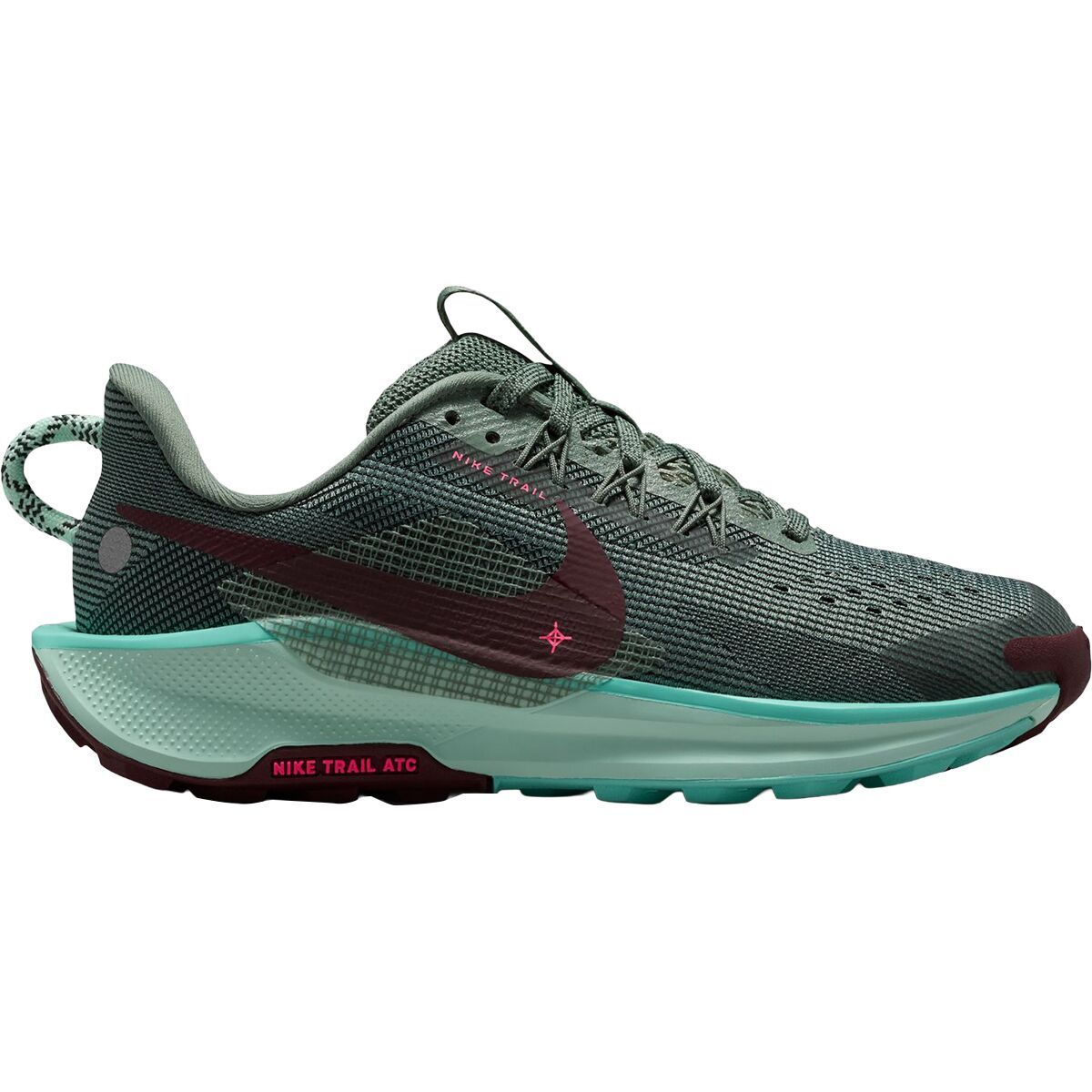
Nike Pegasus Trail 5
Good nutrition + good shoes = longer training sessions. Our pick for mixed-surface running.