How many watts does drafting really save?
CFD-backed estimates of the power you save behind a wheel, deep in a paceline, or buried mid-pack. Based on published wind-tunnel and CFD data (Blocken et al.) across eight draft positions.
Ride conditions
Step 01Endure Weekly
Want to keep improving?
Get your free Zone 2 training guide plus one short training email each Wednesday.
Free. No spam. Unsubscribe anytime.
Featured at Backcountry — 15% off first order
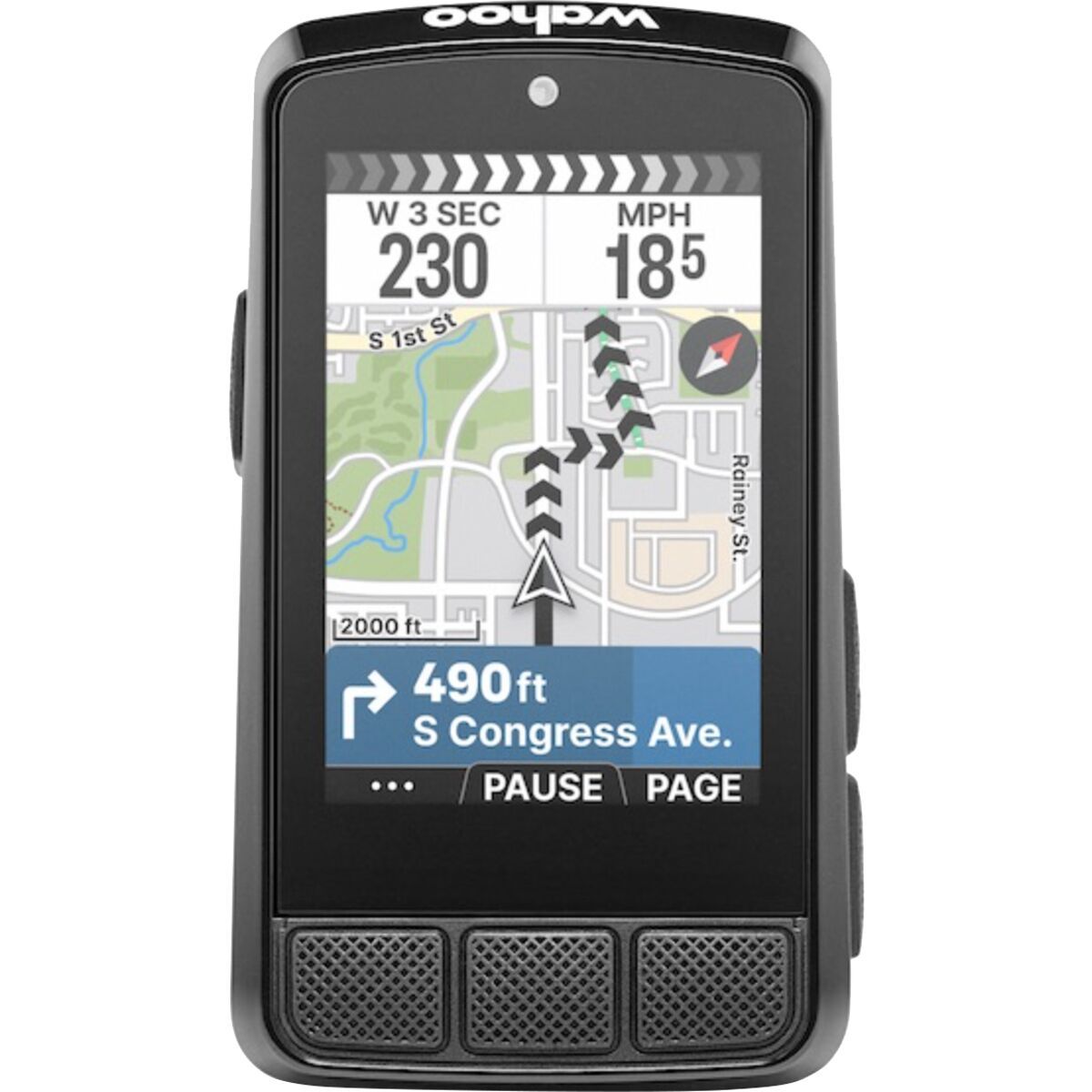
Wahoo ELEMNT BOLT 3
See real-time power in the paceline. Compare your drafting watts to your solo FTP — the Bolt's power field makes it obvious.
How drafting actually works
The lead rider creates a low-pressure wake behind them, and a rider in that wake encounters less air resistance. The closer and more directly you sit in that wake, the larger the savings. Published CFD studies (Blocken et al., 2013; Íñiguez-de-la Torre, 2020) show these rough reductions in aerodynamic drag:
- Solo: 100% drag (baseline)
- Directly behind one wheel (~0.5 m): 27-33% drag reduction
- Paceline 3rd+ rider: 35-40% reduction
- Mid-pack in a 10-rider group: 45-55% reduction
- Deep in a 40+ rider peloton: 50-62% reduction
- Echelon (side-wind): 10-20% reduction
These are drag reductions, not total power reductions. Because rolling resistance and gravity don't change, the total-power savings are typically 70-80% of the drag savings at speed.
The physics behind the numbers
At steady speed on flat ground, your power output is:
P = (m·g·Crr · v + ½·CdA·ρ·v³) / drivetrain efficiency
Drafting reduces the CdA term — your effective frontal drag drops by the position factor. Notice that the aero term scales with v³: at 40 km/h, doubling speed to 50 km/h doesn't just double aero drag, it multiplies it by 1.95. That's why drafting savings grow so fast as pace increases.
Race applications
Pro cyclists ride 30-40% harder at the front of the peloton than in the bunch. That's why most race-winning moves either (a) happen on climbs where drafting vanishes, or (b) involve a breakaway establishing a gap the peloton can't close because the few riders in the break can't share pulls as efficiently as the bunch draft behind.
For amateur racing: if you're in a group with riders of similar strength, rotating pulls cuts everyone's average power by roughly 20-30%. If the group is strong enough that you can't hold on at the front, sit 3rd-6th wheel — that's where savings peak without risking being gapped off the back.
Don't forget the downsides
- Crash risk scales with pack size. Mid-peloton is safest aerodynamically but riskiest when someone goes down.
- Wind direction matters — a strong crosswind turns a paceline into an echelon. The savings drop, and riders get strung out.
- Legality — drafting is banned in non-drafting triathlons and most UCI time trials. The penalty zone is typically 10-12 m.
Frequently Asked Questions
5 QuestionsHow accurate is this calculator?
Within 10-15% for typical road cycling scenarios. The calculator uses average CdA values and published drafting coefficients from CFD studies (Blocken, Defraeye 2013). Real-world savings vary with wind direction, rider size, bike setup, and exact spacing.
Why is mid-pack more efficient than 2nd wheel?
A rider near the middle of a 10+ pack has riders in front AND to the sides, which further disrupts the air they'd otherwise hit. Lead-out trains and peloton "washing machine" formations exploit this geometry.
Is the rider in front slowed down?
Slightly. CFD shows the leader's drag drops about 2-3% when a rider sits close behind (reduced rear eddy effects). This is why pro teams close up formation on descents and in crosswinds.
Does drafting help in Zwift?
Yes. Zwift applies draft reductions that approximately match real-world CFD. Saving 20-30% in a Zwift blob is realistic, which is why sitting in a group is so much easier than ITT-ing the same power.
What about drafting cars and trucks?
Passing cars do create momentary draft pulses, especially box trucks — but this is extremely dangerous and illegal to intentionally exploit. Keep a safe gap.