How long will this climb actually take?
Predict your time up any mountain from distance, gradient, weight, and sustained power. Works for Strava segments, local climbs, and the famous alpine passes — complete with VAM and W/kg benchmarks.
P = m·g·(sinθ + Crr·cosθ)·v + ½·CdA·ρ·v³. A fit amateur at 3.5 W/kg climbs Alpe d'Huez (13.8 km, 8.1%) in ~58 min.Enter your climb
Step 01Endure Weekly
Want to keep improving?
Get your free Zone 2 training guide plus one short training email each Wednesday.
Free. No spam. Unsubscribe anytime.
Featured at Backcountry — 15% off first order
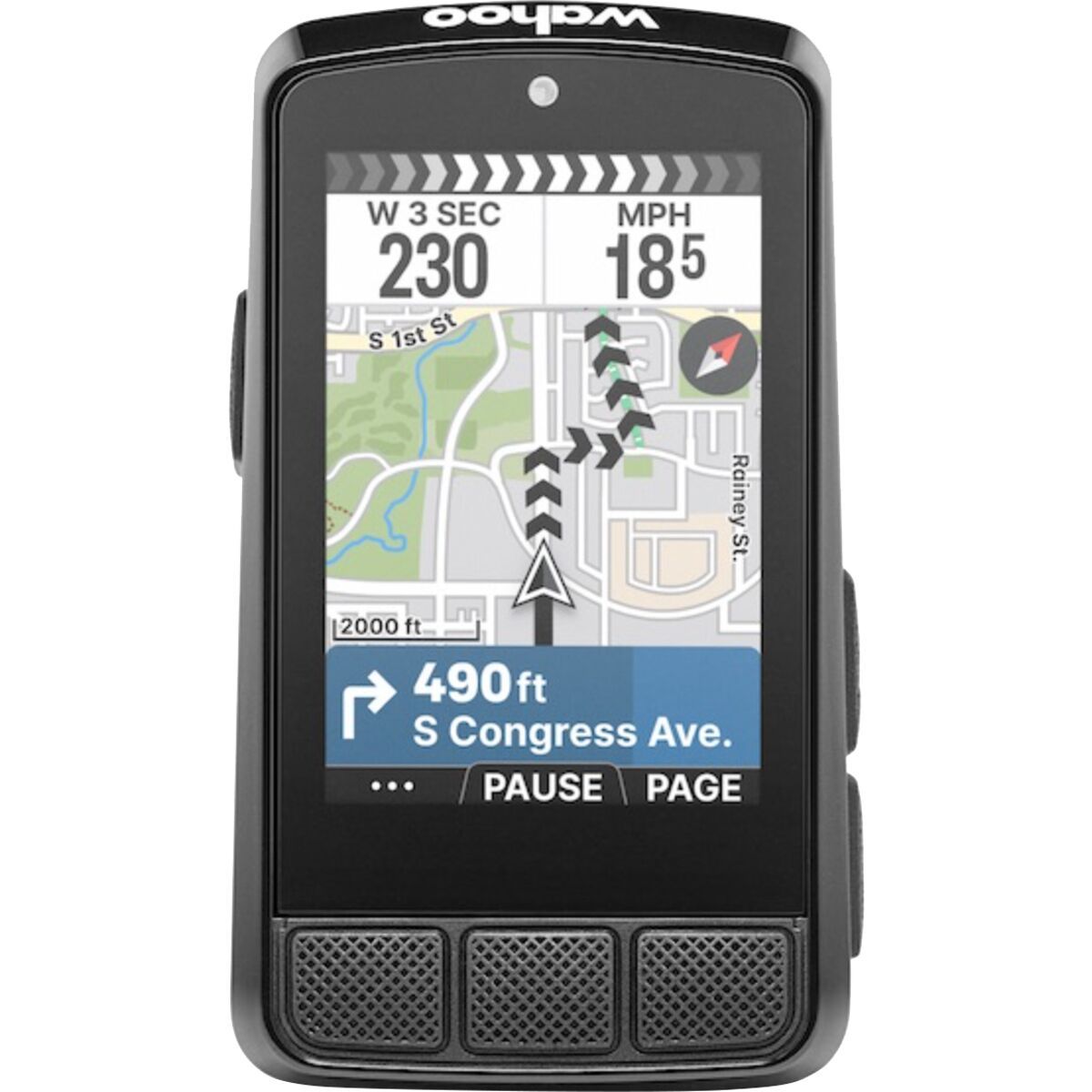
Wahoo ELEMNT BOLT 3
Track actual climb times and compare to this calculator's predictions. Built-in climb detection and VAM display.
How the bike climb calculator works
The calculator solves the standard cycling power equation for velocity, then divides distance by that velocity to get time. The equation balances three forces that resist your forward motion on a climb:
- Gravity —
m·g·sin(θ)·v— dominates on gradients over 5%. This is why weight matters so much on climbs. - Rolling resistance —
Crr·m·g·cos(θ)·v— depends on tire, pavement, and pressure. Fast road tires have Crr around 0.004. - Aerodynamic drag —
½·CdA·ρ·v³— scales with the cube of velocity. Above ~25 km/h it becomes a meaningful drag; below that it's tiny.
For steep climbs at low speeds, gravity is typically 80-95% of total resistance. For shallow climbs (under 3%) at higher speeds, aero becomes the main factor — which is why positioning and gear selection can matter even on modest gradients.
Understanding VAM (Velocità Ascensionale Media)
VAM is vertical meters climbed per hour — the single best metric for comparing climbing performance across different gradients and distances. Benchmarks:
- Casual rider: 600-900 m/h
- Fit amateur: 900-1,200 m/h
- Strong amateur / cat 3: 1,200-1,500 m/h
- Elite amateur: 1,500-1,700 m/h
- Professional: 1,700-1,900+ m/h on signature climbs
Why total mass matters more than you think
On an 8% climb at FTP, roughly 85% of your power fights gravity. A 1 kg reduction in bike+rider mass saves about 1% of climb time. That's about 34 seconds over an hour-long climb. Before spending $3,000 on a lighter frame, consider: losing 1 kg from the rider is free and equally effective.
Choosing the right power number
The calculator is only as accurate as the power you enter. Use:
- Your FTP for climbs between 20 and 60 minutes.
- 20-minute power (about 1.05× FTP) for sub-20-minute climbs.
- 85-90% of FTP for climbs lasting 1-2 hours.
- 75-85% of FTP for multi-hour efforts (Tour-stage style).
Don't know your FTP? Run our FTP Calculator first. Need training zones? Try the Heart Rate Zone Calculator.
Frequently Asked Questions
5 QuestionsHow accurate is this calculator?
Within 3-5% for steady-state climbs on dry pavement in calm conditions. Accuracy drops with variable gradients, switchbacks, wind, and changes in rider pacing. The calculator assumes constant power, which real climbs rarely match exactly.
Does wind affect the result?
Not in this version — the model uses still-air aerodynamics. For steep climbs (over 7%) at climbing speeds, wind has minimal effect. On shallower climbs at higher speeds, headwinds can add 10-30 seconds per km.
What is a good W/kg for climbing?
2.0-2.5 W/kg is fitness-level, 3.0-3.5 is solid amateur, 4.0+ is competitive racer, 5.0+ is elite, 6.0+ is pro. Climbing speed scales linearly with W/kg on steep gradients.
How long does Alpe d'Huez take?
At 3.0 W/kg: ~68 min. At 3.5 W/kg: ~58 min. At 4.0 W/kg: ~51 min. At 5.0 W/kg: ~42 min. The pro record (Pantani, 1997) is 37:35 at an estimated 6.5 W/kg.
Can I use this for Zwift climbs?
Yes — Zwift uses the same physics model, so predictions are very accurate on Zwift. The main variable is trainer power smoothing and whether you hold steady power or punch above on steeper sections.