Quick Answer: Gear ratio = chainring teeth ÷ cog teeth. 50/17 = 2.94 ratio. Higher ratio = harder/faster
This free bike gear calculator works like classic tools such as Gears4U and Sheldon Brown's gear charts: pick your chainrings, cassette, and tire size, and it calculates gear ratios, gear inches, meters of development, and speed at any cadence for every gear combination. Use it to compare cassettes, find your climbing gear, or check for overlap before you buy a new drivetrain.
Calculate Your Bike Gearing
Gear Ratios & Speed Table
Gear Range Analysis
Speed vs Cadence Chart
Endure Weekly
Want to keep improving?
Get your free Zone 2 training guide plus one short training email each Wednesday.
Free. No spam. Unsubscribe anytime.
Change Your Gearing: Parts That Fit
Your numbers above tell you what to change. A low ratio near or below 1.0 means you can spin up steep climbs. Above 1.2 and long climbs will hurt. If your highest ratio is under about 3.8 you will spin out on fast descents.
As an Amazon Associate we earn from qualifying purchases. Prices are approximate and change often, so check the current price on Amazon. Specs are compiled from manufacturer documentation, not from hands-on testing.
1. Bigger cassette: the cheapest way to get a lower climbing gear
Going from an 11-28T to an 11-34T drops your lowest gear by about 18 percent for well under $100. Check your rear derailleur cage length first, since most short-cage (SS) road derailleurs top out at 30T or 32T.
 Shimano 105 CS-R7000, 11-30T
11-speed. Works with short-cage derailleurs. The safe first step up from 11-28T.
~$58
Check on Amazon
Shimano 105 CS-R7000, 11-30T
11-speed. Works with short-cage derailleurs. The safe first step up from 11-28T.
~$58
Check on Amazon
 Shimano 105 CS-HG700, 11-34T
11-speed. Widest range road option. Needs a medium-cage (GS) derailleur.
~$55
Check on Amazon
Shimano 105 CS-HG700, 11-34T
11-speed. Widest range road option. Needs a medium-cage (GS) derailleur.
~$55
Check on Amazon
 Shimano 105 CS-R7101, 11-34T
12-speed. For newer 105 Di2 and mechanical 12-speed builds on a Micro Spline or HG freehub.
~$73
Check on Amazon
Shimano 105 CS-R7101, 11-34T
12-speed. For newer 105 Di2 and mechanical 12-speed builds on a Micro Spline or HG freehub.
~$73
Check on Amazon
 SRAM Rival XG-1250, 10-36T
12-speed. The 10T top cog buys back the top end you lose running smaller rings. Requires an XDR driver body.
~$128
Check on Amazon
SRAM Rival XG-1250, 10-36T
12-speed. The 10T top cog buys back the top end you lose running smaller rings. Requires an XDR driver body.
~$128
Check on Amazon
2. Chainrings: shift your whole range up or down
Swapping the front ring moves every gear at once. Dropping a 50T to a 46T lowers your entire range by about 8 percent. Match the bolt circle diameter (BCD) to your crank, since 4-bolt asymmetric 110 BCD Shimano rings are not interchangeable with older 5-bolt cranks.
 Shimano 105 FC-R7000, 50T Outer
4x110 BCD asymmetric. The standard compact outer ring, for replacing a worn 50T.
~$84
Check on Amazon
Shimano 105 FC-R7000, 50T Outer
4x110 BCD asymmetric. The standard compact outer ring, for replacing a worn 50T.
~$84
Check on Amazon
 Shimano 105 FC-R7000, 36T Inner
4x110 BCD. Inner ring for 52/36 semi-compact. Cheapest single part on this page that changes your gearing.
~$23
Check on Amazon
Shimano 105 FC-R7000, 36T Inner
4x110 BCD. Inner ring for 52/36 semi-compact. Cheapest single part on this page that changes your gearing.
~$23
Check on Amazon
 Wolf Tooth Oval, 110 BCD
Oval profile varies the effective ring size through the pedal stroke. Popular for steady climbing efforts.
~$90
Check on Amazon
Wolf Tooth Oval, 110 BCD
Oval profile varies the effective ring size through the pedal stroke. Popular for steady climbing efforts.
~$90
Check on Amazon
 Wolf Tooth Drop-Stop, 46T 1x
110 BCD, 12-speed. Narrow-wide tooth profile for single-ring gravel and road builds with no front derailleur.
~$90
Check on Amazon
Wolf Tooth Drop-Stop, 46T 1x
110 BCD, 12-speed. Narrow-wide tooth profile for single-ring gravel and road builds with no front derailleur.
~$90
Check on Amazon
3. Chain: budget for a new one with any gearing change
A bigger cassette usually needs a longer chain, and a worn chain will chew through a new cassette in a few hundred miles. Run your new setup through the chain length calculator before you cut links.
 Shimano CN-HG601-11
11-speed, 126 links, quick link included. The default 105 and Ultegra replacement chain.
~$35
Check on Amazon
Shimano CN-HG601-11
11-speed, 126 links, quick link included. The default 105 and Ultegra replacement chain.
~$35
Check on Amazon
 KMC X11
11-speed. Cross-compatible with Shimano and SRAM 11-speed drivetrains, usually cheaper than the Shimano chain.
~$30
Check on Amazon
KMC X11
11-speed. Cross-compatible with Shimano and SRAM 11-speed drivetrains, usually cheaper than the Shimano chain.
~$30
Check on Amazon
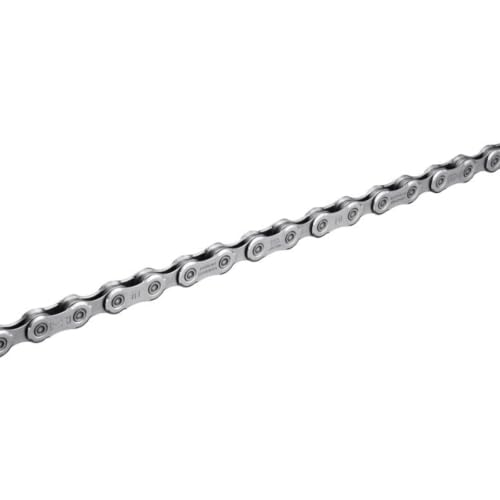 Shimano Deore CN-M6100
12-speed, 126 links, quick link included. The value pick for any Shimano 12-speed setup.
~$30
Check on Amazon
Shimano Deore CN-M6100
12-speed, 126 links, quick link included. The value pick for any Shimano 12-speed setup.
~$30
Check on Amazon
 SRAM PC-1110
11-speed, 114 links, PowerLock included. For SRAM Rival and Apex 11-speed drivetrains.
~$21
Check on Amazon
SRAM PC-1110
11-speed, 114 links, PowerLock included. For SRAM Rival and Apex 11-speed drivetrains.
~$21
Check on Amazon
4. Tools: do the swap yourself for the price of one shop visit
A cassette swap takes about ten minutes once you own the right four tools. Check chain wear first, because installing a new cassette on a stretched chain wastes both parts.
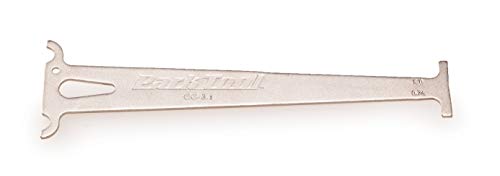 Park Tool CC-3.2
Chain wear checker, 5 to 12 speed. Use this first.
~$13
Check on Amazon
Park Tool CC-3.2
Chain wear checker, 5 to 12 speed. Use this first.
~$13
Check on Amazon
 Park Tool FR-5.2G
Cassette lockring tool. The guide pin version keeps it centered.
~$13
Check on Amazon
Park Tool FR-5.2G
Cassette lockring tool. The guide pin version keeps it centered.
~$13
Check on Amazon
 Park Tool SR-2.3
Chain whip. Holds the cassette while you break the lockring.
~$53
Check on Amazon
Park Tool SR-2.3
Chain whip. Holds the cassette while you break the lockring.
~$53
Check on Amazon
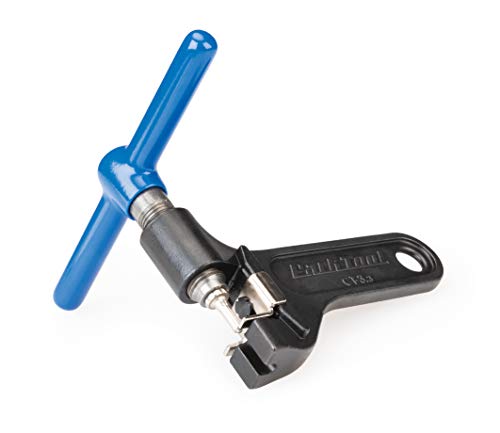 Park Tool CT-3.3
Chain tool, 5 to 12 speed. Needed to size a new chain.
~$49
Check on Amazon
Park Tool CT-3.3
Chain tool, 5 to 12 speed. Needed to size a new chain.
~$49
Check on Amazon
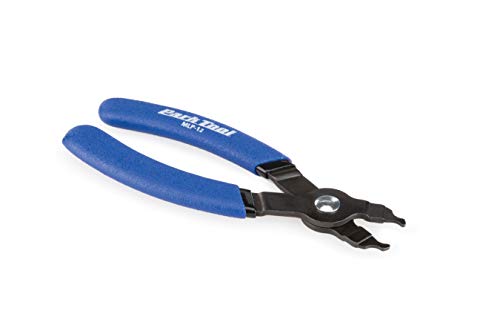 Park Tool MLP-1.2
Master link pliers. Opens and closes quick links without swearing.
~$19
Check on Amazon
Park Tool MLP-1.2
Master link pliers. Opens and closes quick links without swearing.
~$19
Check on Amazon
Not sure a new cassette is the answer? Compare setups side by side in the calculator above, then read the smart trainer guide to test gearing changes indoors before you buy. This page is researched from manufacturer specs and owner reviews and is general information, not professional mechanical advice.
Popular Setups 2026
Gear Ratio Guide
Climbing Gear Check
Complete Guide to Bike Gearing
Understanding Gear Ratios
Your bike's gear ratio determines how far you travel with each pedal revolution. It's calculated by dividing the number of teeth on your chainring by the number of teeth on your cassette cog. A higher ratio means you'll go faster but need more power, while a lower ratio makes pedaling easier but reduces speed.
Quick Formula
Gear Ratio = Chainring Teeth ÷ Cassette Teeth
Speed (mph) = Gear Ratio × Wheel Circumference × Cadence × 0.00595
Choosing the Right Gearing for Your Riding
Road Cycling Gearing
Modern road bikes typically use either compact (50/34), semi-compact (52/36), or standard (53/39) chainrings. The choice depends on your fitness level and terrain:
- Compact (50/34): Best for recreational riders and hilly terrain. Provides excellent climbing gears.
- Semi-Compact (52/36): Balanced option for fit riders who want both climbing ability and top-end speed.
- Standard (53/39): For racers and strong riders on flatter terrain.
Gravel and Adventure Gearing
Gravel bikes need wider gear ranges for varied terrain. Popular options include:
- 2x Systems: 46/30 or 48/31 with 11-34 or 11-36 cassette
- 1x Systems: 40-44T chainring with 10-42 or 10-50 cassette
- Gear Range: Aim for 400-500% total range for versatility
Common Gearing Mistakes to Avoid
- Too high gearing: Many riders choose gears that are too hard, leading to knee problems and poor climbing.
- Ignoring cadence: Optimal cadence is 80-100 rpm. Gearing should support this.
- Cross-chaining: Avoid big-big and small-small combinations which wear components.
- Not considering terrain: Match your gearing to where you actually ride, not theoretical needs.
1x vs 2x vs 3x Drivetrains
| System | Range | Weight | Simplicity | Best For |
|---|---|---|---|---|
| 1x (Single) | 400-520% | Lightest | Simplest | Gravel, MTB, CX |
| 2x (Double) | 400-550% | Medium | Moderate | Road, Gravel |
| 3x (Triple) | 550-630% | Heaviest | Complex | Touring, Casual |
How to Calculate Your Ideal Climbing Gear
To determine your ideal climbing gear, consider these factors:
Climbing Gear Formula
- 1. Determine your sustainable climbing power (typically 70-80% FTP)
- 2. Calculate speed on target gradient using: Speed = Power / (Weight × Grade × 2.7)
- 3. Find gear ratio needed: Ratio = Speed / (Cadence × Wheel Circumference × 0.00595)
- 4. Choose cassette/chainring combination that provides this ratio or lower
Gear Inches and Development
Gear inches and meters development are alternative ways to express gearing:
- Gear Inches: (Chainring ÷ Cassette) × Wheel Diameter in inches
- Meters Development: Distance traveled per pedal revolution in meters
Typical Ranges
- • Touring low gear: 20-25 gear inches
- • Road climbing: 30-40 gear inches
- • Flat cruising: 70-90 gear inches
- • Sprint/descent: 100-125 gear inches
Frequently Asked Questions
What is a good gear ratio for climbing?
A good climbing gear ratio is 1.0 or lower. For steep climbs, aim for 0.8-0.9 (like 34/34 or 32/36). Professional climbers often use 36/32 (1.13) as their lowest gear.
How do I calculate bike gear ratios?
Gear ratio = number of teeth on chainring ÷ number of teeth on cassette cog. For example, 50/11 = 4.55 gear ratio. Higher ratios mean harder gears for speed, lower ratios mean easier gears for climbing.
What gear inches do I need for touring?
For touring, aim for 20-25 gear inches as your lowest gear (for loaded climbing) and 100-110 gear inches as your highest (for descents). This typically requires a wide-range cassette like 11-42 or 11-46.
What's the difference between 11-28 and 11-32 cassette?
An 11-32 cassette provides a 14% easier climbing gear than 11-28. With a 50/34 crankset, the 34/32 combination gives a 1.06 ratio vs 1.21 with 34/28, making steep climbs significantly more manageable.
How fast is 90 rpm in each gear?
At 90 rpm with 700x25c tires: 50/11 = 38.5 mph, 50/15 = 28.2 mph, 34/28 = 10.3 mph. Use our calculator above to find exact speeds for your specific gearing and tire size.
📚 Optimize Your Cycling Performance
Learn how gear selection affects your training and racing
FTP Training Guide
Use optimal gearing for power-based training.
Cycling for Weight Loss
Choose the right gears for fat-burning workouts.
Gear Inches Chart
Look up gear inches for every chainring and cog combo.
Tire Pressure by Rider Weight
Recommended PSI for road, gravel, and MTB tires.
Power-to-Weight Ratio
Optimize gear selection for climbing and racing.
Zone 2 Training
Find the perfect cadence and gearing for Zone 2 rides.
🗺️ Explore the Cycling Power Training Hub
Access all related calculators, guides, and training plans in one place.
Test Your Gearing Indoors
The fastest way to feel how a gearing change rides is on a smart trainer, where apps like Zwift simulate any gradient with your real drivetrain. The Wahoo KICKR Core 2 with Zwift Cog ($548) is the current sweet-spot pick, and our full smart trainer guide compares every option by budget.
As an Amazon Associate, we earn from qualifying purchases.
Related Calculators
Featured at Backcountry — 15% off first order
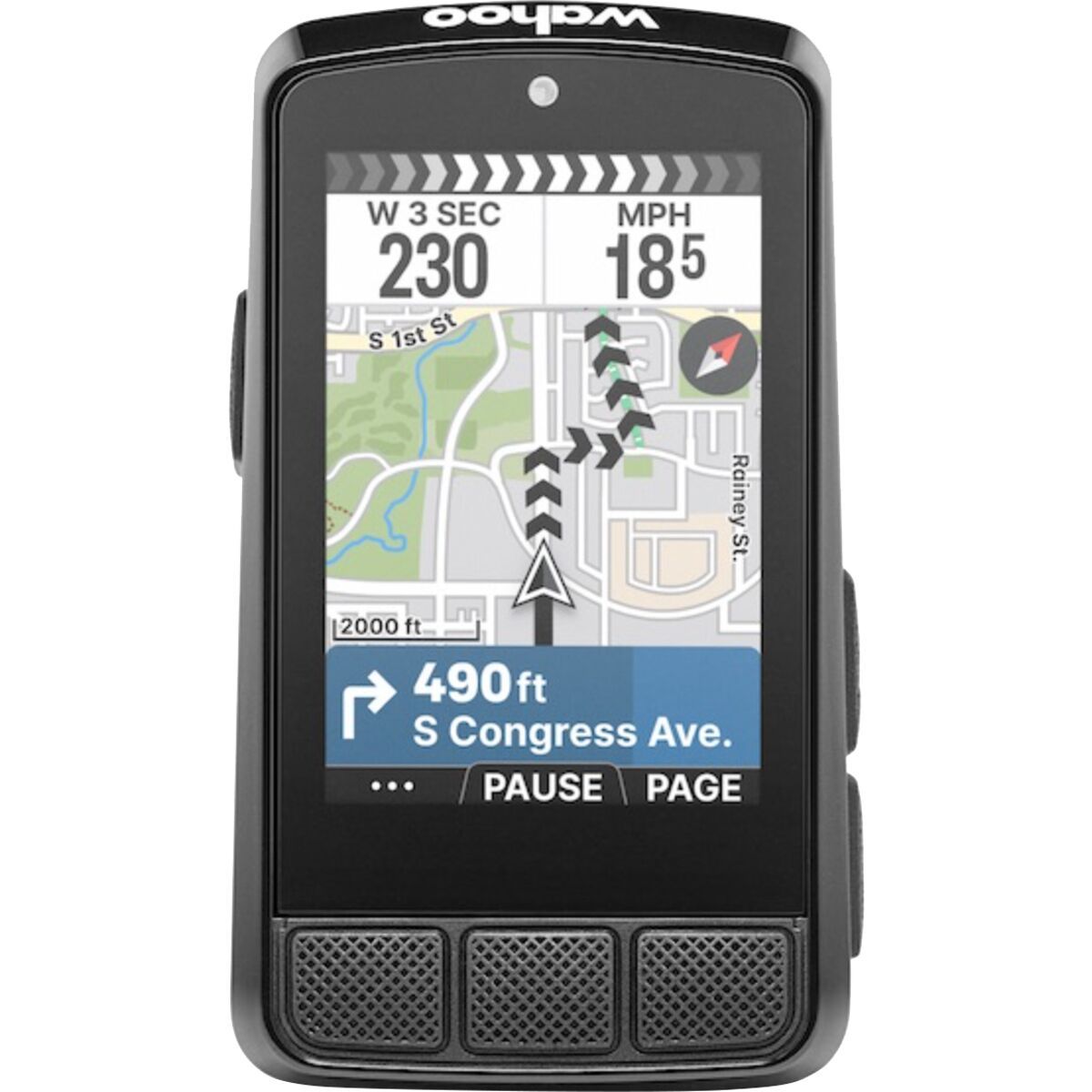
Wahoo ELEMNT BOLT 3
Track your rides with Wahoo's compact GPS — the bike computer we use daily.
Featured at Backcountry — 15% off first order
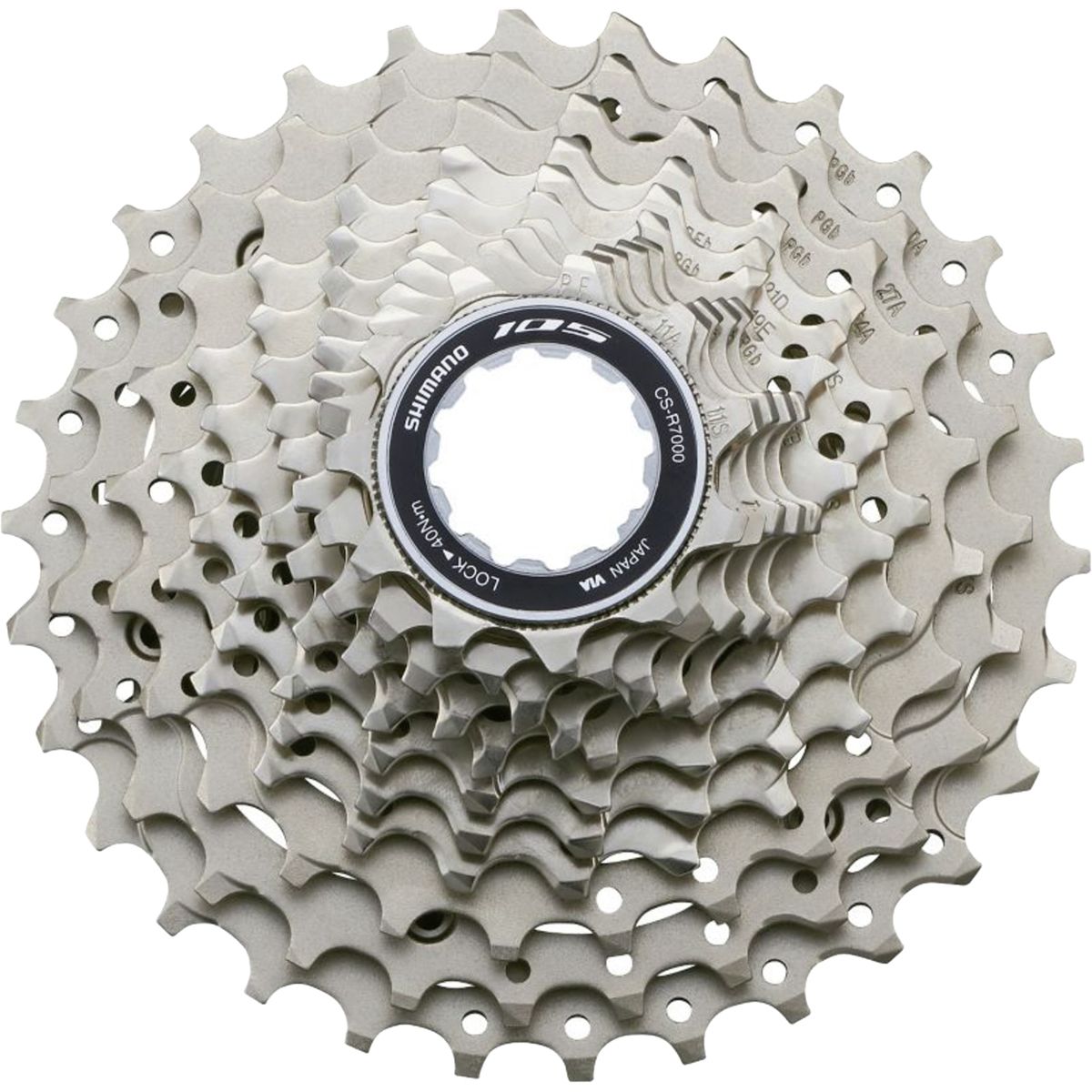
Shimano 105 CS-R7000 11-Speed Cassette
The most common 11-speed cassette upgrade — available in 11-28T (tighter ratios for flats) and 11-32T (wider range for climbs). Pair with the recommended chain whip + lockring tool below to swap at home in 10 minutes.