Are Carbon Bikes Worth It? A Complete Buyer's Guide
The Verdict: Are Carbon Bikes Worth It?
Worth it if: You race competitively, ride 100+ miles weekly, prioritize performance and can comfortably afford $3,000+, or demand the absolute best ride quality.
Skip it if: You're a casual weekend rider, bike commuter, ride less than 50 miles weekly, or have a budget under $2,000.
The reality: Modern aluminum bikes offer 90% of carbon's performance at 40% of the cost. For most cyclists, a quality aluminum frame with carbon fork ($1,500-$2,500) delivers exceptional value. Carbon becomes worth it when you're chasing marginal gains worth thousands of dollars to you personally.
The carbon bike question divides cyclists into passionate camps. Marketing promises transformative rides while skeptics claim it's overpriced hype. After analyzing frame material data, testing bikes at every price point, and consulting industry engineers, here's what actually matters when deciding if carbon is worth the investment.
"Carbon fiber isn't magic - it's engineering. The question isn't whether carbon is 'better' but whether its specific advantages align with your riding style, budget, and performance priorities. For many cyclists, the answer is no." - Glen, Cycling Performance Analyst
Who Should Buy Carbon (And Who Shouldn't)
Carbon Makes Sense For:
- • Competitive racers where watts and grams matter
- • High-mileage riders (150+ miles/week)
- • Cyclists with disposable income over $5,000
- • Gran fondo and sportive enthusiasts
- • Riders who prioritize vibration damping
- • Those upgrading from quality aluminum
- • Performance-focused climbers
Aluminum Is Better For:
- • Recreational weekend riders
- • Budget-conscious cyclists (under $2,500)
- • Commuters and utility cyclists
- • Beginners still developing fitness
- • Riders prioritizing durability over weight
- • Those needing crash-resistant frames
- • Cyclists parking bikes in public areas
Carbon vs Aluminum vs Steel: Complete Comparison
Understanding the real differences between frame materials cuts through marketing hype and reveals what actually impacts your riding experience.
| Characteristic | Carbon Fiber | Aluminum | Steel |
|---|---|---|---|
| Frame Weight | 800-1100g | 1200-1500g | 1600-2200g |
| Complete Bike Weight | 15-17 lbs | 17-19 lbs | 19-22 lbs |
| Vibration Damping | Excellent | Moderate | Good |
| Stiffness-to-Weight | Excellent | Very Good | Good |
| Impact Resistance | Poor (catastrophic) | Good (dents) | Excellent (bends) |
| Lifespan | 10-15 years | 15-20 years | Lifetime |
| Repairability | Difficult/Expensive | Difficult | Easy |
| Entry Price | $2,000+ | $800+ | $1,200+ |
| Premium Price | $8,000-$15,000 | $2,500-$4,000 | $3,000-$6,000 |
Weight Savings Reality: The Numbers That Actually Matter
Weight obsession drives carbon bike marketing, but the actual performance impact tells a more nuanced story.
Complete Bike Weight Comparison
Real-World Weight Differences (Identical Components)
High-End Carbon Frame (56cm)
Frame: 900g | Fork: 350g | Complete bike: 15.5 lbs (7.0 kg)
Premium Aluminum Frame (56cm)
Frame: 1,400g | Carbon fork: 350g | Complete bike: 17.6 lbs (8.0 kg)
The Difference
2.1 lbs (950g) lighter with carbon | Cost difference: $2,000-$4,000
Performance impact: 12 seconds faster per hour at 20 mph for 175 lb rider
What Weight Actually Costs You
Climbing performance reveals where weight savings matter most. On flat terrain, aerodynamics dominates; on climbs, weight becomes significant.
| Scenario | 17 lb Carbon | 19 lb Aluminum | Time Difference |
|---|---|---|---|
| Flat 40km (25mi) at 250W | 1:02:15 | 1:02:38 | 23 seconds |
| 5% grade 5km climb at 250W | 17:45 | 18:22 | 37 seconds |
| 8% grade 10km climb at 250W | 42:30 | 44:06 | 1:36 |
| 100-mile mixed terrain | 5:12:00 | 5:15:30 | 3:30 |
Calculate Your Power-to-Weight Ratio
See how bike weight impacts your climbing and flat-terrain performance with precise wattage calculations.
Ride Quality Differences Explained
Ride quality represents carbon's most significant advantage - and the hardest to quantify. The difference becomes apparent over long distances.
Vibration Damping Performance
Carbon Frame Characteristics
- • Road Buzz: Filters 40-60% of high-frequency vibration
- • Rough Roads: Noticeably smoother on poor pavement
- • Fatigue: Reduces hand/arm numbness on 100+ mile rides
- • Tunable: Layup design optimizes comfort zones
- • Best For: Endurance rides, gran fondos, rough roads
Aluminum Frame Characteristics
- • Road Buzz: Transmits more high-frequency vibration
- • Rough Roads: Harsher feel requires good tires/bar tape
- • Fatigue: More noticeable on rides over 3-4 hours
- • Responsiveness: Direct power transfer feel
- • Best For: Shorter rides, smooth roads, racing crits
Stiffness vs Compliance Balance
Premium carbon frames achieve what aluminum struggles with: lateral stiffness for power transfer combined with vertical compliance for comfort.
The Engineering Advantage
Carbon's directional fiber layup allows engineers to optimize stiffness in specific directions:
- • Bottom Bracket: Maximum lateral stiffness for power transfer (no energy loss in frame flex during sprints)
- • Seat Stays/Chainstays: Vertical compliance for comfort (absorbs road vibration without sacrificing power)
- • Head Tube: Precise stiffness for responsive handling
- • Result: A frame that's both race-stiff and endurance-comfortable
Aluminum tubes must be uniformly stiff in all directions, creating the harsh/compliant compromise
Durability Myths Debunked
Carbon durability generates more misinformation than any other aspect. Here's what engineering data and real-world testing reveal.
The Reality of Carbon Failure
Myth: Carbon frames are fragile
Reality: Carbon is incredibly strong in designed load directions. Modern carbon frames easily withstand rider weights up to 275 lbs and normal riding stresses.
The fragility concern applies to impact damage - dropping the bike, crashes, or clamping the frame incorrectly. In these scenarios, carbon can suffer catastrophic failure where aluminum would dent.
Myth: You can't see carbon damage
Reality: Surface impact damage is usually visible as cracks, delamination, or paint cracks. Internal damage from impacts can be detected through tap testing or professional ultrasound inspection.
After crashes or impacts, always have carbon frames professionally inspected. Cost: $50-150 for peace of mind.
Myth: Carbon wears out over time
Reality: Carbon fiber doesn't fatigue like metals. A well-maintained carbon frame can last 15-20+ years. The resin matrix can degrade from UV exposure and extreme heat, but normal use presents no issues.
Aluminum actually fatigues faster than carbon, with frame life typically 10-15 years of heavy use.
Crash and Impact Comparison
| Impact Type | Carbon Outcome | Aluminum Outcome | Steel Outcome |
|---|---|---|---|
| Minor crash (low speed fall) | Usually fine, check for cracks | Usually fine, minor scratches | Usually fine |
| Moderate crash (road rash) | Inspect carefully, possible damage | Likely rideable, check alignment | Likely fine or bent tube |
| Severe crash (high impact) | Likely frame replacement | Possibly repairable dents | Often repairable |
| Bike falls over in garage | Check impact points | No concern | No concern |
| Overtightened components | Can crack frame | Usually tolerates | No issue |
Price Breakdown by Tier: What You Get at Each Level
Carbon bike pricing varies dramatically. Understanding what you actually get at each price point prevents overspending or underbuying.
Entry Carbon ($2,000-$3,500)
What You Get:
- • Basic carbon frame (heavier layup, 1000-1100g)
- • Entry-level groupset (Shimano 105, SRAM Rival)
- • Alloy wheels or basic carbon wheels
- • Complete bike weight: 18-19 lbs
Worth It If:
You want carbon ride quality without premium cost, ride 75-150 miles/week, participate in amateur racing, or this maxes your budget comfortably.
Skip It If:
You could get premium aluminum with better components for the same price. The Specialized Allez Sprint or Canyon Ultimate AL often outperform entry carbon bikes.
Entry Carbon Pick: Specialized Allez Sprint
Premium aluminum that outperforms entry carbon. Race-proven stiffness, lighter than budget carbon bikes, saves $1,000+ for component upgrades.
Mid-Range Carbon ($3,500-$6,000)
What You Get:
- • High-quality carbon frame (900-1000g)
- • Shimano Ultegra or SRAM Force groupset
- • Quality carbon wheelset (1500-1600g)
- • Complete bike weight: 16.5-17.5 lbs
- • Improved ride quality and vibration damping
Worth It If:
You're a serious enthusiast riding 150+ miles/week, competing regularly, doing gran fondos/centuries, or want the best value in true performance carbon.
Sweet Spot:
This range offers 90-95% of premium bike performance at 50-60% of the cost. Best performance-per-dollar in carbon bikes.
Best Value Pick: Canyon Ultimate CF SL 8
Our top recommendation for serious cyclists. Premium carbon frame, Shimano Ultegra Di2, carbon wheels. Direct-to-consumer pricing delivers $8,000 bike performance for $4,200.
Premium Carbon ($6,000-$10,000)
What You Get:
- • Premium carbon layup (800-900g frames)
- • Shimano Dura-Ace or SRAM Red groupsets
- • High-end carbon wheels (1300-1400g)
- • Complete bike weight: 15.5-16.5 lbs
- • Exceptional ride quality and refined handling
Worth It If:
You're racing at high levels where marginal gains matter, have disposable income over $10,000, appreciate the finest engineering, or this represents your primary hobby investment.
Reality Check:
You're paying $4,000+ for refinements that save 200-300g and improve ride feel. Performance gain vs mid-range: 1-2%. Buy it because you want it, not because you need it.
Premium Pick: Specialized S-Works Tarmac SL8
The benchmark for premium carbon. UCI World Tour proven, 800g frame, Dura-Ace Di2, exceptional aerodynamics. What pros race on.
Super Premium ($10,000+)
What You Get:
- • UCI-legal lightweight frames (sub-800g possible)
- • Electronic shifting (Di2, eTap AXS)
- • Ultra-lightweight wheelsets (sub-1300g)
- • Complete bike weight: 14.5-15.5 lbs
- • Cutting-edge aerodynamics
Worth It If:
You race professionally or at the highest amateur levels, money is genuinely no object, or you're a collector who appreciates engineering art.
Honest Truth:
These bikes are magnificent but deliver minimal performance gains over $6,000-$8,000 bikes. The $5,000+ premium buys exclusivity, latest tech, and bragging rights more than speed.
Ultimate Pick: Pinarello Dogma F
What Tour de France winners ride. 765g frame, integrated aerodynamics, impeccable Italian craftsmanship. The absolute pinnacle of road bike engineering.
When Aluminum Is the Smarter Choice
Quality aluminum bikes deliver exceptional value and performance for the vast majority of cyclists. Here's when aluminum makes more sense than carbon.
Aluminum Advantages
- • Cost Efficiency: $1,500 gets excellent aluminum vs mediocre carbon
- • Durability: More crash-resistant and damage-tolerant
- • Low Maintenance: No stress about minor impacts
- • Better Builds: Money saved on frame goes to superior components
- • Theft: Less attractive to thieves than carbon
- • Resale: Lower initial cost means smaller depreciation hit
Best Aluminum Options
- • Specialized Allez Sprint: Race-level stiffness, $2,300
- • Canyon Ultimate AL: 17.8 lbs complete, $1,899
- • Trek Emonda ALR: Climbing-focused geometry, $2,200
- • Giant TCR Advanced SL: Excellent value, $2,100
- • Cannondale CAAD13: Legendary handling, $2,000
Best Aluminum Alternative: Cannondale CAAD13
The aluminum bike that rides like carbon. Legendary race pedigree, 17.6 lbs complete with 105, outperforms entry carbon bikes. Save $1,500 vs comparable carbon.
Carbon Maintenance and Care
Carbon frames require different maintenance approaches than metal frames. Following these guidelines ensures longevity and safety.
Essential Carbon Care Practices
1. Torque Specifications Are Critical
- • Always use a torque wrench - never guess
- • Common specs: Stem bolts 5-6 Nm, seatpost 5-6 Nm, bottle cages 4-5 Nm
- • Over-tightening causes cracks; under-tightening causes slipping
- • Use carbon assembly paste to reduce required torque
2. Inspect Regularly for Damage
- • Check for cracks, especially around high-stress areas (bottom bracket, head tube, dropouts)
- • Look for paint cracks indicating underlying frame damage
- • Tap test: Undamaged carbon sounds consistent; damaged areas sound dull
- • Post-crash inspection mandatory - professional ultrasound if any doubt
3. Avoid Common Damage Causes
- • Never clamp frame tubes in work stand - clamp seatpost only
- • Don't lean bike against sharp edges or walls (can chip carbon)
- • Protect frame during transport (pad contact points, remove wheels)
- • Avoid extreme heat (don't leave in hot cars for extended periods)
4. Proper Cleaning Techniques
- • Use gentle soap and water - harsh chemicals can damage resin
- • Avoid pressure washers near bearings and frame joints
- • Dry thoroughly to prevent water ingress through cable ports
- • Wax or protective coating helps preserve finish
When to Replace vs Repair
| Damage Type | Repairable? | Typical Cost | Recommendation |
|---|---|---|---|
| Paint chips/scratches | Yes | $50-150 | Cosmetic repair or leave it |
| Small crack in non-critical area | Maybe | $300-800 | Professional assessment required |
| Delamination | Rarely worth it | $500-1500 | Usually better to replace |
| Major structural damage | No | N/A | Replace frame immediately |
| Derailleur hanger damage | Yes | $15-50 | Simple replacement part |
Our Recommendations by Budget and Use Case
The best bike for you depends on your budget, riding style, and performance needs. Here are data-driven recommendations for every scenario.
Budget: Under $2,000
Recommendation: Premium Aluminum
Carbon bikes under $2,000 sacrifice too much in components and frame quality. Invest in excellent aluminum instead.
Best Choice: Canyon Ultimate AL SLX ($1,899) - 17.8 lbs, Shimano 105, carbon wheels included
Runner-up: Giant Contend AR 1 ($1,600) - endurance geometry, excellent all-rounder
Why: Better components matter more than frame material. These bikes outperform $2,500 entry carbon bikes.
Budget: $2,000-$3,500
Recommendation: Entry Carbon or Top-Tier Aluminum
The crossover zone where both materials make sense depending on priorities.
Carbon Option: Specialized Tarmac SL6 Sport ($2,800) - genuine carbon benefits, Shimano 105
Aluminum Option: Cannondale CAAD13 Disc ($2,200) - race-proven platform, better components for less
Decision Factor: Choose carbon if ride quality matters most; aluminum if you want superior components and durability.
Budget: $3,500-$6,000
Recommendation: Mid-Range Carbon (Sweet Spot)
The performance-per-dollar peak. Best balance of frame quality, components, and value.
Best All-Around: Canyon Ultimate CF SL 8 ($4,199) - Ultegra Di2, carbon wheels, 16.8 lbs
Race-Focused: Specialized Tarmac SL7 Comp ($5,200) - aero optimized, exceptional handling
Endurance: Trek Domane SL 6 ($4,500) - IsoSpeed comfort, perfect for centuries
Why: These bikes deliver 90% of pro-level performance. Further spending yields diminishing returns.
Budget: $6,000+
Recommendation: Premium Carbon (If Budget Allows)
Marginal gains territory. Buy because you want the best, not because you need it to perform.
Race Machine: Specialized S-Works Tarmac SL8 ($13,000) - UCI World Tour proven, cutting-edge aero
Climbing Specialist: Canyon Ultimate CFR ($8,999) - 15.2 lbs, pure climbing performance
All-Rounder: Trek Emonda SLR ($11,500) - lightweight, versatile, race-winning pedigree
Reality Check: A $5,000 bike with a trained rider beats a $13,000 bike with an untrained rider every time.
By Riding Style
Recreational/Fitness Rider
- • Recommendation: Aluminum
- • Budget: $1,200-$2,000
- • Why: Carbon's benefits don't justify cost for casual riding
- • Top Pick: Giant Contend AR or Trek Domane AL
Gran Fondo/Century Rider
- • Recommendation: Mid-range carbon
- • Budget: $3,500-$5,500
- • Why: Vibration damping reduces fatigue over 100+ miles
- • Top Pick: Trek Domane SL or Specialized Roubaix
Competitive Racer
- • Recommendation: Mid to premium carbon
- • Budget: $4,000-$8,000
- • Why: Marginal gains matter in racing, stiffness critical
- • Top Pick: Specialized Tarmac SL7 or Canyon Aeroad
Climbing Enthusiast
- • Recommendation: Lightweight carbon
- • Budget: $5,000-$10,000
- • Why: Weight savings most noticeable on climbs
- • Top Pick: Canyon Ultimate CFR or Trek Emonda SLR
Track Your Cycling Performance
Use our cycling calculators to measure improvement and optimize training regardless of your bike choice.
Bottom Line: The Final Verdict
Is a Carbon Bike Worth It?
For competitive racers, high-mileage riders, and cycling enthusiasts with budget flexibility: Yes. Carbon delivers meaningful advantages in weight, ride quality, and performance. Budget $4,000-$6,000 for the sweet spot where value meets performance.
For recreational riders, weekend warriors, and budget-conscious cyclists: No. Modern aluminum offers 90% of carbon's performance at 40% of the cost. Spend $1,500-$2,500 on quality aluminum and invest savings in wheels, training, or more riding time.
For first-time road bike buyers: Start with aluminum. Learn what you value in a bike before investing in carbon. You can always upgrade later with informed priorities.
The uncomfortable truth: For most cyclists, fitness matters 10x more than frame material. A trained rider on a $1,800 aluminum bike will drop an untrained rider on a $12,000 carbon bike every time. Before spending $5,000+ on marginal equipment gains, honestly assess whether that money would deliver more performance invested in coaching, training camps, or simply more riding time.
Carbon bikes are worth it when the specific advantages align with your riding style, performance needs, and budget. For everyone else, aluminum delivers exceptional value without compromise.
"The best bike is the one you ride most. Whether that's carbon, aluminum, or steel matters far less than the miles you put in and the enjoyment you derive. Choose the material that fits your budget and priorities, then ride the hell out of it." - Glen
Continue Your Cycling Journey
Featured at Backcountry — 15% off first order
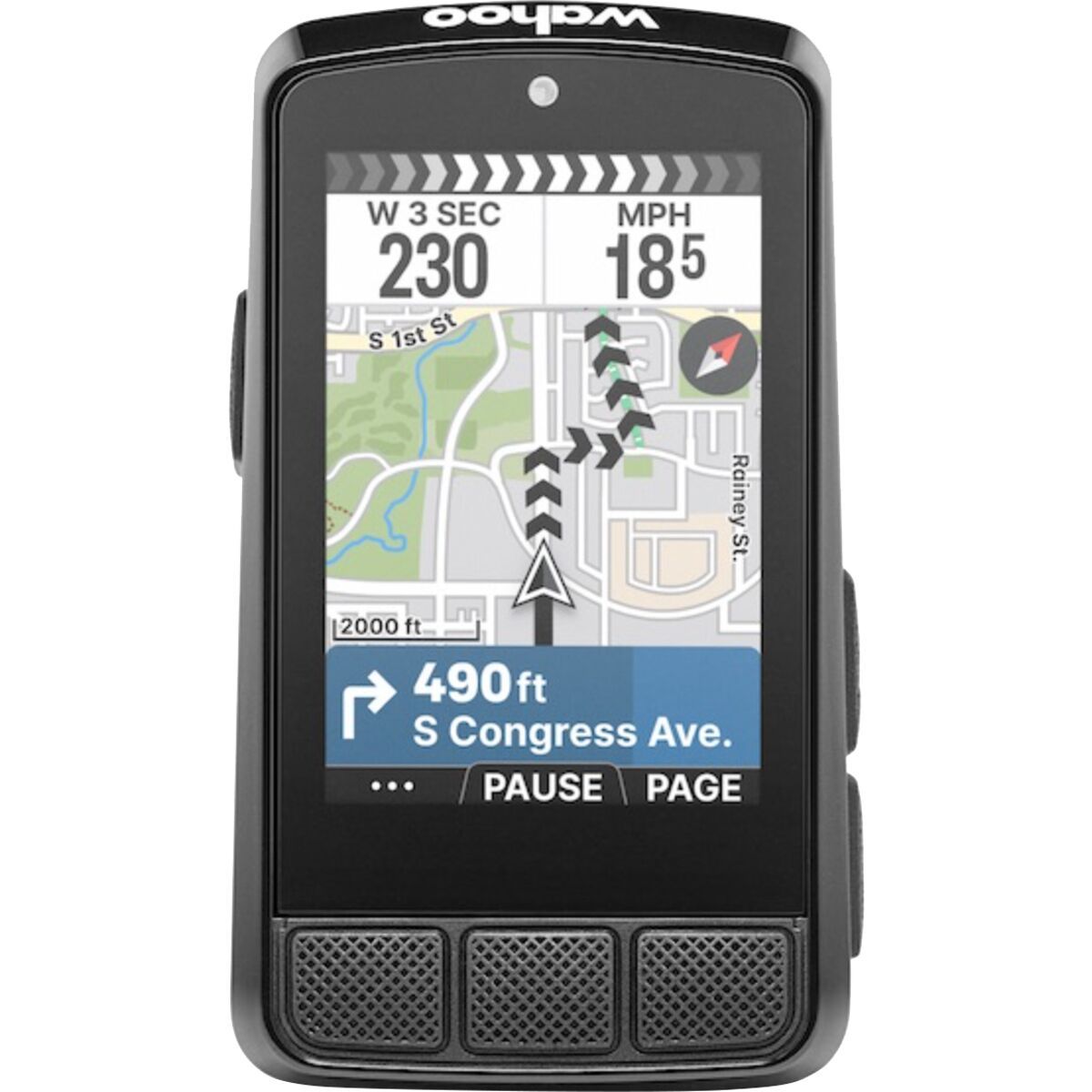
Wahoo ELEMNT BOLT 3
Track your rides with Wahoo's compact GPS — the bike computer we use daily.