Understanding VO2 Max
VO2 Max is the maximum amount of oxygen your body can consume during intense exercise. It's considered the gold standard for measuring aerobic fitness and cardiovascular health. A higher VO2 Max indicates better endurance capacity and overall fitness.
VO2 Max Values by Age and Gender
Men (ml/kg/min)
- 20-29 years: Excellent: >52, Good: 45-52, Average: 35-44, Below Average: <35
- 30-39 years: Excellent: >50, Good: 43-50, Average: 33-42, Below Average: <33
- 40-49 years: Excellent: >48, Good: 41-48, Average: 31-40, Below Average: <31
- 50-59 years: Excellent: >45, Good: 38-45, Average: 29-37, Below Average: <29
- 60+ years: Excellent: >42, Good: 35-42, Average: 26-34, Below Average: <26
Women (ml/kg/min)
- 20-29 years: Excellent: >45, Good: 38-45, Average: 28-37, Below Average: <28
- 30-39 years: Excellent: >43, Good: 36-43, Average: 26-35, Below Average: <26
- 40-49 years: Excellent: >40, Good: 33-40, Average: 24-32, Below Average: <24
- 50-59 years: Excellent: >37, Good: 30-37, Average: 22-29, Below Average: <22
- 60+ years: Excellent: >35, Good: 28-35, Average: 20-27, Below Average: <20
Elite Athlete VO2 Max Values
- Cross-Country Skiers: 65-85 ml/kg/min
- Distance Runners: 60-80 ml/kg/min
- Cyclists: 60-75 ml/kg/min
- Soccer Players: 55-70 ml/kg/min
- Swimmers: 50-70 ml/kg/min
Want the full picture? See our complete VO2 max norms by age, gender and sport — detailed Poor-to-Elite reference tables for runners, cyclists, swimmers, rowers, triathletes and more.
Test Methods Explained
Running Performance Formula
Estimates VO2 Max based on race performance using established relationships between running speed and oxygen consumption. More accurate for trained runners.
Cooper 12-Minute Test
Developed by Dr. Kenneth Cooper, this test correlates the distance covered in 12 minutes with VO2 Max. Formula: VO2 Max = (Distance in meters - 504.9) / 44.73
Rockport 1-Mile Walk Test
A submaximal test suitable for beginners or those with health concerns. Uses walk time, heart rate, age, gender, and weight to estimate VO2 Max.
Factors Affecting VO2 Max
- Genetics: 25-50% determined by genetics
- Age: Decreases ~1% per year after age 25
- Training: Can improve 15-25% with training
- Body Composition: Lower body fat typically means higher VO2 Max
- Gender: Men typically 15-20% higher than women
- Altitude: Training at altitude can improve VO2 Max
How to Improve Your VO2 Max
- High-Intensity Intervals: 3-5 minute intervals at 90-95% max HR
- Tempo Runs: 20-40 minutes at comfortably hard pace
- Long Slow Distance: Build aerobic base with easy runs
- Hill Training: Adds intensity and strength
- Cross-Training: Cycling, swimming, rowing
- Consistency: Regular training 4-6 times per week
VO2 Max Improvement Timeline
How quickly your VO2 max improves depends on your starting fitness level. Here are realistic expectations based on training research:
Untrained to Beginner
10-15% improvement in 4-8 weeks. The fastest gains happen when you first start consistent aerobic training.
Beginner to Intermediate
5-10% improvement over 3-6 months. Adding structured intervals and tempo work drives continued progress.
Intermediate to Advanced
2-5% improvement over 6-12 months. Gains slow significantly and require periodized, sport-specific training.
Near Genetic Ceiling
Less than 1% per year. At this level, improvements come from running economy and lactate threshold rather than VO2 max itself.
Genetics matter: Research suggests that roughly 50% of your VO2 max potential is genetically determined. Training can maximize your ceiling, but that ceiling varies from person to person. For a deeper look at what to expect, read our guide on realistic VO2 max improvement timelines.
VO2 Max by Sport
VO2 max demands vary widely across sports. The table below shows typical ranges for athletes at different levels, from elite competitors to recreational participants.
| Sport / Activity | VO2 Max Range (ml/kg/min) | Notes |
|---|---|---|
| Cross-Country Skiing | 75-96 | Highest recorded VO2 max in any sport (96 ml/kg/min) |
| Elite Marathoners | 70-85 | Top runners combine high VO2 with exceptional economy |
| Professional Cyclists | 65-85 | Grand Tour riders at the upper end of this range |
| Competitive Swimmers | 55-70 | Technique and stroke economy play a larger role |
| Recreational Runners | 35-50 | Most consistent runners fall in this range |
| Recreational Cyclists | 30-45 | Weekend riders and bike commuters |
| General Population | 25-40 | Varies widely with age and activity level |
Want to see how you compare? Try the Cooper Test Calculator for a field-based estimate of your aerobic fitness.
What Your VO2 Max Score Means for Racing
Your VO2 max gives you a ballpark idea of the race times you can realistically target. Use the ranges below as a starting point, then fine-tune with a race time predictor.
| VO2 Max (ml/kg/min) | Estimated 5K Time | Estimated Marathon Time |
|---|---|---|
| 35-40 | 28+ minutes | 5:00+ hours |
| 40-45 | 24-28 minutes | 4:00-4:30 hours |
| 45-50 | 21-24 minutes | 3:30-4:00 hours |
| 50-55 | 18-21 minutes | 3:00-3:30 hours |
| 55-60 | 17-18 minutes | 2:45-3:00 hours |
| 60+ | Sub-17 minutes | Sub-2:45 hours |
Important: VO2 max is not the only factor that determines race performance. Lactate threshold, running economy, fueling strategy, and mental toughness all play significant roles. Two runners with the same VO2 max can have very different race times.
To train smarter for your target race pace, pair VO2 max data with your heart rate training zones. Our complete guide to running heart rate zones walks you through setting up zone-based workouts.
Frequently Asked Questions
What is a good VO2 max for my age?
For men: Excellent is >52 (20s), >50 (30s), >48 (40s), >45 (50s), >42 (60+). For women: Excellent is >45 (20s), >43 (30s), >40 (40s), >37 (50s), >35 (60+). Values are in ml/kg/min.
How accurate are VO2 max calculators?
Online calculators provide estimates within ±10-15% of lab-tested values. Running performance formulas are most accurate for trained runners, while field tests like Cooper 12-minute test work well for general fitness assessment.
Can you improve VO2 max after age 40?
Yes! While VO2 max naturally declines ~1% per year after age 25, regular training can improve it by 15-25% at any age. High-intensity interval training is particularly effective for older adults.
What's the difference between VO2 max and fitness?
VO2 max measures your body's maximum oxygen uptake capacity, while fitness encompasses strength, flexibility, endurance, and body composition. VO2 max is specifically your aerobic engine's ceiling capacity.
How often should I test my VO2 max?
Test every 6-12 weeks to track training progress. More frequent testing isn't necessary as VO2 max changes slowly. Focus on consistent training rather than frequent testing.
Featured at Backcountry — 15% off first order
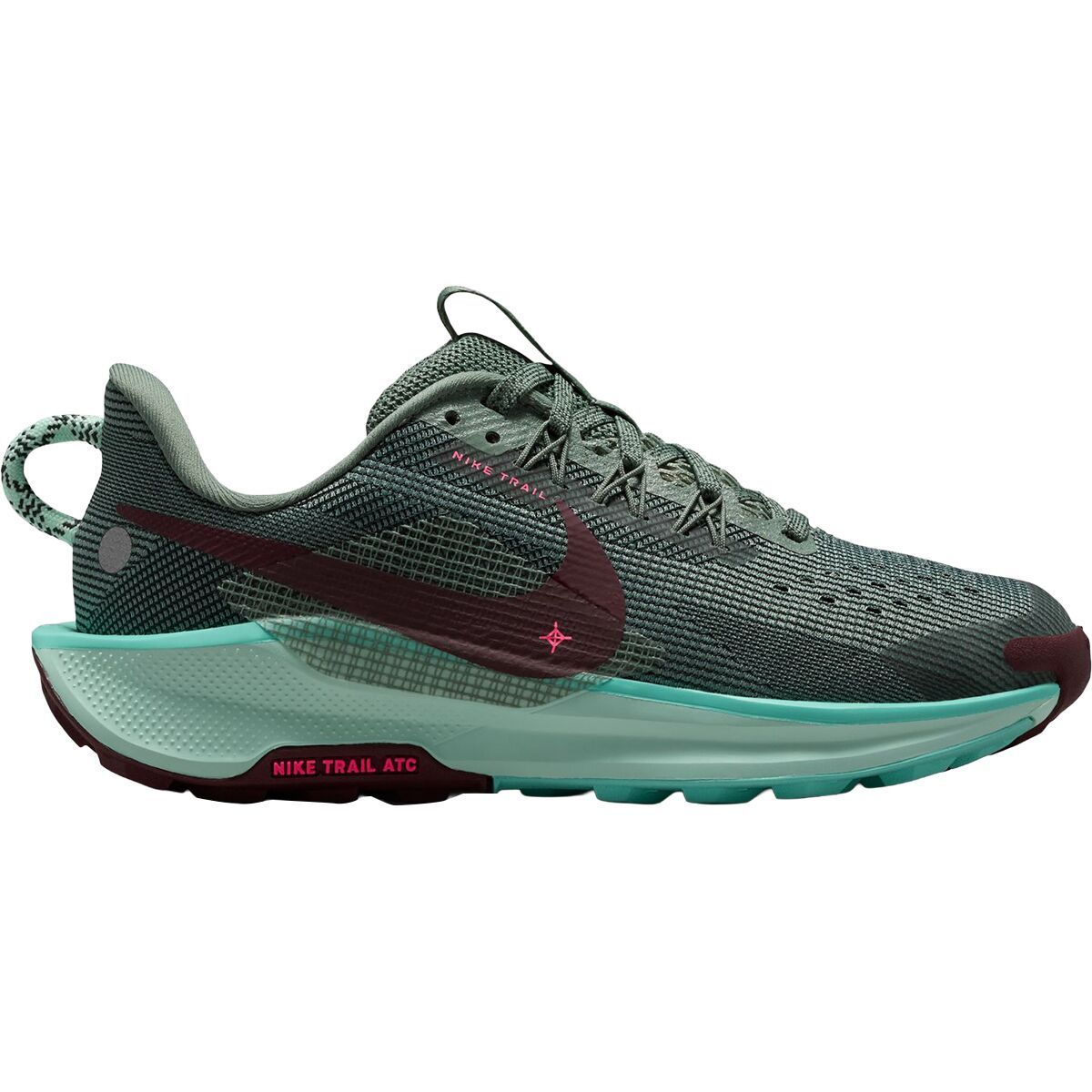
Nike Pegasus Trail 5
Our go-to trail-capable training shoe. React foam + sticky outsole.