Table of Contents
Calculate Your FTP Now
Use our free calculator to determine your FTP from 20-minute test, ramp test, or other protocols.
FTP Calculator1. What Is FTP?
Functional Threshold Power (FTP) represents the maximum power you can sustain for approximately one hour. Think of it as your "hour power" - the highest average wattage you could hold if you went absolutely all-out for 60 minutes.
FTP sits at the boundary between sustainable and unsustainable exercise. Below your FTP, your body can clear lactate as fast as it produces it. Above FTP, lactate accumulates and you'll eventually be forced to slow down.
Technical Definition: FTP approximates your lactate threshold - the point where blood lactate concentration begins to rise exponentially. It's measured in watts (W) and often expressed as watts per kilogram (W/kg) for comparison between athletes.
FTP Is Used To:
- Set training zones: All power-based training zones are calculated as percentages of FTP
- Track fitness improvement: FTP changes reflect gains or losses in aerobic fitness
- Compare performance: W/kg allows fair comparison between cyclists of different sizes
- Pace races and events: Know exactly how hard you can go without blowing up
- Calculate Training Stress Score (TSS): Quantify the load of each workout
2. Why FTP Matters
FTP is the cornerstone of structured cycling training. Without an accurate FTP, your training zones are wrong, which means you're either training too hard (risking burnout and overtraining) or too easy (leaving gains on the table).
Raw FTP vs W/kg
Raw FTP in watts doesn't tell the whole story. A 70kg cyclist with 250W FTP has 3.57 W/kg, while an 85kg cyclist with 280W has only 3.29 W/kg. Despite lower absolute power, the lighter cyclist would climb faster.
Calculate your W/kg: FTP (watts) / Body Weight (kg)
Example Calculation
If your FTP is 250 watts and you weigh 70kg:
250W / 70kg = 3.57 W/kg
When Raw Watts Matter More
- Time trials on flat courses: Aerodynamic drag is the main resistance
- Pulling in group rides: Breaking the wind for others
- Track cycling: Speed on flat velodrome
When W/kg Matters More
- Hill climbing: Fighting gravity is all about power-to-weight
- Hilly road races: Selection often happens on climbs
- Gran fondos with elevation: Sustainable climbing pace
Calculate Your Power-to-Weight
Find your W/kg and see how it compares to different cycling categories.
Power to Weight Calculator3. FTP Testing Methods
There are several ways to determine your FTP. Each has pros and cons, and some work better for certain athletes than others.
| Test | Protocol | Pros | Cons |
|---|---|---|---|
| 20-Minute Test | 20 min all-out x 0.95 = FTP | Gold standard, widely used | Pacing can be tricky, mentally tough |
| Ramp Test | Increase power until failure, 75% of final minute | Quick, no pacing required, less mental strain | May overestimate for some athletes |
| 60-Minute Test | 1-hour all-out = FTP | Most accurate by definition | Extremely demanding, rarely done |
| 2x8 Minute Test | Two 8-min efforts, average x 0.90 | Good for beginners, shorter suffering | Less accurate than 20-min test |
| 8-Minute Test | 8 min all-out x 0.90 = FTP | Shorter duration | More influenced by anaerobic capacity |
20-Minute Test Protocol (Recommended)
The 20-minute test is the most widely used and provides reliable results when executed properly:
- Warm up thoroughly: 20 minutes including some short efforts
- Perform a 5-minute all-out "blow out" effort (clears anaerobic energy)
- Easy spinning for 10 minutes
- 20-minute all-out effort (pace evenly!)
- Cool down 10-15 minutes
- Average power for 20 min x 0.95 = FTP
Ramp Test Protocol
Popular in apps like Zwift and TrainerRoad:
- Start at easy power (usually around 100W)
- Increase power by a set amount every minute (typically 20W)
- Continue until you cannot maintain the required power
- FTP is calculated as 75% of your best 1-minute power from the final minute
Which Test to Choose? If you're new to testing, start with the ramp test - it's less mentally demanding and gives reasonable results. As you become more experienced, the 20-minute test provides more accurate and repeatable results for most cyclists.
4. Test Preparation: The 48-Hour Protocol
An FTP test is only useful if it accurately reflects your fitness. Poor preparation can result in an underestimated FTP, leading to training zones that are too easy. Follow this protocol for reliable results.
48 Hours Before: Training and Recovery
- Two days before: Normal training is fine, but avoid any high-intensity work
- Day before: Complete rest or very easy spin (30-45 minutes, Zone 1)
- No hard sessions: Legs should feel fresh, not fatigued from recent efforts
48 Hours Before: Nutrition
- Eat normally - no need for special carb loading
- Stay hydrated but don't overdo it
- Avoid alcohol (dehydrates and affects recovery)
- Don't try new foods or supplements
Night Before
- Sleep: Aim for 7-8 hours in a dark, cool room
- Dinner: Normal meal with carbohydrates, moderate protein, low fat
- Mental prep: Visualize the test - know the protocol, have your plan
- Equipment check: Ensure power meter, trainer, and fans are ready
Test Morning: 2-3 Hours Before
- Eat your normal pre-ride meal (what you'd eat before any hard ride)
- Include easily digestible carbohydrates (oatmeal, toast, banana)
- Moderate protein, low fiber and fat
- Drink water but don't overhydrate
30-60 Minutes Before
- Optional: small snack if you're used to it (half banana, gel, etc.)
- Set up your testing environment (fans, music, towel, water)
- Do a calibration check on your power meter
- Open windows or maximize cooling - heat kills FTP tests
The Critical Warmup
A proper warmup prepares your body without depleting energy:
- 10-15 minutes easy spinning (Zone 1-2)
- 3 x 1-minute progressive builds to threshold (1 min easy between)
- 5 minutes easy spinning
- 1 x 5-second sprint (just to open legs)
- 5 minutes easy spinning before test start
5. Test Execution Tips
For 20-Minute Test
- Start conservative: First 5 minutes should feel sustainable, not all-out
- Settle into a rhythm: Avoid power spikes and surges
- Save something: Keep a reserve for the last 3-5 minutes
- Final push: Last 2 minutes, give everything remaining
- Don't look at the clock constantly: Focus on power and perceived effort
Pacing Tip: Start slightly below what you think you can hold. The first 5 minutes should feel too easy. Build into it. Most failed tests start too hard and result in blown efforts.
For Ramp Test
- Focus on cadence: Maintain 85-95 RPM as long as possible
- Don't anticipate failure: Keep going until you literally can't turn the pedals
- Mental preparation: The test ends when you end it - be ready for this
- Stay seated: Standing changes muscle recruitment and affects results
Common Test Execution Mistakes
- Testing when tired: Your FTP will be artificially low
- Poor cooling: Overheating significantly reduces power output
- Starting too hard: Blowing up early ruins the test
- Wrong gearing: Choose a gear you can maintain at target cadence
- Inconsistent conditions: Test the same way each time for comparable results
- Skipping the 5-minute blow-out: This clears anaerobic energy and is essential for accurate 20-min test
6. Understanding Your FTP Number
Your FTP test came back at 250 watts. Is that good? What does it mean for your training and racing? Context matters enormously when interpreting FTP.
Context Is Everything
A 250W FTP means very different things depending on:
- Body weight: 250W at 60kg (4.17 W/kg) vs 250W at 90kg (2.78 W/kg)
- Training history: First year cycling vs 10 years of training
- Age: 25-year-old vs 55-year-old
- Gender: Male vs female (different physiological norms)
- Goals: Recreational riding vs competitive racing
What Your FTP Tells You
- Current aerobic fitness: Your threshold capacity right now
- Training zone targets: All zones calculated from this number
- Racing pacing: How hard you can sustainably ride
- Progress tracking: Compare to past tests to see improvement
What FTP Doesn't Tell You
- Sprint power: Short-duration power is separate from FTP
- 5-minute power: VO2max efforts may not correlate directly
- Endurance capacity: FTP doesn't indicate how long you can ride
- Technical skills: Bike handling, descending, bunch riding
- Race tactics: When and how to attack
7. FTP Classification Tables
These tables provide general benchmarks for FTP relative to body weight. Remember that individual variation is significant, and these are guidelines, not rigid categories.
FTP Classification Table (Male)
| Category | W/kg | Description |
|---|---|---|
| Untrained | <2.0 | New to cycling, minimal training |
| Recreational | 2.0-2.5 | Casual riding, some structured training |
| Trained | 2.5-3.2 | Regular training, club-level events |
| Well-Trained | 3.2-4.0 | Serious amateur, competitive events |
| Very Well-Trained | 4.0-4.6 | Cat 3-4 racing, high-level amateur |
| Elite Amateur | 4.6-5.2 | Cat 1-2 racing, competitive in major events |
| Professional | 5.5-6.5+ | WorldTour, Continental professional teams |
FTP Classification Table (Female)
| Category | W/kg | Description |
|---|---|---|
| Untrained | <1.5 | New to cycling |
| Recreational | 1.5-2.0 | Casual riding |
| Trained | 2.0-2.8 | Regular training |
| Well-Trained | 2.8-3.5 | Competitive amateur |
| Very Well-Trained | 3.5-4.0 | High-level amateur |
| Elite/Professional | 4.0-5.5+ | Professional level |
Note: Most recreational cyclists can reach 3.0-3.5 W/kg with dedicated training. The gap between 4.0 and 5.0+ W/kg requires exceptional genetics and years of focused training.
8. When to Retest Your FTP
Training with an outdated FTP means your zones are wrong. Too high, and you'll burn out. Too low, and you won't stress your systems enough to adapt. Here's when to retest.
Recommended Testing Frequency
| Situation | Retest Frequency |
|---|---|
| New to cycling (<2 years) | Every 4-6 weeks |
| Active structured training | Every 6-8 weeks |
| Maintenance phase | Every 8-12 weeks |
| After illness or break (>2 weeks) | Upon return to training |
| Start of new training block | First week of block |
| Before target event | 3-4 weeks before (not closer) |
When NOT to Test
- During a hard training week: Fatigue will underestimate FTP
- When ill or recovering: Wait until fully healthy
- Race week: Save the effort for competition
- After travel: Allow 2-3 days to adjust
- In very hot conditions: Unless you race in heat, test in moderate temps
Alternatives to Full Testing
If you hate FTP tests, consider these approaches:
- Auto-detection software: Zwift, TrainerRoad, and others can estimate FTP from workouts
- Workout comparison: Repeat a standard workout monthly and compare results
- Race performance: A well-paced 40km TT gives reliable FTP estimate (avg power x 0.95)
- Heart rate correlation: If HR for given power drops 5+ BPM, add ~3-5% to FTP
9. Signs Your FTP Has Changed
Signs Your FTP Has Increased
Watch for these indicators that your current FTP is too low:
- Threshold workouts feel easy: You can talk during supposed Zone 4 efforts
- Heart rate is lower than expected: Same power, 5-10 BPM lower HR
- Power creeps up during intervals: You finish above target consistently
- Recovery is faster: You bounce back quickly from hard sessions
- Sweet spot feels like tempo: 88-93% FTP efforts aren't challenging
- Training stress scores seem low: Despite consistent training volume
Signs Your FTP May Have Decreased
Fitness loss is normal after breaks or illness. Watch for:
- Workouts feel impossibly hard: You can't complete prescribed intervals
- Heart rate spikes early: Max HR reached too quickly
- You fail workouts regularly: Cutting intervals short or reducing power
- Extended fatigue: Not recovering between sessions
- Mood and motivation drop: Training feels like a grind
Track Your FTP Over Time
Monitor your FTP progress and estimate future improvements.
FTP Improvement Calculator10. Why Your FTP Dropped: 12 Common Reasons
A dropping FTP is every cyclist's nightmare. You've been training consistently, yet your latest test shows a 10-20 watt decrease. Before panicking, understand that FTP fluctuations are normal and often reversible.
1. Overtraining Syndrome
Symptoms: Chronic fatigue, elevated resting HR, mood changes, poor sleep
Solution: Take 5-7 days completely off, then ease back with 2 weeks at 50% volume
2. Insufficient Recovery
Cause: Too many hard days without adequate rest
Fix: Implement 2:1 or 3:1 work:rest ratio, prioritize sleep (8+ hours)
3. Poor Test Execution
Common Mistakes: Starting too hard, inadequate warm-up, mental fatigue
Solution: Standardize test protocol, practice pacing, test when fresh
4. Seasonal Detraining
Timeline: 10% loss after 2-3 weeks off, 25% after 8 weeks
Recovery: Gradual return over 4-6 weeks with progressive overload
5. Nutritional Deficiencies
Key Nutrients for FTP:
- Iron: Critical for oxygen transport
- Vitamin D: Muscle function and recovery
- B12: Energy metabolism
- Magnesium: Muscle contraction
6. Chronic Stress
Impact: Elevated cortisol suppresses testosterone and growth hormone
Management: Meditation, yoga, reduce training load during high-stress periods
7. Weight Loss Too Rapid
Problem: Losing >1kg/week sacrifices muscle mass
Approach: Aim for 0.5kg/week max, maintain protein at 2g/kg
8. Illness or Infection
Recovery Time: 1 week easy for every 2 days of fever
Protocol: Return at 50% volume, build back over 2-3 weeks
9. Heat and Dehydration
Performance Loss: 2-3% per degree above 21C
Prevention: Heat acclimatization, proper hydration strategy
10. Equipment Issues
- Power meter calibration drift
- Trainer resistance changes
- Drivetrain efficiency loss
11. Training Monotony
Sign: Same workouts for 8+ weeks
Solution: Periodize training, vary intensity and volume
12. Age-Related Decline
Rate: 0.5-1% per year after 35
Counter: Increase recovery time, add strength training
When to Seek Help
Consult a coach or sports medicine professional if:
- FTP drops >15% despite rest
- Symptoms persist >3 weeks
- Resting HR elevated >10bpm
- Unexplained weight loss
11. FTP Recovery Action Plan
If your FTP has dropped, follow this structured 8-week recovery plan:
8-Week FTP Recovery Protocol
Remember: FTP is not permanent. With proper diagnosis and targeted intervention, most athletes recover their previous power within 4-8 weeks.
12. Realistic Improvement Expectations
Understanding realistic FTP improvement timelines helps set appropriate goals and avoid frustration.
Expected Annual Improvement by Experience
| Training Year | Expected Improvement | Notes |
|---|---|---|
| Year 1 | 20-50% | Biggest gains for beginners |
| Year 2 | 10-20% | Still significant progress |
| Year 3-4 | 5-10% | Gains require more effort |
| Year 5+ | 2-5% | Approaching genetic ceiling |
Factors Affecting Your Potential
- Genetics: Some athletes have higher ceilings than others
- Age: Younger athletes typically have more room for improvement
- Training history: Athletic background provides a foundation
- Available training time: More training hours generally means more progress
- Training quality: Structured training beats random riding
- Recovery resources: Sleep, nutrition, and stress management
Realistic Ceiling: Most recreational cyclists can reach 3.0-3.5 W/kg with dedicated training. Breaking 4.0 W/kg requires years of focused training and favorable genetics. Professional levels (5.5+ W/kg) are achieved by only a tiny fraction of cyclists.
13. Common FTP Training Mistakes to Avoid
1. Testing Too Often
Testing every week or two doesn't allow time for adaptations. FTP changes slowly over weeks, not days.
2. Testing Too Rarely
Training with a months-old FTP means your zones are likely wrong. Retest at least every 8 weeks during active training.
3. Comparing to Others
Your FTP journey is personal. Comparing to others with different genetics, training history, or body composition leads to frustration.
4. Ignoring W/kg
Chasing absolute watts while ignoring body composition. A 300W FTP at 90kg (3.33 W/kg) is less impressive than 250W at 65kg (3.85 W/kg) for most cycling applications.
5. Training Zone Mistakes
Going too hard on easy days and not hard enough on hard days. Zone 2 should feel easy; Zone 5 should feel very hard.
6. Neglecting the Aerobic Base
All intensity, no base. Zone 2 training builds the foundation for everything else. Most training should be easy.
7. Inconsistent Testing Conditions
Testing indoors one month and outdoors the next, or at different times of day. Standardize conditions for valid comparisons.
14. Frequently Asked Questions
What is FTP in cycling?
What is a good FTP for a cyclist?
How often should I test my FTP?
How should I prepare for an FTP test?
What causes FTP to drop?
How quickly can FTP improve?
What are signs that my FTP has increased?
What is the difference between the 20-minute test and ramp test?
What is the proper warmup before an FTP test?
When should I NOT test my FTP?
How do I calculate my W/kg (watts per kilogram)?
What are alternatives to formal FTP testing?
Power Up Your Cycling
Use our free calculators to optimize your training:
Related Articles
Cycling Power Zones Complete Guide
Master power-based training with FTP zones and structured workouts.
Lactate Threshold Training Guide
Understand the science behind threshold training.
Indoor Training Complete Guide
Set up the perfect environment for FTP testing and training.
Power-to-Weight Complete Guide
Optimize your W/kg for climbing performance.
Explore the Cycling Power Training Hub
Access all related calculators, guides, and training plans in one place.
Visit Cycling Power Training HubFeatured at Backcountry — 15% off first order
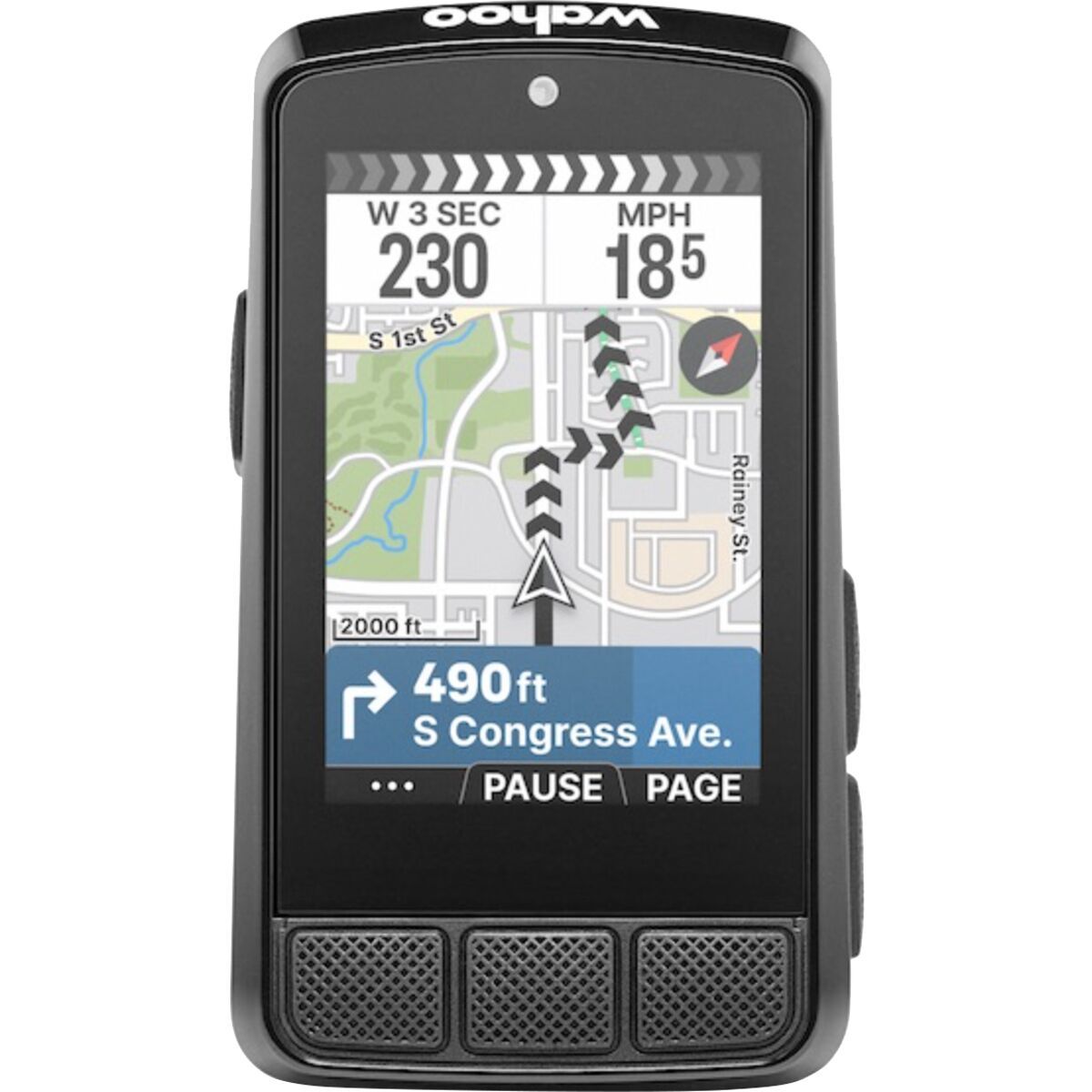
Wahoo ELEMNT BOLT 3
Display real-time watts from any power meter on Wahoo's premium head unit.