Cooper Test Quick Reference
Pre-Test Protocol
- 48 hours: No hard training
- 24 hours: Light activity only
- 3 hours: Light carb meal
- 15 min: Dynamic warm-up
Accuracy Factors
- Pacing strategy: +/- 5%
- Temperature: +/- 3%
- Surface type: +/- 2%
- Motivation level: +/- 4%
The Cooper Test remains one of the most accessible and widely-used field tests for estimating VO2 max and aerobic fitness. Originally developed by Dr. Kenneth Cooper in 1968 for military fitness assessment, this 12-minute run test has stood the test of time because of its simplicity and reasonable correlation with laboratory testing. However, your results are only as good as your preparation and test execution. This comprehensive guide covers everything you need to maximize accuracy and get meaningful fitness data.
Understanding the Cooper Test
What the Test Measures
The Cooper Test estimates your maximal oxygen uptake (VO2 max) based on the distance you cover running for exactly 12 minutes. The underlying principle is simple: individuals with higher aerobic capacity can sustain faster paces for longer durations.
The Cooper Formula:
VO2 max = (Distance in meters - 504.9) / 44.73
This formula estimates VO2 max in ml/kg/min based on distance covered.
Pre-Test Preparation Timeline
48 Hours Before Test
Training Considerations
- Avoid any high-intensity workouts or interval sessions
- Skip strength training that targets legs
- Rest or perform only light recovery activities
- Prioritize 7-9 hours of quality sleep both nights
Nutrition Focus
- Maintain normal hydration levels throughout
- Eat balanced meals with adequate carbohydrates
- Avoid alcohol which impairs recovery and performance
- Limit caffeine to normal daily amounts
24 Hours Before Test
Do
- Light 20-30 minute jog with strides
- Foam rolling and light stretching
- Carbohydrate-rich dinner
- Early bedtime for optimal rest
Avoid
- Any running over 40 minutes
- Speed work or intervals
- Heavy or fatty meals
- Late-night activities
Test Day Morning
2-3 Hours Before:
- Light, easily digestible meal (200-300 calories)
- Focus on simple carbs: toast, banana, oatmeal
- 16-20 oz of water with breakfast
- Caffeine (if normally consumed): 100-200mg
30-60 Minutes Before:
- Use bathroom to empty bladder
- Sip water as needed (avoid excess)
- Prepare mental strategy and target splits
- Check weather conditions and adjust expectations
The Essential Warm-Up Protocol
15-20 Minute Warm-Up Sequence
Phase 1: Easy Jog (5-7 minutes)
Start with very easy jogging at 50-60% effort. Focus on gradually elevating heart rate and body temperature. You should be able to hold a full conversation easily.
Phase 2: Dynamic Stretches (3-4 minutes)
- Leg swings (forward/back and side to side): 10 each leg
- Walking lunges with twist: 10 each side
- High knees: 20 meters x 2
- Butt kicks: 20 meters x 2
Phase 3: Progressive Strides (5-6 minutes)
- Stride 1: 80 meters at 70% effort
- Stride 2: 80 meters at 80% effort
- Stride 3: 80 meters at 90% effort
- Stride 4: 80 meters at 95% effort (near target pace)
- Walk 60-90 seconds between each stride
Phase 4: Rest Before Start (2-3 minutes)
Walk or stand, stay loose, practice controlled breathing. Start the test while your body is primed but not fatigued from warm-up.
Optimal Pacing Strategy
The Even-Pacing Approach
Research consistently shows that even pacing produces the best Cooper Test results. Starting too fast leads to premature fatigue and a dramatic slowdown in the final minutes.
Recommended Pacing Distribution:
- Minutes 0-3: Start at target pace (resist urge to go faster)
- Minutes 3-6: Maintain steady rhythm, check pace at 400m marks
- Minutes 6-9: Focus on form, this is where pacing pays off
- Minutes 9-11: Slight increase if feeling strong
- Minutes 11-12: All-out effort to finish line
Pro Tip: If you feel comfortable in the first 3 minutes, you are doing it right. If you feel like you are going hard, you started too fast.
Factors Affecting Test Accuracy
Environmental Variables
Temperature Impact
- Below 50F (10C): Add 1-2% to result
- 50-70F (10-21C): Optimal range
- 70-80F (21-27C): Subtract 2-3%
- Above 80F (27C): Subtract 4-6%
Humidity Effects
- Below 40%: Minimal impact
- 40-60%: Slight performance decrease
- 60-80%: Moderate impact (-2-3%)
- Above 80%: Significant impact (-4-5%)
Surface Type
- Track (ideal): Baseline comparison
- Firm grass: -2% to -3%
- Asphalt: Similar to track
- Treadmill: +3% to +5% (no wind)
Wind Conditions
- Calm: Optimal conditions
- Light (5-10 mph): Minimal impact
- Moderate (10-15 mph): -2% to -4%
- Strong (15+ mph): -5% or more
Physiological Variables
Factors That Reduce Accuracy:
- Dehydration: Even 2% dehydration can reduce performance by 4-6%
- Sleep deprivation: Less than 6 hours reduces performance 3-5%
- Residual fatigue: Training within 48 hours impacts results
- Illness/stress: Elevated resting HR indicates compromised state
- Time of day: Performance peaks in late afternoon (4-7 PM)
Interpreting Your Results
Cooper Test Distance Classifications
Men (Ages 20-29)
- Excellent: 2800m+ (56+ VO2 max)
- Good: 2400-2799m (47-55)
- Average: 2200-2399m (42-46)
- Below Average: 1600-2199m (33-41)
Women (Ages 20-29)
- Excellent: 2700m+ (54+ VO2 max)
- Good: 2200-2699m (43-53)
- Average: 1800-2199m (35-42)
- Below Average: 1500-1799m (30-34)
Common Mistakes to Avoid
- Starting too fast: The number one mistake. Use a GPS watch or track marks to enforce even pacing from the start.
- Inadequate warm-up: Cold muscles and unprepared cardiovascular system reduce performance by 5-10%.
- Testing when fatigued: Residual fatigue from recent hard training significantly skews results.
- Ignoring conditions: Testing in poor weather without adjusting expectations leads to discouragement.
- Inconsistent test conditions: Compare results only when testing under similar conditions.
Frequently Asked Questions
Can I do the Cooper Test on a treadmill?
Yes, but set the incline to 1% to simulate outdoor wind resistance. Treadmill results are typically 3-5% higher than outdoor track results due to the controlled environment and moving belt assistance.
Should I run the same pace throughout?
Aim for even splits with a slight negative split strategy. Your first lap should feel controlled, allowing you to maintain or slightly increase pace in the final minutes rather than slowing dramatically.
How do I improve my Cooper Test score?
Focus on threshold training and interval workouts. The Cooper Test correlates highly with lactate threshold, so tempo runs and threshold intervals produce the fastest improvements.
The gear these numbers assume
Every pace, zone and power figure on this page assumes something is measuring it. These are the three that cover running, cycling and the threshold work in between.
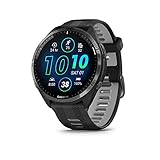 Garmin Forerunner 965
Multisport with the training-load and threshold metrics most of these calculations assume you can actually see day to day.
Check Backcountry → Check price on Amazon → COROS APEX 2 Series GPS Watch
Sapphire titanium and the longest battery in its class, which is the deciding feature once sessions run past a few hours.
Check Backcountry → Check price on Amazon → Favero Assioma Uno Power Meter Pedal
Single-sided pedal power, the cheapest honest way to start training with watts instead of estimating from heart rate.
Check Backcountry → Check price on Amazon →As an Amazon Associate we earn from qualifying purchases, at no extra cost to you. Prices change, so check before buying.
Is the Cooper Test as accurate as lab VO2 max testing?
No field test matches laboratory accuracy. However, with proper preparation and execution, the Cooper Test provides a useful estimate within 10-15% of true VO2 max. Its value lies in tracking changes over time rather than absolute values.
Calculate Your VO2 Max from Cooper Test Results
Enter your Cooper Test distance to instantly calculate your estimated VO2 max and compare against fitness standards.
Use Cooper Test Calculator