Introduction: The Art and Science of Running Form
Running is the most natural human movement, yet most runners never consciously think about how they run. While your body has found a way that works, understanding running biomechanics can help you run faster, more efficiently, and with reduced injury risk.
Good running form isn't about forcing yourself into a predetermined mold—elite runners display significant individual variation. Instead, it's about understanding fundamental principles and making small adjustments that compound into meaningful improvements over thousands of miles.
This guide covers the key elements of running biomechanics: foot strike, cadence, posture, arm swing, and running economy. You'll learn what the research actually says (versus popular myths), identify common form errors, and discover drills to reinforce efficient movement patterns.
Benefits of Efficient Running Form
- Reduced injury risk: Proper mechanics decrease stress on joints and tissues
- Improved economy: Use less energy at the same pace
- Faster speeds: Better power transfer means more forward propulsion
- Less fatigue: Efficient form delays breakdown at end of races
- Greater enjoyment: Running feels easier and more natural
Understanding Running Biomechanics
Running is a series of single-leg hops with a brief flight phase between each ground contact. Understanding the phases of the running gait cycle helps identify where inefficiencies occur and how to address them.
The Running Gait Cycle
Each stride consists of stance phase (foot on ground) and swing phase (foot in air). At jogging pace, stance comprises about 40% of the cycle; at sprinting, just 22%. The flight phase—when both feet are airborne—distinguishes running from walking.
Phases of Running Gait
| Phase | Description | Key Elements |
|---|---|---|
| Initial Contact | Foot touches ground | Foot strike pattern, landing position |
| Midstance | Body passes over foot | Hip, knee, ankle alignment |
| Toe-Off | Push-off and propulsion | Hip extension, glute activation |
| Swing | Leg recovery forward | Hip flexion, knee drive |
| Flight | Both feet airborne | Body position, forward lean |
Ground Reaction Forces
Each footstrike generates ground reaction forces of 2-3 times body weight. These forces must be absorbed and redirected efficiently. Impact peak (the initial collision with ground) and active peak (maximum force during push-off) are the two key force events in each stride.
The Kinetic Chain
Running is a whole-body movement. The kinetic chain links ankles, knees, hips, pelvis, spine, and arms. Dysfunction anywhere in the chain affects the entire system—weak hips can cause knee pain; tight ankles can alter hip mechanics. This is why form work must address the complete system.
Foot Strike Patterns: What Really Matters
Few topics generate more debate than foot strike. Should you heel strike, midfoot strike, or forefoot strike? The research-based answer is more nuanced than popular advice suggests.
The Three Strike Patterns
- Heel strike: Heel contacts ground first (75-80% of recreational runners)
- Midfoot strike: Heel and forefoot contact nearly simultaneously
- Forefoot strike: Ball of foot contacts first, heel may or may not touch down
What Research Actually Shows
Studies of elite marathoners show mixed patterns—approximately 75% heel strike during races, though many shift toward midfoot/forefoot at faster paces. There's no consistent evidence that one pattern prevents injuries better than others. The injury profile simply shifts: heel strikers stress knees more; forefoot strikers stress calves and Achilles more.
What Matters More Than Foot Strike
Landing position matters far more than which part of your foot touches first. Landing with your foot beneath (or slightly behind) your center of mass—rather than reaching out in front—reduces braking forces and impact regardless of foot strike pattern. Focus on "where" not "how."
The Overstriding Problem
Overstriding—landing with your foot well ahead of your center of mass—creates a braking force with each step. This wastes energy, increases impact loading, and is associated with running injuries. Reducing overstride is more important than changing foot strike pattern.
Practical Recommendations
- Don't force a foot strike change if injury-free and running efficiently
- Focus on landing beneath your hips, not reaching forward
- Let foot strike adjust naturally to pace—faster usually means more midfoot
- If changing, do so gradually during easy runs only
- Strengthen calves and feet before transitioning to more forefoot running
Cadence: Steps Per Minute Optimization
Cadence (steps per minute) influences impact forces, ground contact time, and running economy. While "180 spm" is often cited as ideal, the reality is more individual.
The 180 Myth
Jack Daniels observed elite runners at the 1984 Olympics and noted most ran at 180+ spm. This became simplified into a universal prescription. However, optimal cadence varies by height, leg length, speed, and individual mechanics. Most recreational runners fall between 160-180 spm at easy pace.
Why Higher Cadence Often Helps
Increasing cadence (while maintaining the same speed) typically means shorter strides. This reduces overstriding, decreases vertical oscillation, and lowers impact forces. A 5-10% increase in cadence can meaningfully reduce injury risk without changing perceived effort.
Cadence Guidelines by Pace
| Pace | Typical Cadence Range |
|---|---|
| Easy/recovery (10:00+/mile) | 160-175 spm |
| Steady (8:00-9:30/mile) | 170-180 spm |
| Tempo (7:00-8:00/mile) | 175-185 spm |
| Threshold (6:00-7:00/mile) | 180-190 spm |
| Fast (sub-6:00/mile) | 185-200+ spm |
How to Increase Cadence
- Measure current cadence during easy runs (use watch or count for 30 seconds × 2)
- Increase by 5% maximum—e.g., 160 spm → 168 spm
- Use a metronome app during portions of runs
- Focus on "quick feet" rather than counting constantly
- Allow 4-6 weeks for new cadence to feel natural
- Higher cadence may initially feel awkward but should not increase effort
Posture and Body Alignment
Proper posture creates a stable platform from which all running movement originates. Poor posture wastes energy, limits breathing, and often leads to compensation patterns that cause injury.
Head Position
Keep your head balanced over your spine, looking ahead rather than down at your feet. Your gaze should be 15-20 meters ahead on level ground. A forward head position (common when fatigued) strains neck muscles and disrupts whole-body alignment.
The Forward Lean
Efficient runners maintain a slight forward lean—about 3-7 degrees from vertical—originating from the ankles, not the waist. This positions your center of mass slightly ahead of your base of support, creating natural forward momentum. Bending at the waist (very common) collapses the core and restricts hip extension.
Hip Position
"Run tall" with hips high. Avoid sitting back (collapsing at the pelvis) which shortens stride and increases quad work. Think of a string pulling you up from the crown of your head, creating length through your spine and keeping hips forward.
Core Stability
Your core connects upper and lower body, transferring forces between legs and arms. A stable core prevents energy leaks from excessive rotation or lateral movement. You don't need to actively brace, but maintain enough tension to hold your pelvis stable as legs and arms move.
Quick Posture Check
- ✓ Eyes looking ahead, not down
- ✓ Shoulders relaxed and level (not hunched)
- ✓ Slight forward lean from ankles
- ✓ Hips high and forward, not sitting back
- ✓ Minimal side-to-side trunk movement
Arm Swing: The Forgotten Element
Arms provide balance, rhythm, and surprisingly, propulsion. Poor arm mechanics can slow you down and contribute to inefficient movement patterns throughout the body.
Arm Position
Elbows should be bent at approximately 90 degrees (this naturally shortens during faster running). Hands should be relaxed—imagine holding a potato chip without crushing it. Avoid clenched fists or tense fingers, as this tension propagates up through shoulders.
Swing Direction
Arms should swing forward and back, not across the body. Cross-body swing creates trunk rotation that wastes energy and increases lateral forces. At easy pace, hands should swing from roughly hip level to chest level. At faster speeds, the range increases.
Shoulders
Keep shoulders low and relaxed. A common fatigue response is shoulders creeping up toward ears—this creates tension and restricts breathing. Periodically "reset" by shrugging shoulders to ears, then dropping them. Shake out arms briefly if tension builds.
Arm Drive at Speed
During faster running, arms become more active. Drive elbows backward (the forward swing is a natural reaction). Think "elbows back" rather than "hands forward." Research shows that restricted arm swing reduces running economy by 3-8%—your arms matter.
Running Economy: The Key to Faster Running
Running economy (RE) is the oxygen cost of running at a given speed—essentially, your fuel efficiency. Two runners with identical VO2max will have different performances if one is more economical. RE explains why some runners look effortless while others labor at the same pace.
Factors Affecting Running Economy
- Biomechanics: Efficient movement patterns waste less energy
- Muscle stiffness: Stiffer tendons store and return more elastic energy
- Fiber type: Slow-twitch fibers are more efficient at aerobic speeds
- Training history: Years of running improve economy through neural and muscular adaptations
- Body mass: Lighter = less energy to move (especially limb mass)
- Shoes: Lighter shoes and carbon plates improve economy 1-4%
How to Improve Running Economy
| Method | Mechanism | Expected Improvement |
|---|---|---|
| Plyometrics | Increased tendon stiffness | 2-8% over 6-12 weeks |
| Heavy strength training | Improved neuromuscular function | 3-8% over 8-12 weeks |
| High mileage | Neural and fiber adaptations | Gradual improvement over years |
| Altitude training | Improved oxygen utilization | 2-5% with proper protocols |
| Form drills | Reinforced efficient patterns | 1-3% with consistent practice |
Reducing Vertical Oscillation
Vertical oscillation—how much you bounce up and down—wastes energy that could go into forward motion. Some oscillation is necessary (you're jumping), but excessive bouncing is inefficient. Target 6-10 cm of vertical oscillation at easy pace. Higher cadence and proper forward lean typically reduce bouncing.
Running Form Drills
Drills isolate and reinforce specific movement patterns that transfer to running. Performed regularly, they ingrain efficient mechanics at the neuromuscular level. Include drills 2-3 times per week, ideally after warm-up and before quality sessions.
Essential Running Drills
A-Skips
Purpose: Hip flexion, knee drive, coordination
Skip with exaggerated knee lift, driving knee up until thigh is parallel to ground. Opposite arm drives forward. Focus on quick ground contact and hip action. 2-3 × 30 meters.
B-Skips
Purpose: Hip extension, hamstring activation, ground contact
Like A-skips, but after knee lifts, extend leg forward then "paw" back to the ground like you're scraping something off your shoe. Emphasizes the pulling action. 2-3 × 30 meters.
High Knees
Purpose: Hip flexor activation, quick turnover
Run in place or with minimal forward movement, driving knees high and fast. Stay on balls of feet with minimal ground contact time. Focus on speed of movement, not height. 2-3 × 20 seconds.
Butt Kicks
Purpose: Hamstring activation, leg recovery
Run with minimal forward movement, heels kicking up to touch glutes. Keep thighs vertical—the motion comes from knee flexion, not hip movement. Quick and light. 2-3 × 20 seconds.
Strides
Purpose: Reinforce form at speed, neuromuscular activation
Gradually accelerate to 85-95% sprint speed over 80-100 meters, then decelerate. Focus on relaxed, smooth running with all form elements. Walk back recovery. 4-8 strides after easy runs or before workouts.
Carioca (Grapevine)
Purpose: Hip mobility, lateral movement, coordination
Move sideways, alternating feet crossing in front and behind. Drive hips to rotate while keeping shoulders square. Develops hip mobility and coordination. 2 × 30 meters each direction.
Common Running Form Errors
Recognizing common form errors is the first step toward correcting them. Many errors are related—fixing one often improves others naturally.
Overstriding
Landing with the foot well ahead of the center of mass creates braking forces and increases impact loading. Often caused by trying to lengthen stride to run faster. Fix by increasing cadence and focusing on landing beneath hips.
Sitting Back
Hips positioned behind the feet, with excessive knee bend at contact. This overworks quadriceps and limits hip extension (the power phase). Cue: "Run tall" and "hips forward." Strengthen glutes and hip flexors.
Cross-Body Arm Swing
Arms swinging across the body rather than forward/back. Creates trunk rotation and lateral movement. Often accompanied by tight shoulders. Cue: "Hands swing from pocket to chest, not across."
Excessive Vertical Bouncing
Too much up-and-down movement wastes energy. Often related to overstriding or inadequate forward lean. Cue: "Run smooth, not bouncy." Increase cadence and maintain slight ankle lean.
Tension in Upper Body
Hunched shoulders, clenched fists, tight facial muscles. Wastes energy and restricts breathing. Develops progressively as fatigue builds. Cue: "Relax face, drop shoulders, soft hands."
Video Analysis
Have someone film you running from the side and behind. Compare to efficient runners. Look for: foot position at landing, hip position, arm swing path, vertical oscillation, and trunk lean. Refilm periodically to track changes.
How to Change Your Running Form
Form changes should be gradual and carefully implemented. Your body has adapted to your current mechanics over thousands of miles; sudden changes can cause injury. Follow these principles for safe form modification.
When to Consider Changes
- Recurring injuries that may be biomechanically related
- Clear inefficiencies identified through video analysis
- Plateau in performance despite consistent training
- Returning from injury and rebuilding mechanics
Principles for Safe Change
- One element at a time: Don't change foot strike, cadence, and posture simultaneously
- Easy runs only: Practice new patterns at low intensity where you can focus
- Gradual introduction: Start with 5-10 minutes of focus per run, expand over weeks
- Strengthen first: Build tissue tolerance before changing loading patterns
- Allow adaptation time: 6-12 weeks minimum for meaningful change
- Monitor for pain: New discomfort means back off and progress more slowly
The Role of Cueing
External cues often work better than internal focus. Rather than "flex hip more," try "imagine stepping over a low hurdle." Rather than "land on midfoot," try "run quietly." Experiment with cues to find what works for you.
Recommended Gear for Form Work
Quality equipment can support form development through feedback, analysis, and appropriate footwear.
Essential Reading
Running Rewired
Jay Dicharry - Comprehensive guide to running mechanics and injury prevention
View Product →Watches with Running Dynamics
Garmin Forerunner 265
Cadence, ground contact time, vertical oscillation (with HRM-Pro)
Check Backcountry → View Product →Running Form Accessories
Frequently Asked Questions
What is the best foot strike for running?
There's no universally "best" foot strike. Most recreational runners heel strike, while elite runners often midfoot or forefoot strike. What matters most is landing with your foot beneath your center of mass, not reaching out in front. Focus on reducing overstriding rather than artificially changing your foot strike.
What is the ideal running cadence?
While 180 steps per minute is often cited as ideal, optimal cadence varies by individual, pace, and terrain. Most efficient runners fall between 170-190 spm at easy paces. Rather than forcing a specific number, focus on taking shorter, quicker steps to reduce overstriding and impact forces.
How can I improve my running economy?
Running economy improves through consistent training, strength work (especially plyometrics and heavy resistance), running drills, and small form improvements. Focus on reducing vertical oscillation, maintaining forward lean from ankles, relaxed upper body, and appropriate cadence for your pace.
Should I change my running form?
Only change form if you have recurring injuries or major inefficiencies. Make changes gradually—one element at a time—during easy runs only. Your body has adapted to your current form over thousands of miles; dramatic changes can cause new injuries. Small tweaks are safer than overhauls.
What running drills should I do?
Key drills include A-skips (hip flexion, knee drive), B-skips (hip extension), butt kicks (hamstring activation), high knees, and carioca (hip mobility). Perform 2-3 sets of 20-30 meters before runs or after warm-up. Strides (20-30 second accelerations) reinforce good form at speed.
Run Smarter, Not Just Harder
Good running form isn't about perfection—it's about efficiency. Small improvements in how you run compound over millions of footstrikes into fewer injuries, faster times, and more enjoyable running.
Start with awareness: film yourself, note what you see, and pick one element to work on. Practice drills consistently, make changes gradually, and trust that your body will adapt. The best running form is the one that carries you efficiently, injury-free, for years to come.
Related Articles
📊 Optimize Your Training
Use our free calculators to plan your runs:
Featured at Backcountry — 15% off first order
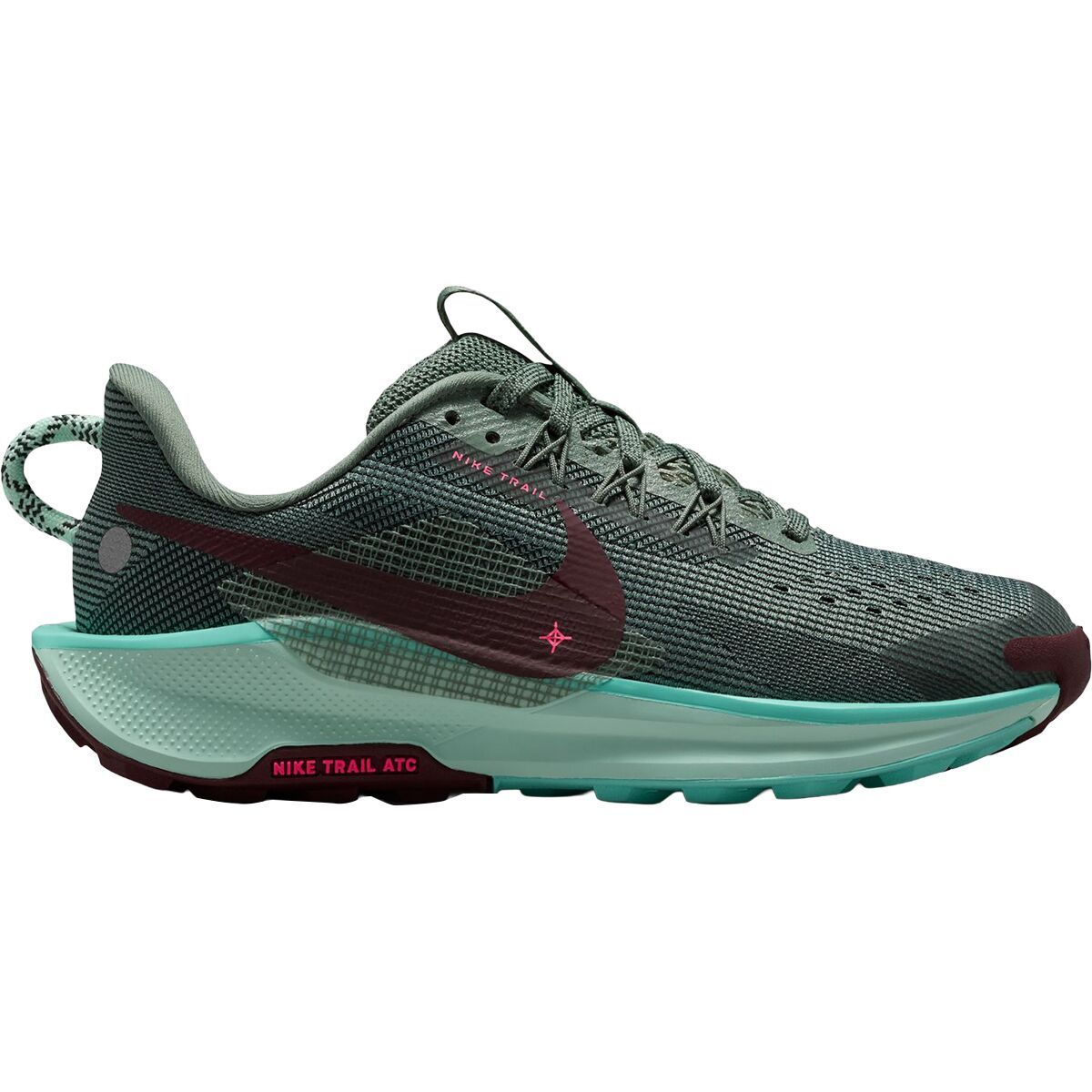
Nike Pegasus Trail 5
Our go-to trail-capable training shoe. React foam + sticky outsole.