Watts to Calories Calculator
Convert cycling power output (watts) to calories burned with our precise calculator. Perfect for tracking energy expenditure during power-based training sessions.
Endure Weekly
Want to keep improving?
Get your free Zone 2 training guide plus one short training email each Wednesday.
Free. No spam. Unsubscribe anytime.
Understanding Watts to Calories Conversion
Converting cycling power output (watts) to calories burned is essential for understanding energy expenditure during training and racing. This conversion helps cyclists track their energy balance, plan nutrition strategies, and monitor training load.
How Power-Based Calorie Calculation Works
The relationship between power output and calorie burn depends on several factors:
- Mechanical Efficiency: Typically 20-25% for most cyclists
- Body Weight: Heavier riders burn more calories at the same power
- Duration: Total energy expenditure over time
- Metabolic Rate: Individual differences in energy conversion
Basic Conversion Formula
The fundamental equation for converting watts to calories is:
Calories = (Watts × Time in seconds × 4.184) / (Efficiency × 4184)
This can be simplified to approximately 1 watt for 1 hour = 3.6 calories at 23% efficiency.
Power Training Applications
- Nutrition Planning: Match calorie intake to expenditure
- Weight Management: Track energy balance for body composition goals
- Recovery Planning: Understand metabolic stress from training
- Race Strategy: Plan fueling based on expected power output
Factors Affecting Accuracy
Several factors can influence the accuracy of watts-to-calories conversion:
- Individual Efficiency: Varies from 18-27% between individuals
- Training Status: Trained athletes tend to be more efficient
- Power Meter Accuracy: Quality of power measurement affects results
- Environmental Conditions: Heat and altitude can affect metabolism
Normalized Power vs Average Power
For variable intensity rides, Normalized Power (NP) provides a more accurate representation of physiological stress than average power. NP accounts for the non-linear relationship between power output and physiological cost.
Practical Applications
Use this calculator for:
- Training Load Monitoring: Track weekly calorie expenditure from cycling
- Fueling Strategy: Plan nutrition for long rides and races
- Recovery Assessment: Understand metabolic cost of different sessions
- Performance Analysis: Compare efficiency across different conditions
Efficiency Benchmarks
Typical efficiency ranges by cycling level:
- Recreational: 20-22%
- Trained Amateur: 22-24%
- Competitive: 23-25%
- Elite/Professional: 24-27%
Integration with Training Software
Most training platforms use similar calculations but may apply different efficiency factors. Understanding these calculations helps you interpret data from TrainingPeaks, Strava, WKO, and other platforms.
For the most accurate results, consider using a consistent efficiency factor across all your calculations and validate against measured metabolic testing when possible.
The gear these numbers assume
Every pace, zone and power figure on this page assumes something is measuring it. These are the three that cover running, cycling and the threshold work in between.
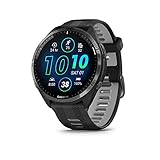 Garmin Forerunner 965
Multisport with the training-load and threshold metrics most of these calculations assume you can actually see day to day.
Check Backcountry → Check price on Amazon → COROS APEX 2 Series GPS Watch
Sapphire titanium and the longest battery in its class, which is the deciding feature once sessions run past a few hours.
Check Backcountry → Check price on Amazon → Favero Assioma Uno Power Meter Pedal
Single-sided pedal power, the cheapest honest way to start training with watts instead of estimating from heart rate.
Check Backcountry → Check price on Amazon →As an Amazon Associate we earn from qualifying purchases, at no extra cost to you. Prices change, so check before buying.
📚 Understand Energy Expenditure
Learn how power output relates to calorie burn and training
Cycling for Weight Loss
Use power-based calorie tracking for weight loss.
FTP Training Guide
Understand energy demands of FTP training.
Zone 2 Training
Optimize fat burning with power-based Zone 2 training.
Power-to-Weight Ratio
Balance power output with body weight for performance.
🗺️ Explore the Cycling Power Training Hub
Access all related calculators, guides, and training plans in one place.