Cut your chain to the exact right length.
Park Tool's big-big formula for any road, gravel, or mountain drivetrain — 1x, 2x, 3x, with automatic adjustment for clutch derailleurs and SRAM AXS Eagle.
2·(chainstay in inches) + (big chainring ÷ 4) + (big cog ÷ 4) + 1 — round up to the nearest even number. Add 2 for clutch, 4 for SRAM AXS Eagle.Drivetrain details
Step 01BB center to rear axle. Road 405–425 mm · Gravel 420–435 · MTB 420–450.
Endure Weekly
Want to keep improving?
Get your free Zone 2 training guide plus one short training email each Wednesday.
Free. No spam. Unsubscribe anytime.
Featured at Backcountry — 15% off first order
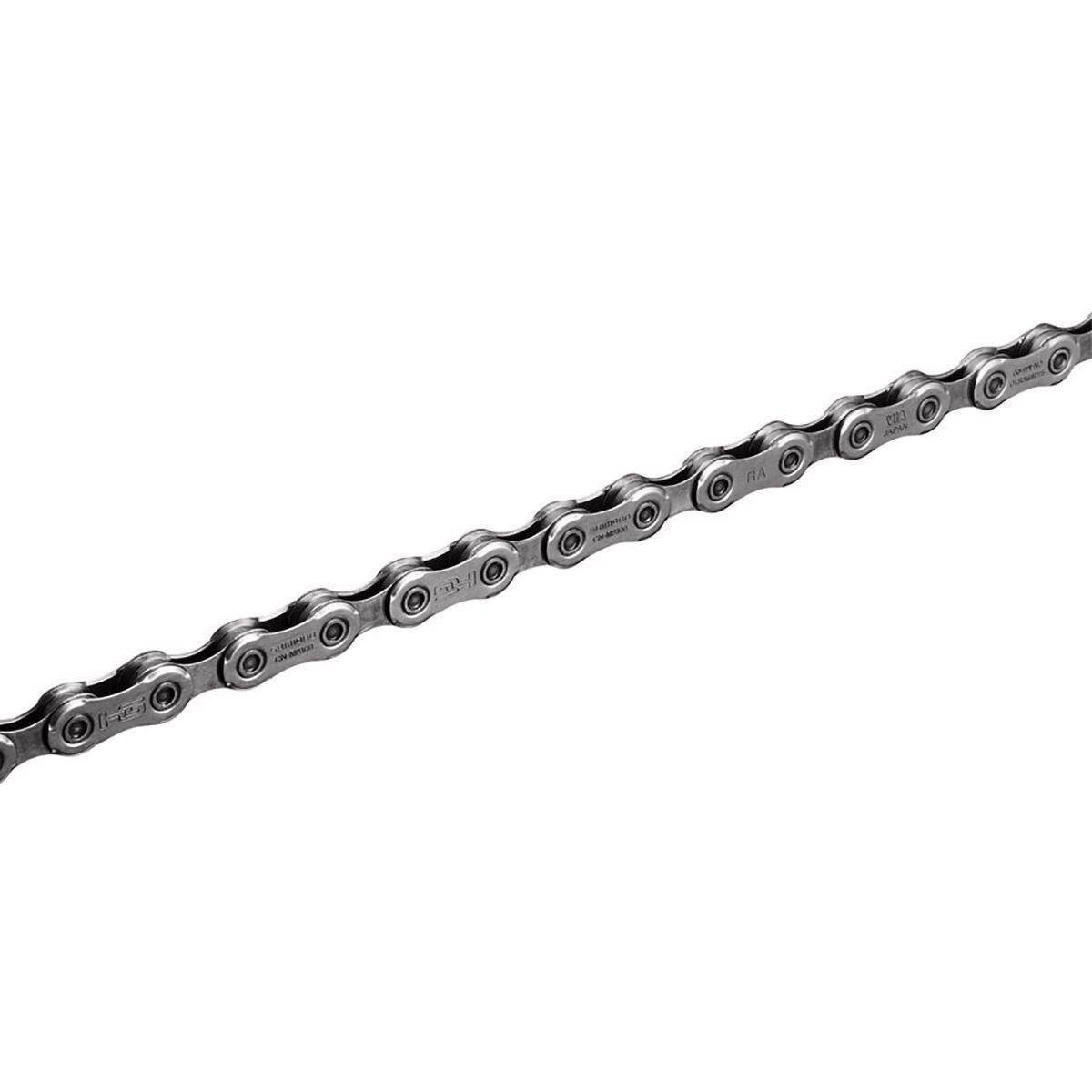
Shimano XT / Ultegra CN-M8100 Chain
12-speed, 138 links — the universal Shimano chain for modern Ultegra/105 road setups and XT/SLX mountain drivetrains. HYPERGLIDE+ for smooth shifts under load. Silver finish.
The Park Tool chain length formula
The industry-standard method for sizing a bike chain is the Park Tool formula, which sizes to the worst-case "big-big" combination (largest chainring + largest cog):
Links = 2 × (chainstay in inches) + (largest ring ÷ 4) + (largest cog ÷ 4) + 1
Round up to the nearest even number — chains only connect at full links. For clutch derailleurs, add 2 links for tensioner clearance. SRAM 1x Eagle typically needs 4 extra links.
Why big-big sizing matters
The big-big combination puts the most chain tension on your derailleur cage. If the chain is too short, you can damage the derailleur or snap a chain when shifting into that gear. If the chain is too long, the derailleur cage collapses and can slap the chainstay in the small-small combo.
The rule: sized for big-big with correct tension, then verify small-small doesn't cause a slack, derailleur-sagging situation. A correctly sized chain should have the derailleur cage in a roughly vertical position when in the middle of the cassette on the big ring.
Common drivetrain examples
- Road 52/36 with 11-30 cassette, 420 mm chainstay: 56 links
- Gravel 46/30 with 11-36 cassette, 425 mm chainstay: 56 links
- Gravel 1x 42T with 10-44 cassette, 430 mm chainstay: 54 links (+2 for clutch = 56)
- MTB 1x 32T with 10-52 Eagle, 437 mm chainstay: 54 links (+4 for AXS = 58)
- Touring 3x 48/36/26 with 11-34, 440 mm chainstay: 58 links
How to measure your chainstay
Measure from the center of the bottom bracket axle to the center of the rear dropout (where the axle sits). Use calipers or a steel ruler. On most road and gravel bikes this lands between 400-435 mm. Mountain bikes range from 420 mm (XC) to 460+ mm (enduro). Manufacturers publish chainstay length on the geometry chart.
Frequently Asked Questions
5 QuestionsWhat if the calculator gives an odd number?
Round up to the nearest even number. Standard half-pitch chains can only be connected at full inner/outer link pairs, so the final count is always even.
Do I need to add links for a clutch derailleur?
Usually yes. Clutch derailleurs (Shimano GRX RX, XTR, SRAM Force/GX Type 2) need +2 links. SRAM Eagle 1x mountain drivetrains can need +4. Always double-check the derailleur manual.
Can I use this calculator for an eMTB?
Yes. Use the motor's output sprocket as the chainring input, and measure the chainstay from the motor axle (not the BB — eMTBs offset the BB forward). Most eMTB chains are sized the same way as regular MTBs.
What tools do I need to cut a chain?
A chain breaker (Park Tool CT-3.3 or similar) and a chain-keeper stand. For modern 11-12 speed chains, use a quick-link (KMC or Wippermann) rather than re-pressing a pin.
Is there a way to size chain without math?
Yes — the wrap-around method: wrap the new chain through big ring and big cog (skipping the derailleur), add 2 links, then cut. This gives the same result as the formula for most drivetrains. Use the calculator when you're ordering chain online and need the number in advance.