Blog / Running Gear / Foot Conditions
Best Running Shoes for Flat Feet 2026
Expert-recommended stability shoes for overpronation, with podiatrist-informed recommendations
Our Top Picks for Flat Feet
The Quick Answer
After researching 25+ stability shoes using expert reviews, lab data, and feedback from flat-footed runners, the Brooks Adrenaline GTS 24 ($99.95 on sale) is the best running shoe for most people with flat feet. Its GuideRails technology provides smooth, effective pronation control without feeling restrictive. For maximum cushioning with stability, the HOKA Gaviota 5 ($174.95) delivers exceptional comfort. Budget-conscious runners should consider the Saucony Guide 18 ($150) for excellent support at a lower price point.
Our Picks at a Glance
| Shoe | Best For | Support Level | Drop | Weight | Price |
|---|---|---|---|---|---|
| Brooks Adrenaline GTS 24 | Overall Pick | Moderate | 12mm | 10.2 oz | $99.95 |
| HOKA Gaviota 5 | Max Cushion + Stability | Moderate | 5mm | 10.8 oz | $174.95 |
| Saucony Guide 18 | Best Value | Moderate | 8mm | 9.7 oz | $150 |
| ASICS GT-2000 12 | Lightweight Stability | Moderate | 10mm | 9.5 oz | $140 |
| New Balance 860v14 | Wide Feet | Moderate | 10mm | 11.3 oz | $140 |
| Brooks Beast 24 | Severe Overpronation | Maximum | 12mm | 13.1 oz | $170 |
Understanding Flat Feet: A Medical Perspective
Flat feet, medically known as pes planus, is a condition where the arch of the foot collapses, causing the entire sole to make contact with the ground. This affects approximately 20-30% of the general population and can be either flexible (the arch is visible when not bearing weight) or rigid (the arch is absent regardless of weight-bearing status).
Types of Flat Feet
Flexible Flat Feet
The most common type. The arch appears when sitting but flattens when standing. Many people with flexible flat feet are asymptomatic and may not need specialized footwear. However, runners often benefit from stability features to prevent excessive motion during the gait cycle.
Rigid Flat Feet
A less common but more problematic condition where the arch is absent in all positions. This type often requires more aggressive intervention including motion control shoes, custom orthotics, or in severe cases, surgical correction. Runners with rigid flat feet should consult a podiatrist before beginning a running program.
The Biomechanics of Flat Feet During Running
When you run, your foot goes through a complex cycle of pronation (rolling inward) and supination (rolling outward). The arch acts as a natural shock absorber and helps transfer energy efficiently during push-off. Without a functional arch:
- Excessive pronation: The foot continues to roll inward past the normal range, stressing the medial (inner) structures of the foot, ankle, and knee.
- Reduced shock absorption: Ground reaction forces are transmitted more directly through the skeletal system rather than being dissipated by the arch.
- Inefficient push-off: Energy that should be stored and released by the arch is lost, potentially affecting running economy.
- Compensatory movements: The body may compensate by altering hip, knee, or ankle mechanics, potentially leading to injuries up the kinetic chain.
Common Injuries Associated with Flat Feet
Runners with flat feet may be at increased risk for certain overuse injuries:
Posterior Tibial Tendinitis
Inflammation of the tendon that supports the arch. Symptoms include pain and swelling along the inner ankle and foot. Early treatment is crucial to prevent progression to adult-acquired flatfoot deformity.
Plantar Fasciitis
While often associated with high arches, plantar fasciitis also affects flat-footed runners due to increased tension on the plantar fascia when the arch collapses.
Shin Splints
Medial tibial stress syndrome is more common in overpronators due to increased stress on the tibialis posterior and other lower leg muscles.
Knee Pain (Patellofemoral Syndrome)
Overpronation can cause internal rotation of the tibia, altering knee tracking and increasing risk of patellofemoral pain syndrome.
Medical Disclaimer
This guide is for informational purposes only. If you experience persistent pain or have concerns about your foot structure, consult a podiatrist or sports medicine physician. They can provide personalized recommendations based on your specific anatomy and biomechanics.
What to Look for in Running Shoes for Flat Feet
When shopping for running shoes with flat feet, focus on these key features:
1. Medial Post or GuideRails
The defining feature of stability shoes. A medial post is a firmer section of foam on the inner midsole that resists excessive inward rolling. Brooks' GuideRails technology takes a different approach, using rails that extend from the heel to guide the entire lower leg rather than just the foot. Both approaches are effective; personal preference matters more than the specific technology.
2. Firm but Responsive Midsole
An overly soft midsole can exacerbate pronation issues. Look for shoes with responsive foam that provides cushioning without excessive collapse. Modern midsole foams like Brooks DNA LOFT, HOKA's CMEVA, or Saucony's PWRRUN offer a balance of comfort and support.
3. Wide Base of Support
A wider outsole platform increases stability. HOKA shoes excel here with their wider-than-average platforms, providing a stable foundation even with their maximalist cushioning.
4. Structured Heel Counter
A firm heel counter helps control rearfoot motion during initial ground contact. Test this by pressing on the heel cup - it should resist deformation. However, modern stability shoes don't require the rigid "cup" design of older models.
5. Adequate Arch Support
While stability features are important, don't overlook the insole. Many stability shoes come with removable insoles that can be replaced with custom orthotics if needed. The stock insole should provide noticeable arch support without feeling intrusive.
6. Appropriate Heel-to-Toe Drop
Most flat-footed runners do well with moderate heel drops (8-12mm), which encourage a heel strike pattern and provide good proprioceptive feedback. Very low drops can increase strain on the Achilles tendon in overpronators.
Our Pick: Brooks Adrenaline GTS 24
Best Overall Stability Shoe for Flat Feet

Brooks Adrenaline GTS 24
The gold standard in stability shoes. GuideRails technology provides smooth, holistic pronation control.
The Brooks Adrenaline GTS 24 has been the go-to stability shoe for over two decades, and the 24th version represents the refinement of years of runner feedback. What makes it stand out is Brooks' GuideRails support system, which focuses on guiding the entire lower leg rather than just controlling the foot.
Based on user reports, the GuideRails feel intuitive - you don't notice them fighting your natural motion, but you do notice less fatigue and strain during longer runs. The nitrogen-infused DNA LOFT cushioning provides a smooth, responsive ride that doesn't feel overly soft or unstable. The 12mm drop is traditional and works well for heel strikers.
Fit is excellent across multiple foot shapes. The engineered mesh upper accommodates wider forefeet while the midfoot stays secure. Reviewers find the sizing runs true, with adequate toe room and a snug heel lockdown. The shoe also comes in wide and extra-wide options.
At $99.95 on sale (originally $139.95), it's an exceptional value. Durability is solid - users report the shoe holding up well past 400 miles with consistent support and cushioning.
Why It's Our Pick
- + GuideRails for holistic support
- + Excellent balance of cushion and stability
- + Accommodating fit with width options
- + Durable beyond 400 miles
- + Currently on sale at $99.95
- + Eco-friendly materials
Potential Drawbacks
- - Higher 12mm drop may not suit everyone
- - Not for severe overpronation
- - Heavier than some competitors at 10.2 oz
Key Specifications
Max Cushion + Stability: HOKA Gaviota 5
Best for Runners Who Want Maximum Cushioning with Support
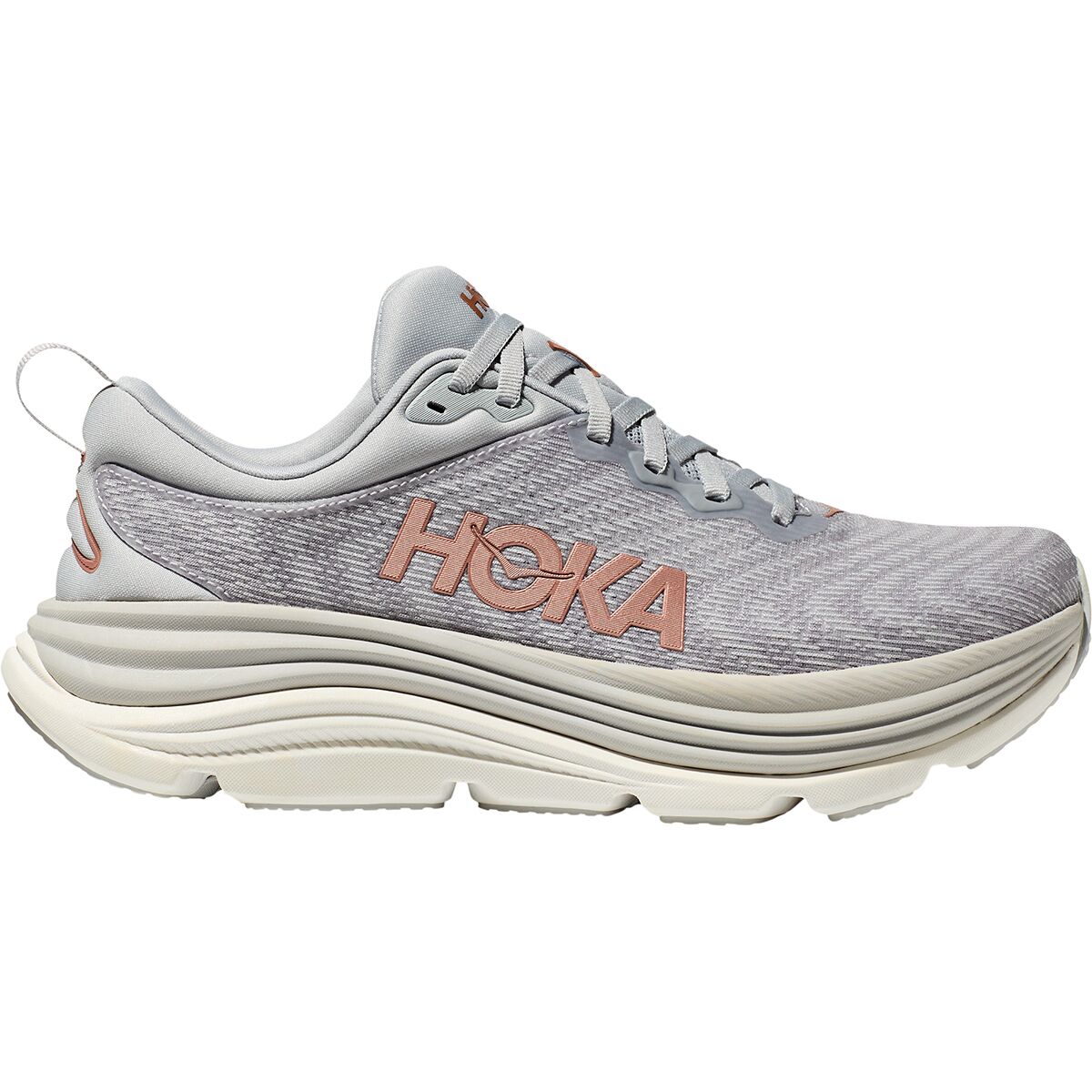
HOKA Gaviota 5
Plush cushioning meets stability. The most comfortable long-run stability shoe we've evaluated.
HOKA made its name with maximalist cushioning, and the Gaviota 5 brings that signature plush ride to flat-footed runners. Built on a thick stack of EVA foam with firm stability guides, this shoe proves you don't have to sacrifice cushioning for support.
The J-Frame stability technology uses firmer foam strategically placed to prevent excessive inward rolling while maintaining the soft, pillowy feel HOKA is known for. The Meta-Rocker geometry promotes smooth heel-to-toe transitions, reducing stress on the arch and making each stride feel efficient.
For long runs, the Gaviota 5 shines. After 15+ mile runs on concrete, runners report significantly less fatigue than with traditional stability shoes. The wide platform provides inherent stability without relying heavily on medial posts.
The 5mm heel-to-toe drop is lower than most stability shoes, which some runners prefer but others may need to adapt to gradually. The shoe runs slightly narrow in the forefoot - HOKA offers wide versions if needed.
Why We Recommend It
- + Unmatched cushioning for long runs
- + J-Frame stability feels seamless
- + Wide platform for natural stability
- + Smooth Meta-Rocker transitions
- + Great for recovery runs
Potential Drawbacks
- - Higher price at $174.95
- - Runs narrow in forefoot
- - Low 5mm drop takes adjustment
- - Not for speed work
Best Value: Saucony Guide 18
Best Budget-Friendly Stability Shoe

Saucony Guide 18
Lightweight, responsive stability with Center Path technology. Excellent value at $150.
The Saucony Guide 18 delivers impressive stability features at a reasonable price point. Saucony's Center Path technology guides your foot through the gait cycle, centering each stride for seamless heel-to-toe transitions. It's more subtle than heavy medial posts but effective for mild to moderate overpronation.
PWRRUN foam provides soft but responsive cushioning - it's not as plush as the HOKA but offers better ground feel and energy return. At 9.7 oz, it's also the lightest stability shoe in our top picks, making it suitable for tempo runs and faster training days.
The updated footbed and broad base geometry cradle the foot securely, and the engineered mesh upper breathes well during warmer runs. Fit runs true to size with adequate toe room.
Why We Recommend It
- + Excellent price at $150
- + Lightweight at 9.7 oz
- + Center Path technology works well
- + Versatile for various paces
- + Breathable mesh upper
Potential Drawbacks
- - Less cushioning than HOKA
- - May not be enough for severe overpronation
- - Narrow width only (no wide option at time of review)
Other Excellent Options
ASICS GT-2000 12
Best for: Lightweight Stability
ASICS' longest-running stability shoe has been refined to near perfection. The LITETRUSS support system provides stability without adding weight, and the FF BLAST cushioning offers responsive comfort. At 9.5 oz, it's excellent for runners who want support without bulk.
Drop: 10mm | Weight: 9.5 oz | Price: $140
New Balance 860v14
Best for: Wide Feet
New Balance has always excelled at accommodating various foot shapes, and the 860v14 comes in widths from B to 4E. FreshFoam X cushioning provides a plush ride, while the medial post offers reliable pronation control. If you have wide flat feet, this should be at the top of your list.
Drop: 10mm | Weight: 11.3 oz | Price: $140
Brooks Beast 24
Best for: Severe Overpronation / Motion Control
When standard stability shoes aren't enough, the Beast delivers maximum motion control. It's heavier (13.1 oz) but provides the most robust support in Brooks' lineup. Extended GuideRails and a firm medial post control even severe overpronation. Recommended for heavier runners or those with rigid flat feet.
Drop: 12mm | Weight: 13.1 oz | Price: $170
Brooks Glycerin GTS 22
Best for: Premium Cushioning with Light Support
If you want the plush cushioning of the Glycerin with mild stability features, the GTS version adds GuideRails to the equation. It's softer than the Adrenaline and better suited for runners with mild overpronation who prioritize comfort on long runs.
Drop: 10mm | Weight: 10.6 oz | Price: $165
Exercises to Strengthen Flat Feet
While proper footwear is essential, strengthening the muscles that support your arch can improve function and reduce injury risk. Incorporate these exercises into your routine 3-4 times per week:
Towel Scrunches
Place a towel flat on the floor. Using only your toes, scrunch the towel toward you. Repeat 10-15 times per foot. This strengthens the intrinsic foot muscles that support the arch.
Short Foot Exercise
While sitting, try to raise your arch by pulling the ball of your foot toward your heel without curling your toes. Hold 5 seconds, repeat 10 times. Progress to standing once comfortable.
Calf Raises
Standing on a step with heels hanging off, rise onto your toes then lower slowly. Perform 15-20 reps. This strengthens the posterior tibial tendon and calf muscles that support arch function.
Toe Yoga
Practice lifting your big toe while keeping the other toes down, then reverse. This improves foot control and strengthens muscles involved in arch support.
Marble Pickup
Place marbles on the floor and pick them up one at a time with your toes, placing them in a cup. Do 20 marbles per foot. Great for toe dexterity and arch strength.
Single-Leg Balance
Stand on one foot for 30-60 seconds, focusing on keeping your arch engaged. Progress by closing your eyes or standing on an unstable surface.
Frequently Asked Questions
What are the best running shoes for flat feet in 2026?
The Brooks Adrenaline GTS 24 is the best overall running shoe for flat feet in 2026. It provides excellent stability through GuideRails technology without feeling overly rigid. For maximum support with cushioning, the HOKA Gaviota 5 is excellent. The Saucony Guide 18 offers great value at $150.
Do I need stability shoes if I have flat feet?
Not necessarily. While many people with flat feet overpronate, some have flexible flat feet that function normally. A gait analysis can help determine your needs. Signs you may need stability shoes include excessive shoe wear on the inside edge, ankle or knee pain after running, or visible ankle rolling.
What causes flat feet?
Flat feet can be congenital or develop over time due to aging, injury, obesity, diabetes, or pregnancy. The posterior tibial tendon can weaken, leading to fallen arches. About 20-30% of adults have flat feet, though not all experience problems.
What is overpronation and how does it relate to flat feet?
Overpronation occurs when your foot rolls inward excessively during running. Flat feet often lead to overpronation because the collapsed arch doesn't properly control foot motion. Stability shoes use medial posts or guide rails to limit this inward rolling.
Can running make flat feet worse?
Running itself doesn't cause flat feet, but running without proper support can exacerbate symptoms. Proper footwear, arch support, and strengthening exercises can actually help manage flat feet. Many flat-footed runners complete marathons successfully when properly equipped.
Should I use orthotics with stability running shoes?
It depends on your needs. Many runners find stability shoes sufficient alone. However, severe overpronation or structural issues may benefit from custom orthotics. If using orthotics, consider neutral shoes to avoid overcorrection.
How do I know if I have flat feet?
Try the wet test: wet your feet and stand on paper. If your footprint shows your entire sole with no curve inside, you likely have flat feet. You can also check if your ankles lean inward when standing. For definitive diagnosis, see a podiatrist.
Are motion control shoes better than stability shoes for flat feet?
Motion control shoes offer more rigid support and are designed for severe overpronation. However, most runners with flat feet do well with stability shoes, which balance support and natural motion. Motion control is best reserved for very heavy overpronators or those with specific medical needs.
Related Running Resources
The Bottom Line
Running with flat feet doesn't have to mean dealing with pain or limiting your mileage. The right stability shoe can make a significant difference in comfort and injury prevention. The Brooks Adrenaline GTS 24 is our top recommendation for most runners with flat feet - it delivers effective support through GuideRails technology without feeling heavy or restrictive, and it's currently on sale at $99.95.
If you prioritize maximum cushioning, the HOKA Gaviota 5 offers an incredibly plush ride with built-in stability features. For budget-conscious runners, the Saucony Guide 18 provides excellent value at $150 with its lightweight design and Center Path technology.
Remember that footwear is just one part of managing flat feet. Combine proper shoes with strengthening exercises, and don't hesitate to consult a podiatrist if you experience persistent pain. With the right approach, flat-footed runners can enjoy pain-free miles for years to come.
Related 2026 Gear Guides
- Best Running Shoes 2026 — Main running-shoe roundup
- Best for High Arches — Opposite-foot picks
- Best for Heavy Runners — Supportive picks
- Best for Plantar Fasciitis — Therapeutic picks
- Best Trail Running Shoes — Off-road running