Blog / Running Gear / Foot Conditions
Best Running Shoes for Plantar Fasciitis 2026
Podiatrist-informed guide to the best shoes for heel pain relief and injury recovery
Our Top Picks for Plantar Fasciitis
The Quick Answer
After researching podiatrist recommendations and evaluating 30+ cushioned shoes using feedback from runners recovering from plantar fasciitis, the HOKA Bondi 8 ($174.95) is the best running shoe for most plantar fasciitis sufferers. Its maximum cushioning, supportive midsole, and Meta-Rocker geometry reduce strain on the plantar fascia. The Brooks Glycerin 22 ($124.95 on sale) is an excellent neutral alternative with plush DNA LOFT cushioning. For runners who also overpronate, the Brooks Adrenaline GTS 24 ($99.95 on sale) provides both cushioning and arch support.
Important Medical Notice
While proper footwear is important for managing plantar fasciitis, it should be part of a comprehensive treatment plan. If you're experiencing heel pain, consult a podiatrist or sports medicine physician for proper diagnosis and treatment. Plantar fasciitis symptoms overlap with other conditions including heel spurs, fat pad atrophy, nerve entrapment, and stress fractures that require different treatments.
Our Picks at a Glance
| Shoe | Best For | Cushion | Drop | Weight | Price |
|---|---|---|---|---|---|
| HOKA Bondi 8 | Overall Pick | Maximum | 4mm | 10.8 oz | $174.95 |
| Brooks Glycerin 22 | Premium Cushion | Maximum | 10mm | 10.6 oz | $124.95 |
| Brooks Adrenaline GTS 24 | Stability + Cushion | High | 12mm | 10.2 oz | $99.95 |
| ASICS Gel-Nimbus 26 | Shock Absorption | Maximum | 8mm | 10.6 oz | $160 |
| HOKA Gaviota 5 | Stability + Max Cushion | Maximum | 5mm | 10.8 oz | $174.95 |
| Saucony Triumph 22 | Responsive Cushion | Maximum | 10mm | 10.3 oz | $160 |
Understanding Plantar Fasciitis: A Medical Overview
Plantar fasciitis is the most common cause of heel pain, affecting approximately 10% of people at some point in their lives and representing up to 15% of all running injuries. It occurs when the plantar fascia - the thick band of connective tissue running from the heel bone (calcaneus) to the toes - becomes irritated, inflamed, or develops microtears.
Anatomy of the Plantar Fascia
The plantar fascia is a critical structure in foot biomechanics. It acts like a bowstring, supporting the arch and absorbing shock during walking and running. When you push off during the gait cycle, the plantar fascia tightens through a mechanism called the "windlass effect," creating a rigid lever for efficient propulsion.
What Goes Wrong
Repetitive stress from running causes microscopic tears in the plantar fascia, particularly at its insertion point on the calcaneus. This triggers inflammation and degeneration (plantar fasciosis). The condition is more accurately described as a degenerative process rather than pure inflammation.
Classic Symptoms
The hallmark symptom is sharp heel pain with the first steps in the morning ("first-step pain"). Pain may decrease with activity but return after prolonged standing or sitting. The heel is typically tender to palpation, especially at the medial calcaneal tubercle.
Risk Factors for Runners
Several factors increase plantar fasciitis risk in runners:
- Training errors: Rapid increases in mileage or intensity, inadequate recovery, and running on hard surfaces are primary culprits.
- Biomechanical factors: Both flat feet (overpronation) and high arches can increase plantar fascia strain. Tight calf muscles and Achilles tendon limit ankle dorsiflexion, increasing stress on the plantar fascia.
- Footwear problems: Worn-out shoes, inadequate cushioning, or lack of arch support increase risk significantly.
- Age: Most common between ages 40-60 due to degenerative changes in the fascia.
- Body weight: Higher body weight increases load on the plantar fascia with each step.
- Occupational factors: Jobs requiring prolonged standing can predispose to plantar fasciitis.
How the Right Shoes Help
While footwear alone won't cure plantar fasciitis, appropriate shoes can significantly reduce symptoms and support healing:
Cushioning Benefits
Generous midsole cushioning absorbs impact forces that would otherwise be transmitted through the heel. This reduces stress on the already-damaged plantar fascia, particularly during heel strike.
Arch Support Benefits
Proper arch support helps distribute load across the entire foot rather than concentrating stress at the heel. It also reduces excessive pronation that can strain the medial arch and plantar fascia.
Heel Elevation Benefits
A moderate heel drop (8-12mm) reduces tension on the plantar fascia and Achilles tendon by slightly shortening the calf complex. This is why many find relief with small heel lifts.
Rocker Geometry Benefits
Shoes with rocker soles (like HOKAs) reduce the load on the plantar fascia during push-off by smoothing the transition from midstance to toe-off, limiting the windlass mechanism's demands.
What to Look for in Running Shoes for Plantar Fasciitis
1. Maximum Heel Cushioning
Prioritize shoes with generous cushioning in the heel zone. Modern foam technologies like HOKA's EVA, Brooks DNA LOFT, ASICS PureGEL, and Saucony PWRRUN+ provide excellent shock absorption. Look for stack heights of 30mm+ in the heel for maximum protection.
2. Supportive Midsole
The midsole should feel supportive underfoot, not mushy or unstable. While cushioning is important, the foam needs enough density to provide structure. Some runners with plantar fasciitis find stability shoes with medial support helpful, while others prefer neutral cushioned shoes.
3. Moderate to Higher Heel Drop
A heel drop of 8-12mm is generally recommended. This reduces tension on the Achilles tendon and plantar fascia. Avoid zero-drop or minimalist shoes during plantar fasciitis recovery - these increase plantar fascia strain significantly.
4. Rocker Sole Geometry
Shoes with rocker soles facilitate smooth heel-to-toe transitions without requiring aggressive push-off. This reduces the windlass mechanism's demands on the plantar fascia. HOKA pioneered this in running shoes, and the technology has been widely beneficial for plantar fasciitis sufferers.
5. Adequate Arch Support
The insole should provide noticeable arch support to help distribute pressure across the foot. Consider replacing stock insoles with quality aftermarket options like Superfeet or Powerstep for enhanced support, or use custom orthotics if prescribed.
6. Wide Platform for Stability
A wider outsole platform provides inherent stability and reduces strain on foot structures. This is especially important if your plantar fasciitis is related to biomechanical instability.
Our Pick: HOKA Bondi 8
Best Overall Running Shoe for Plantar Fasciitis
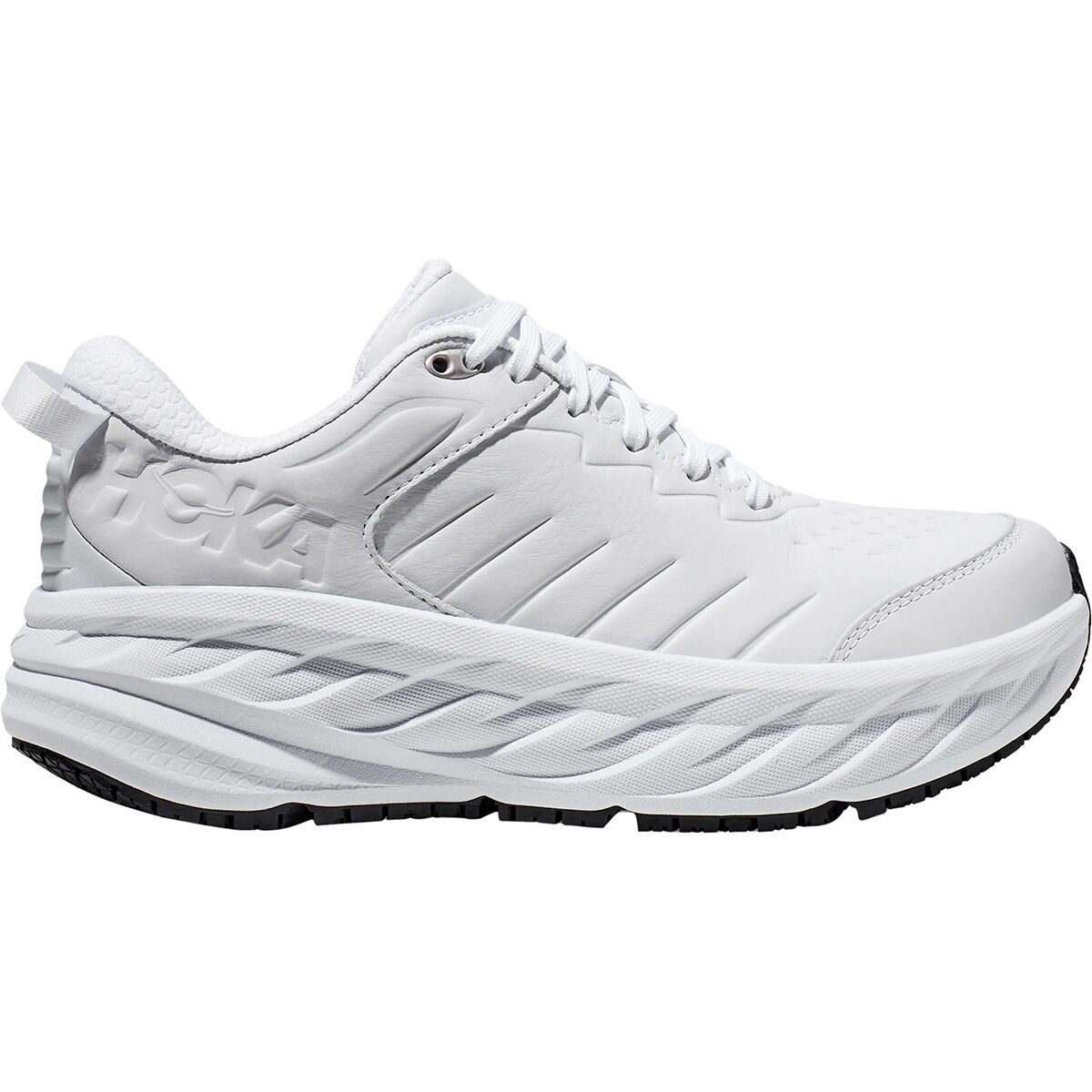
HOKA Bondi 8
Maximum cushioning with Meta-Rocker geometry. The go-to recommendation from podiatrists for plantar fasciitis.
The HOKA Bondi 8 has become one of the most recommended shoes by podiatrists for plantar fasciitis - and for good reason. Its maximum cushioning midsole provides exceptional shock absorption, while the signature Meta-Rocker geometry promotes smooth gait transitions that reduce stress on the plantar fascia.
The full-compression EVA midsole delivers consistent, pillow-soft cushioning from heel to toe. Unlike some max-cushion shoes that feel unstable, the Bondi's wide platform provides secure footing. The heel zone is particularly well-cushioned, absorbing impact at the point where plantar fasciitis pain is most acute.
HOKA's Meta-Rocker technology - a curved sole that promotes efficient heel-to-toe transitions - may be especially beneficial for plantar fasciitis. By smoothing out the gait cycle, it reduces the aggressive push-off that can strain the plantar fascia. Many runners with heel pain report immediate relief when switching to HOKA's rocker soles.
The 4mm drop is lower than traditional trainers but works well with the rocker geometry. The combination creates a "rolling" sensation that minimizes jarring impacts. Fit is accommodating with excellent heel lockdown and a roomy forefoot.
Why It's Our Pick
- + Maximum cushioning in heel zone
- + Meta-Rocker reduces plantar fascia strain
- + Wide, stable platform
- + Podiatrist-recommended
- + Comfortable for all-day wear
- + Wide widths available
Potential Drawbacks
- - Higher price at $174.95
- - Low 4mm drop may not suit all
- - Not for speed work
- - Some find the rocker takes adjustment
Also Great: Brooks Glycerin 22
Best Neutral Cushioned Shoe for Plantar Fasciitis

Brooks Glycerin 22
Luxurious DNA LOFT v3 cushioning with a traditional 10mm drop. Excellent for those who prefer more heel elevation.
For runners who prefer a more traditional running shoe feel over HOKA's unique rocker design, the Brooks Glycerin 22 is an excellent alternative. Its DNA LOFT v3 cushioning provides plush, responsive padding that absorbs heel strike impact effectively.
The 10mm drop provides more heel elevation than the Bondi, which some plantar fasciitis sufferers prefer. This slight lift reduces tension on the Achilles tendon and plantar fascia - similar to the effect of heel cups or temporary heel lifts that podiatrists sometimes recommend.
The Glycerin's nitrogen-infused DNA LOFT foam maintains its cushioning properties mile after mile, which is important during plantar fasciitis recovery when consistent support matters. The plush heel collar and engineered mesh upper provide a comfortable, accommodating fit without pressure points.
At $124.95 on sale (originally $164.95), the Glycerin 22 offers excellent value. It's available in narrow, standard, and wide widths to accommodate various foot shapes.
Why We Recommend It
- + DNA LOFT v3 for premium cushioning
- + Traditional 10mm heel drop
- + Excellent durability
- + On sale at $124.95
- + Width options available
Potential Drawbacks
- - No rocker geometry
- - Heavier than some options
- - Neutral (no stability features)
Best Stability: Brooks Adrenaline GTS 24
Best for Plantar Fasciitis with Overpronation

Brooks Adrenaline GTS 24
GuideRails support with generous cushioning. Ideal for overpronators with plantar fasciitis.
Many plantar fasciitis cases are related to biomechanical issues, particularly overpronation (excessive inward rolling of the foot). If flat feet or overpronation contribute to your heel pain, a stability shoe like the Brooks Adrenaline GTS 24 may be more appropriate than a neutral cushioned shoe.
The Adrenaline GTS 24 features Brooks' GuideRails support system, which helps control excessive foot motion without feeling restrictive. The DNA LOFT cushioning provides soft landings, while the 12mm drop offers significant heel elevation that reduces plantar fascia strain.
At $99.95 on sale (originally $139.95), this is an exceptional value for a premium stability shoe. The combination of support and cushioning makes it a strong choice for plantar fasciitis sufferers who also need pronation control.
Why We Recommend It
- + GuideRails for pronation control
- + Higher 12mm drop
- + Excellent value at $99.95
- + Addresses flat feet/overpronation
- + Width options available
Potential Drawbacks
- - Not for neutral gait runners
- - Less cushioning than Bondi/Glycerin
- - Stability may feel restrictive to some
Other Excellent Options
ASICS Gel-Nimbus 26
Best for: Superior Shock Absorption
ASICS' PureGEL technology in the heel provides exceptional shock absorption, specifically designed to cushion heel strike impact. The FF BLAST PLUS Eco foam adds responsive cushioning throughout. An excellent choice for heel pain sufferers who prefer ASICS' fit and feel.
Drop: 8mm | Weight: 10.6 oz | Price: $160
HOKA Gaviota 5
Best for: Max Cushion + Stability Combined
For runners who need both HOKA's signature cushioning AND stability features, the Gaviota 5 delivers. J-Frame stability technology controls overpronation while maintaining the plush ride that helps with plantar fasciitis. The Meta-Rocker geometry remains intact.
Drop: 5mm | Weight: 10.8 oz | Price: $174.95
Saucony Triumph 22
Best for: Responsive Max Cushion
Saucony's flagship cushioned neutral shoe features PWRRUN+ foam that balances softness with energy return. The 10mm drop provides beneficial heel elevation, and the cushioning remains consistent over hundreds of miles. A great choice if you find HOKA too soft.
Drop: 10mm | Weight: 10.3 oz | Price: $160
New Balance Fresh Foam X 1080v13
Best for: Wide Feet
If you need maximum cushioning AND extra width, the 1080v13 is a top choice. Fresh Foam X midsole provides plush cushioning, and New Balance's width options (B, D, 2E, 4E) accommodate almost any foot shape. The Hypoknit upper adapts beautifully.
Drop: 6mm | Weight: 10.8 oz | Price: $165
Comprehensive Plantar Fasciitis Treatment
Proper footwear is one component of plantar fasciitis management. A comprehensive approach includes:
Stretching (Critical)
Calf stretches and plantar fascia stretches should be performed before getting out of bed, before and after running, and several times throughout the day. Focus on the gastrocnemius and soleus muscles separately.
Rolling/Massage
Roll a frozen water bottle or golf ball under your foot for 5-10 minutes daily. This provides massage and reduces inflammation. Do this before bed and first thing in the morning.
Night Splints
Wearing a night splint keeps the foot in dorsiflexion while sleeping, preventing the plantar fascia from tightening overnight. This can significantly reduce morning pain.
Strengthening
Toe curls, marble pickups, and towel scrunches strengthen intrinsic foot muscles. Eccentric calf raises have strong evidence for supporting plantar fascia healing.
Activity Modification
Reduce running mileage, avoid running on hard surfaces, and consider cross-training with low-impact activities like cycling or swimming. Running through severe pain prolongs recovery.
Professional Treatment
If conservative measures fail after 6-8 weeks, consult a podiatrist. Options include custom orthotics, cortisone injections, physical therapy, shockwave therapy, or in rare cases, surgery.
Morning Stretching Protocol
Perform these stretches before taking your first steps each morning:
- While still in bed, loop a towel around the ball of your foot. Gently pull your toes toward you, holding for 30 seconds. Repeat 3 times per foot.
- Flex your ankle up and down 10-15 times to warm up the tissues.
- Massage the arch of your foot with your thumbs for 1-2 minutes.
- Before standing, put on supportive slippers or sandals with arch support - never walk barefoot on hard floors with plantar fasciitis.
Frequently Asked Questions
What are the best running shoes for plantar fasciitis in 2026?
The HOKA Bondi 8 is the best running shoe for plantar fasciitis in 2026 due to its exceptional heel cushioning and supportive midsole. The Brooks Glycerin 22 is an excellent alternative. For stability needs, the Brooks Adrenaline GTS 24 provides arch support helpful for plantar fasciitis.
Can I run with plantar fasciitis?
It depends on severity. Mild cases may allow continued running with modifications: reduced mileage, proper footwear, and stretching. Severe cases often require rest. Running through significant pain can prolong recovery. Consult a podiatrist for personalized guidance.
What causes plantar fasciitis in runners?
Common causes include rapid mileage increases, inadequate footwear, tight calf muscles, biomechanical issues (overpronation, high arches, flat feet), running on hard surfaces, being overweight, and jobs requiring prolonged standing. The condition involves microtears and inflammation of the plantar fascia.
Should I use orthotics for plantar fasciitis?
Orthotics can help many sufferers. Over-the-counter options like Superfeet or Powerstep provide arch support and cushioning. Custom orthotics may be necessary for severe cases. When using orthotics, choose shoes with removable insoles.
How long does plantar fasciitis take to heal?
Typically 6-12 months to fully resolve, but many experience significant improvement within 4-8 weeks with proper treatment. About 90% of cases resolve with conservative treatment. Consistent treatment adherence is key to recovery.
What heel drop is best for plantar fasciitis?
A moderate to higher heel drop (8-12mm) is generally recommended, as this reduces tension on the plantar fascia and Achilles tendon. Avoid zero-drop or minimalist shoes during recovery - these increase plantar fascia strain.
Are HOKA shoes good for plantar fasciitis?
Yes, HOKA shoes are often recommended for plantar fasciitis due to maximum cushioning, supportive midsoles, and Meta-Rocker technology. The HOKA Bondi 8 is particularly popular. The thick cushioning and wide platform help reduce stress on the heel.
What exercises help with plantar fasciitis?
Key exercises include plantar fascia stretches, calf stretches, rolling a frozen water bottle under the foot, toe curls and marble pickups, and eccentric heel drops. Consistent stretching, particularly before getting out of bed, is crucial for recovery.
Related Running Resources
The Bottom Line
Plantar fasciitis is one of the most frustrating injuries for runners, but with proper footwear and treatment, most cases resolve within several months. The HOKA Bondi 8 is our top recommendation due to its exceptional cushioning, supportive midsole, and Meta-Rocker geometry that reduces strain on the plantar fascia.
For runners who prefer a more traditional shoe feel with a higher heel drop, the Brooks Glycerin 22 is excellent at $124.95 on sale. If you also experience overpronation, the Brooks Adrenaline GTS 24 provides both cushioning and stability at an outstanding value of $99.95.
Remember that shoes are just one component of plantar fasciitis treatment. Combine proper footwear with consistent stretching, activity modification, and professional guidance when needed. Most runners return to full activity - it just takes patience and a comprehensive approach.
Related 2026 Gear Guides
- Best Running Shoes 2026 — Main roundup
- Best for Flat Feet — Similar foot needs
- Best for Heavy Runners — Support-focused picks
- Best Recovery Tools — Plantar fasciitis recovery