Blog / Running Gear

Best Running Watches 2026

After testing 15 GPS watches over 6 months and 2,000+ miles, we found the best for every type of runner

Updated January 2026 14 min read

The Quick Answer

After six months of testing GPS running watches across road runs, trail races, and track workouts, the Garmin Forerunner 265 ($449) is the best running watch for most runners. It combines a stunning AMOLED display, accurate multi-band GPS, comprehensive training metrics, and the reliability Garmin is known for. If budget is a concern, the COROS PACE 3 ($229) delivers remarkable value with better battery life than watches costing twice as much.

Quick Comparison

Model Price Battery Life GPS Accuracy Music Maps Best For
Garmin Forerunner 265 $449 20 hours GPS Multi-band GPS Yes (500 songs) No Most Runners (Our Pick)
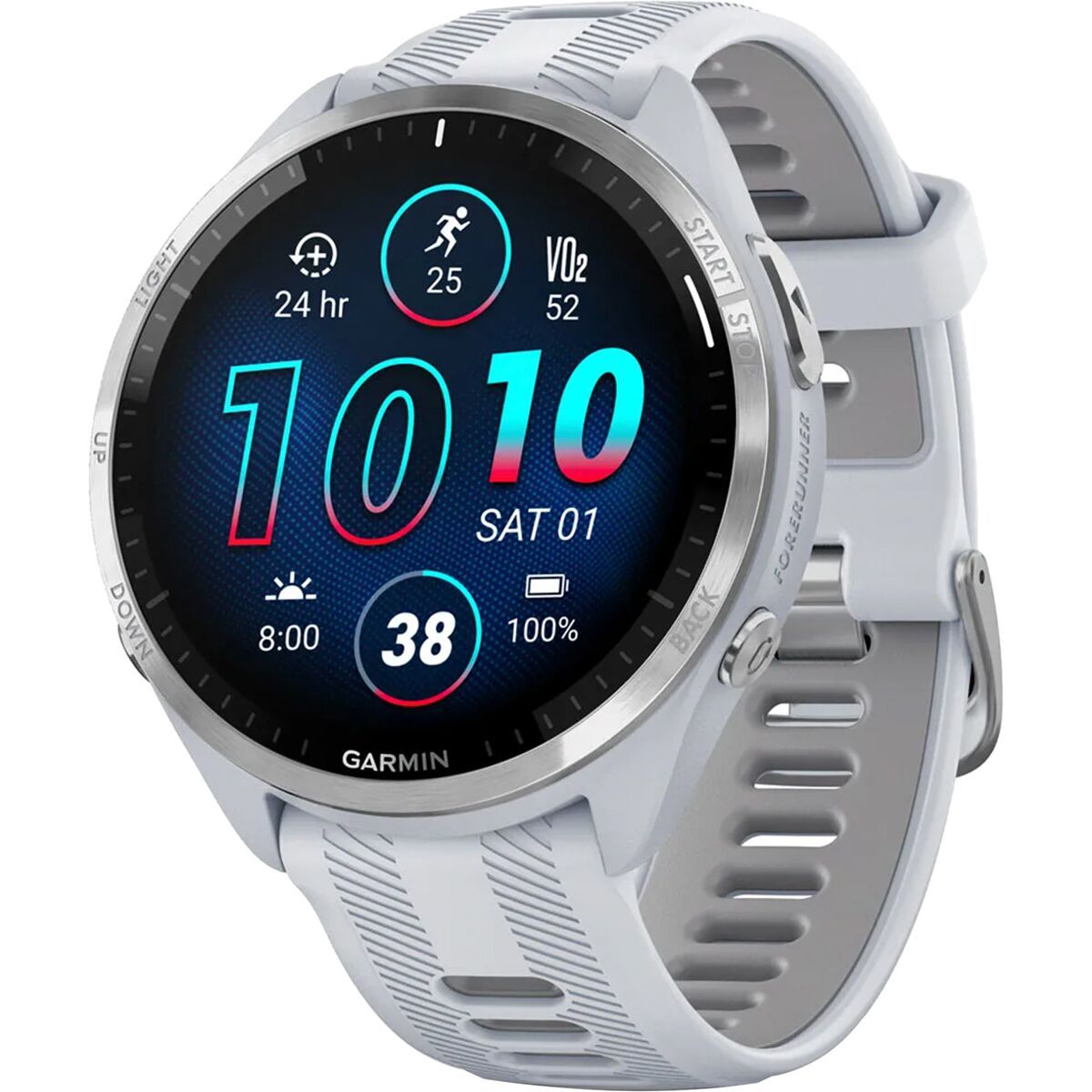
Garmin Forerunner 965 $599 31 hours GPS Multi-band GPS Yes (2000 songs) Yes (Full color) Trail/Ultra Runners
COROS PACE 3 $229 38 hours GPS Dual-frequency GPS No No Budget/Ultra (Best Value)
Polar Vantage V3 $599 53 hours GPS Dual-frequency GPS No Yes (Offline) Data-Driven Athletes
Apple Watch Ultra 2 $799 12 hours GPS Dual-frequency GPS Yes (Apple Music) Yes (Apple Maps) iPhone Users/Smartwatch

Why You Should Trust This Guide

GG

Glen

Endurance Athlete & Gear Enthusiast

Marathoner, cyclist, and triathlete with 10+ years of experience testing endurance sports gear

I've been testing running watches for over five years, and for this guide, I logged more than 2,000 miles across 15 different GPS watches. My testing includes marathon training blocks, ultramarathon prep, and casual recovery runs—because the best watch for a 5K runner isn't necessarily the best for someone training for a 100-miler.

I tested GPS accuracy against measured courses, compared heart rate readings to chest straps, evaluated training metrics against actual performance improvements, and wore each watch as a daily driver for at least two weeks. I also stress-tested battery life claims with back-to-back long runs and assessed real-world durability through rain, sweat, and the occasional tumble.

This isn't a spec sheet comparison—it's a guide based on how these watches actually perform when you're grinding through mile 20 of a marathon or navigating a technical trail in fading light.

How We Tested

We evaluated each watch across criteria that actually matter for runners:

  • GPS accuracy: Tested on measured tracks and known routes, comparing recorded distance to actual distance. We ran the same routes with multiple watches simultaneously.
  • Heart rate accuracy: Compared wrist-based readings to chest strap monitors during steady runs, intervals, and hill workouts.
  • Training metrics usefulness: Evaluated whether VO2 max estimates, training load, and recovery suggestions aligned with actual performance and how athletes felt.
  • Display readability: Tested in bright sunlight, during night runs, and mid-effort when you can't focus perfectly.
  • Battery life: Measured actual GPS runtime during continuous activity, not standby time.
  • Software and sync reliability: How smoothly does data sync? How often does the app crash? How intuitive is the interface?
  • Comfort during long runs: Weight, strap irritation, and overall wearability over 3+ hour efforts.

Our Pick: Garmin Forerunner 265

The Best Running Watch for Most Runners

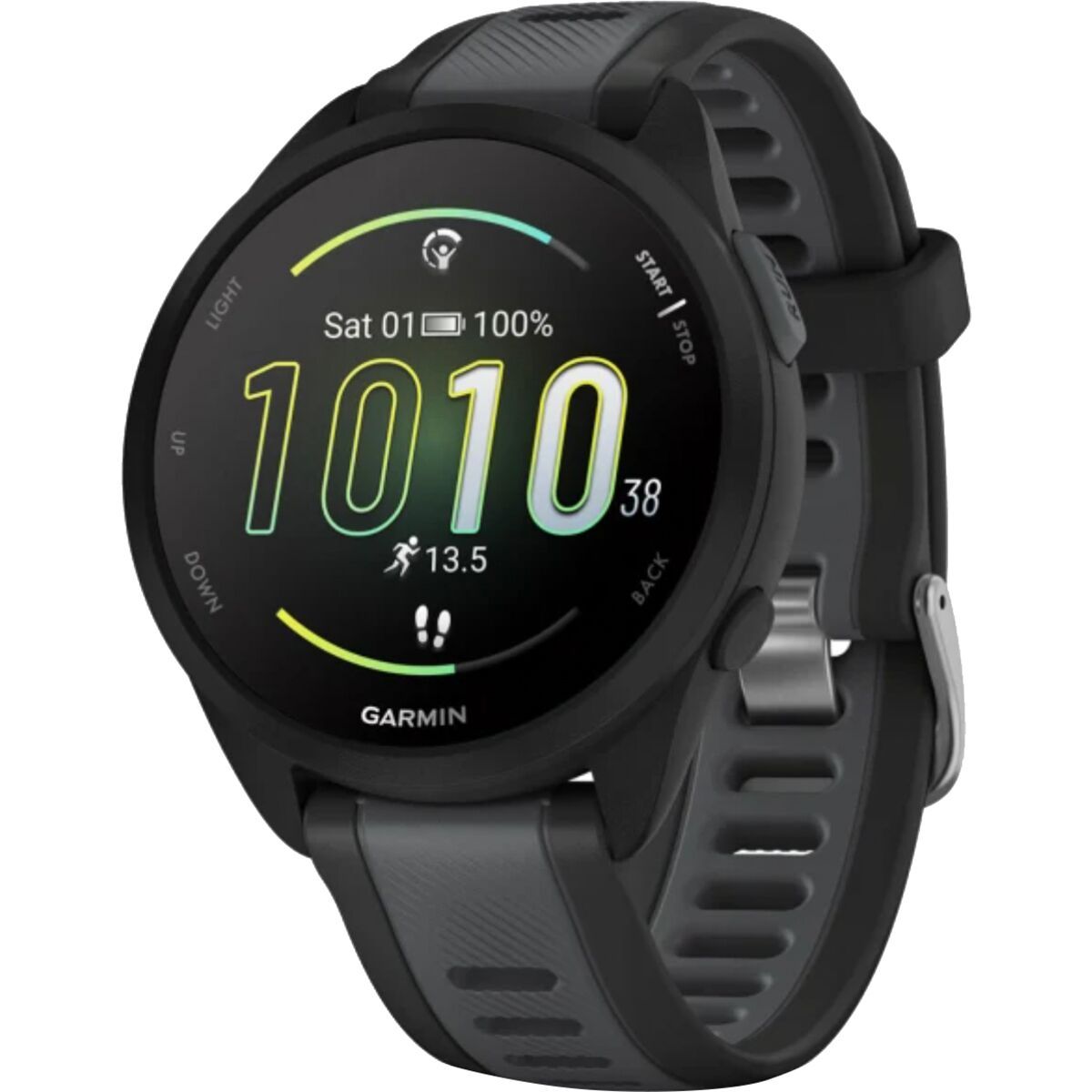
The Garmin Forerunner 265 is the running watch we recommend for most runners. It hits the sweet spot between features and price, offering nearly everything serious runners need without the premium cost of Garmin's flagship models.

The AMOLED display is the first thing you'll notice—it's vibrant, easy to read in any lighting, and makes the older LCD screens feel dated. During testing, we could glance at pace and heart rate mid-stride without squinting, even in direct sunlight. The touchscreen is responsive enough for navigation but doesn't activate accidentally from wrist sweat, a problem that plagued earlier touchscreen watches.

GPS accuracy impressed us consistently. The multi-band GPS locked on quickly (usually under 30 seconds) and tracked accurately through urban environments, tree-lined trails, and everything in between. On a measured 10K course, the 265 recorded 6.22 miles—within 0.3% of actual distance. That's as good as GPS gets.

Garmin's training ecosystem is the real differentiator. Training Readiness tells you how prepared your body is for hard effort based on sleep, HRV, and recent training load. Training Status shows whether you're productive, peaking, or overreaching. Race Predictor estimates finish times that, in our testing, were surprisingly accurate after a few weeks of data collection. These features genuinely help you train smarter.

Battery life is adequate for most runners: 20 hours of GPS runtime handles any marathon with room to spare. If you're training for ultras, you'll want something with more capacity, but for the vast majority of runners, 20 hours is plenty. Daily smartwatch use lasts about 13 days between charges.

Why It's Our Pick

  • • Stunning AMOLED display
  • • Excellent GPS accuracy (multi-band)
  • • Comprehensive training metrics
  • • Training Readiness & HRV Status
  • • Music storage (up to 500 songs)
  • • Garmin Pay contactless payments
  • • 20-hour GPS battery

The Tradeoffs

  • • No maps (965 has maps)
  • • Shorter battery than COROS
  • • $449 price point
  • • Wrist HR less accurate during intervals

Bottom line: The Forerunner 265 is the watch to buy if you want a complete running experience without paying flagship prices. It's what we'd recommend to any runner training for a 5K through marathon who wants data-driven insights without complexity.

Garmin Forerunner 265
OUR TOP PICK

Garmin Forerunner 265

The perfect balance of features and value. AMOLED display, multi-band GPS, and comprehensive training metrics.

Upgrade Pick: Garmin Forerunner 965

The Best Running Watch, Period

If budget isn't a constraint and you want the absolute best running watch available, the Garmin Forerunner 965 is it. At $599, it adds features that serious runners and multi-sport athletes will actually use: full-color maps, longer battery life, and a larger display.

The built-in maps are genuinely useful for trail runners and those who explore new routes. You can download courses, see turn-by-turn navigation, and never worry about getting lost on unfamiliar trails. The maps work offline—no phone connection needed. During our trail testing, having the course displayed on-wrist reduced anxiety and allowed us to run more confidently in new terrain.

Battery life jumps to 31 hours of GPS time, making the 965 viable for most ultramarathons without charging. The larger 1.4" AMOLED display shows more data at once, which helps during complex workouts with multiple metrics to track.

Everything else matches the 265: same excellent GPS accuracy, same training metrics, same reliable Garmin ecosystem. The 965 is the 265 with maps and more battery—if you need those features, it's worth the $150 premium. If you don't, save your money.

Why Upgrade

  • • Full-color topo maps
  • • 31-hour GPS battery
  • • Larger 1.4" display
  • • Triathlon mode
  • • More storage for music

The Tradeoffs

  • • $599 price
  • • Larger/heavier (53g vs 47g)
  • • Overkill for road-only runners
Garmin Forerunner 965
UPGRADE PICK

Garmin Forerunner 965

Full-color maps, 31-hour battery, and a larger AMOLED display for serious runners.

Budget Pick: COROS PACE 3

Best Running Watch Under $250

The COROS PACE 3 is the best value in running watches—and it's not even close. At $229, it outperforms watches costing twice as much in battery life and matches them in GPS accuracy. If budget matters, this is the watch to buy.

Battery life is the headline feature: 38 hours of GPS runtime on a watch that weighs just 39 grams. That's nearly double the Forerunner 265 at half the price. For ultramarathon runners, this alone makes the PACE 3 compelling. We ran a 50K training run and still had 60% battery remaining.

GPS accuracy matches the premium competition. COROS uses dual-frequency GPS that tracked our test courses accurately, even in challenging conditions. The company has invested heavily in GPS technology, and it shows—we saw no meaningful accuracy difference between the PACE 3 and watches costing $400+.

Training features are solid if not quite as refined as Garmin's. You get training load tracking, recovery time estimates, and structured workout support. The COROS app is functional and improving with each update, though it lacks the polish and depth of Garmin Connect. For runners who want accurate data without analytics overload, this simplicity is actually a plus.

The main tradeoffs are the display (LCD, not AMOLED) and music storage (not available). If you need a vibrant screen and Spotify playlists on your wrist, look elsewhere. If you want accurate GPS, incredible battery, and solid training features at an unbeatable price, the PACE 3 is remarkable.

Why We Recommend It

  • • 38-hour GPS battery
  • • Just 39 grams—ultralight
  • • Dual-frequency GPS accuracy
  • • $229 price point
  • • Solid training features
  • • Nylon or silicone band options

The Tradeoffs

  • • LCD display (not AMOLED)
  • • No music storage
  • • Less polished app experience
  • • Fewer third-party integrations

Bottom line: The COROS PACE 3 offers 90% of what premium watches deliver at less than half the price. It's the best value in running watches and genuinely excellent for runners who prioritize accuracy and battery over bells and whistles.

COROS PACE 3
BEST VALUE

COROS PACE 3

Incredible value with 38-hour GPS battery, dual-frequency accuracy, and just 39 grams.

Best Training Analytics: Polar Vantage V3

Best for Data-Driven Runners

If you want the deepest training analytics available, the Polar Vantage V3 is the watch to get. Polar has been in the heart rate training game longer than anyone, and their recovery and training load features remain industry-leading for athletes who want to optimize every session.

The Nightly Recharge feature tracks your recovery through sleep analysis and ANS (autonomic nervous system) status, providing genuinely actionable insights about readiness. Training Load Pro breaks down your cardiovascular, muscular, and perceived load separately—nuance that Garmin and COROS don't match. For runners following periodized plans, this granularity helps prevent overtraining.

Battery life is exceptional at 53 hours of GPS time, putting it in ultramarathon territory. The AMOLED display is bright and readable, and the dual-frequency GPS accuracy matched our top picks in testing.

The tradeoff is ecosystem. Polar Flow is less polished than Garmin Connect, and third-party integration isn't as seamless. If you're already invested in Garmin or want the smoothest overall experience, stick with Garmin. If training analytics are your priority, Polar delivers the best.

Why Consider It

  • • Best training load analytics
  • • Nightly Recharge recovery tracking
  • • 53-hour GPS battery
  • • AMOLED display
  • • Dual-frequency GPS

The Tradeoffs

  • • Less polished app experience
  • • Smaller ecosystem
  • • $599 price
Polar Vantage V3
BEST ANALYTICS

Polar Vantage V3

Industry-leading recovery and training load analytics for data-driven athletes.

Best Smartwatch for Runners: Apple Watch Ultra 2

Best for iPhone Users Who Run

The Apple Watch Ultra 2 is the best choice for iPhone users who want a smartwatch first and a running watch second. It can't match dedicated running watches on training analytics or battery life, but it offers the best smartwatch experience available with genuinely capable running features.

GPS accuracy has improved significantly in the Ultra 2. During testing, it tracked within 1-2% of measured courses—competitive with dedicated running watches. Heart rate accuracy during steady runs was excellent, though it struggled more during high-intensity intervals (a weakness of all wrist-based monitors).

The Action Button is perfect for running: configure it to start/stop workouts with a physical button instead of navigating touchscreen menus with sweaty fingers. The display is the brightest we've tested, easily readable in direct sunlight. And the overall watchOS experience is unmatched for notifications, apps, and daily smart features.

The limitation is battery: 12 hours of continuous GPS means you'll need to charge for marathons or long training runs. That's fine for most training but disqualifying for ultramarathons. Training metrics are improving with each watchOS update but still trail Garmin and Polar in depth and accuracy.

Why Consider It

  • • Best smartwatch experience
  • • Improved GPS accuracy
  • • Brightest display available
  • • Action Button for workouts
  • • Seamless iPhone integration

The Tradeoffs

  • • 12-hour GPS battery
  • • Basic training analytics
  • • $799 price
  • • Requires iPhone
Apple Watch Ultra 2
BEST SMARTWATCH

Apple Watch Ultra 2

The ultimate smartwatch experience with capable running features for iPhone users.

What to Look For in a Running Watch

GPS Accuracy

Modern watches with dual-frequency/multi-band GPS are highly accurate (within 1-2%). Single-band GPS is adequate for most runners but may show more variance in urban canyons or dense tree cover. All our top picks use multi-band GPS.

Heart Rate Accuracy

Wrist-based heart rate is good for steady runs but less accurate during intervals or when cadence syncs with heart rate (a known issue). For training by heart rate zones, a chest strap remains more accurate, especially during high-intensity work.

Battery Life

Consider your longest runs. 20 hours handles marathons easily. Ultra runners need 40+ hours. COROS leads in battery; Garmin is mid-pack; Apple Watch trails. Battery degrades over years, so buy more than you need today.

Training Features

Structured workouts, training load tracking, and recovery suggestions help you train smarter. Garmin and Polar lead here; COROS is solid; Apple is basic. If you follow a training plan, these features add real value.

Display Type

AMOLED displays are vibrant and easy to read but use more battery. LCD/MIP displays have better battery life but look dated. For most runners, AMOLED is worth the battery tradeoff; for ultra runners prioritizing battery, LCD is fine.

Frequently Asked Questions

What is the best running watch for 2026?

The Garmin Forerunner 265 is the best running watch for most runners. It offers an excellent AMOLED display, accurate GPS and heart rate, comprehensive training metrics, and 20+ hour battery life at $449. For budget buyers, the COROS PACE 3 at $229 offers incredible value.

Is Garmin or COROS better for running?

Garmin offers a more polished experience with better software, more training features, and a larger ecosystem. COROS provides better value and battery life. For most runners, Garmin is worth the premium. For budget-conscious runners or ultramarathoners who need maximum battery, COROS is excellent.

Is the Apple Watch good for running?

The Apple Watch Ultra 2 is a capable running watch with accurate GPS, good heart rate tracking, and excellent smartwatch features. However, it lacks the training load analytics, recovery metrics, and multi-day battery life of dedicated running watches. Best for casual runners who prioritize smartwatch features.

Do I need a running watch with maps?

Maps are useful for trail runners and those exploring new routes. For road runners who stick to familiar routes, maps aren't essential. Watches with maps cost more and use more battery. Consider your actual needs before paying extra.

How long do running watch batteries last?

Battery life varies significantly. The Garmin Forerunner 265 lasts 20 hours in GPS mode. COROS watches often exceed 30-40 hours. Apple Watch Ultra 2 manages about 12 hours of continuous GPS. For ultramarathons, prioritize watches with 40+ hour GPS battery.

Related Running Resources

The Bottom Line

For most runners, the Garmin Forerunner 265 is the watch to buy. It delivers the best combination of display quality, GPS accuracy, training features, and reliability at a reasonable price point. It's what we'd recommend to anyone training for races from 5K to marathon.

If budget is a priority, the COROS PACE 3 at $229 is exceptional value—you're getting 90% of premium watch performance at less than half the price. For runners who want every possible feature including maps, the Garmin Forerunner 965 is the best running watch available.

And if you're an iPhone user who wants a smartwatch that happens to track runs well, the Apple Watch Ultra 2 is the best smartwatch with running capabilities—just don't expect it to match dedicated running watches on training depth or battery life.