Blog / Running Gear / Body Type
Best Running Shoes for Heavy Runners 2026
Expert-recommended shoes with maximum durability and cushioning for 200+ lb runners
Our Top Picks for Heavy Runners
The Quick Answer
After researching 25+ shoes using expert reviews, durability data, and feedback from runners over 200 lbs, the Brooks Beast 24 ($170) is the best running shoe for heavy runners who need maximum support. Its motion control features and robust construction handle higher loads without premature breakdown. For neutral heavy runners, the HOKA Bondi 8 ($174.95) provides exceptional cushioning with a wide, stable platform. Budget-conscious heavy runners should consider the Saucony Ride 18 ($145) for its durable construction and responsive cushioning.
Our Picks at a Glance
| Shoe | Best For | Support | Drop | Weight | Price |
|---|---|---|---|---|---|
| Brooks Beast 24 | Max Support | Motion Control | 12mm | 13.1 oz | $170 |
| HOKA Bondi 8 | Neutral + Cushion | Neutral | 4mm | 10.8 oz | $174.95 |
| Saucony Ride 18 | Best Value | Neutral | 8mm | 9.5 oz | $145 |
| ASICS Gel-Kayano 31 | Stability + Durability | Stability | 10mm | 11.4 oz | $180 |
| Brooks Adrenaline GTS 24 | Moderate Stability | Stability | 12mm | 10.2 oz | $99.95 |
| New Balance 1080v13 | Wide Feet | Neutral | 6mm | 10.8 oz | $165 |
| HOKA Gaviota 5 | Stability + Max Cushion | Stability | 5mm | 10.8 oz | $174.95 |
Understanding the Unique Needs of Heavy Runners
Running as a heavier athlete presents unique biomechanical challenges that standard running shoes may not adequately address. While "heavy" is relative, this guide focuses on runners weighing approximately 200+ pounds (90+ kg), though the principles apply to anyone who finds standard shoes breaking down quickly or lacking adequate support.
The Physics of Running at Higher Weight
When you run, your body experiences ground reaction forces of 2-3 times your body weight with each footstrike. For a 200-pound runner, that's 400-600 pounds of force per step. Over a 5K run (approximately 3,500 steps), that adds up to millions of pounds of cumulative impact. This has profound implications for footwear:
Foam Compression
Midsole foam compresses faster under higher loads. Where a 150-pound runner might get 500 miles from a shoe, a 220-pound runner may see significant degradation at 300 miles. The foam simply endures more stress per step and degrades accordingly.
Stability Demands
Higher body weight creates greater rotational forces on the foot and ankle. This can exacerbate overpronation or supination tendencies. A wider, more supportive platform becomes essential for maintaining proper alignment.
Common Challenges for Heavier Runners
- Premature shoe breakdown: Standard shoes may lose cushioning and support well before their expected lifespan.
- Inadequate cushioning: Foam designed for lighter runners may compress too much, providing a "bottoming out" sensation.
- Stability issues: Narrow platforms and soft foams can feel unstable under higher loads.
- Upper durability: Mesh uppers may stretch, tear, or lose structure faster.
- Width limitations: Many heavier runners have wider feet, and standard widths can be restrictive.
- Higher injury risk: Inadequate footwear combined with higher impact forces can increase injury susceptibility.
The Good News
Modern running shoe technology has evolved to better serve heavier runners. Dense, resilient foams like Brooks DNA AMP, HOKA EVA, and ASICS FF BLAST+ maintain their properties under higher loads. Manufacturers now offer wide and extra-wide options, and motion control/stability technologies are more refined than ever. With the right shoes, heavy runners can enjoy comfortable, injury-free running.
What to Look for in Running Shoes for Heavy Runners
1. Dense, Durable Midsole Foam
The midsole is the most critical component. Look for dense, resilient foams that won't compress permanently under load. Avoid ultra-soft "marshmallow" foams that feel great initially but bottom out quickly. Brooks DNA AMP, ASICS FF BLAST+, and Saucony PWRRUN are excellent choices. HOKA's EVA is surprisingly durable despite its plush feel.
2. Wide, Stable Platform
A broader outsole provides a larger surface area to distribute impact forces and increases lateral stability. HOKA shoes excel here with their characteristically wide platforms. Look for shoes that don't narrow dramatically in the midfoot or forefoot.
3. Robust Outsole Construction
The outsole takes a beating from higher impact forces. Look for thick rubber coverage, particularly in high-wear areas (heel and toe). Continental rubber (found on some Adidas models) and ASICS AHARPLUS are known for durability. Avoid shoes with large exposed foam sections on the outsole.
4. Reinforced Upper Materials
Standard mesh uppers can stretch and lose structure under higher loads. Look for engineered mesh with reinforced overlays, or shoes with more structured upper materials. Pay attention to the heel counter - it should be firm and resist deformation.
5. Width Options
Many heavier runners have wider feet. Choose brands that offer wide (2E for men, D for women) or extra-wide (4E/2E) options. New Balance, Brooks, and ASICS typically have the best width selection. A shoe that's too narrow causes pressure points and may not provide adequate support.
6. Appropriate Support Level
Choose support level based on your gait, not weight alone. Neutral runners should choose cushioned neutral shoes; overpronators need stability or motion control. However, heavier overpronators often need more aggressive support (like motion control) since higher loads amplify pronation forces.
Max Support Pick: Brooks Beast 24
Best Motion Control Shoe for Heavy Runners
Brooks Beast 24
Maximum motion control and durability for heavy overpronators. Built to handle 200+ lb runners mile after mile.
The Brooks Beast 24 is Brooks' maximum support shoe, designed specifically for heavier runners and severe overpronators. It's built like a tank - and that's exactly what many heavy runners need. The extended GuideRails and firm medial post control even the most aggressive pronation, while the DNA AMP midsole maintains its cushioning properties under higher loads.
At 13.1 oz, the Beast is heavy by modern standards, but that weight contributes to its durability and supportive structure. The 12mm drop provides beneficial heel elevation that reduces strain on the Achilles tendon and plantar fascia - important for heavier runners who experience greater impact forces.
Owners consistently report the Beast to be exceptionally durable, maintaining its support and cushioning well past 400 miles, impressive for any shoe, remarkable for one handling heavy loads. The wide platform provides a stable base, and the shoe is available in wide (2E) and extra-wide (4E) options.
The Beast isn't for everyone. Neutral runners or mild overpronators may find the motion control features excessive. But for heavy runners with significant overpronation, it's the most supportive, durable option available.
Why It's Our Pick
- + Maximum motion control for overpronators
- + Exceptionally durable construction
- + DNA AMP foam holds up under load
- + Wide and extra-wide options
- + Extended GuideRails support
- + 400+ mile lifespan for heavy runners
Potential Drawbacks
- - Heavy at 13.1 oz
- - Too much support for neutral runners
- - Not for speed work
- - Higher price at $170
Key Specifications
Neutral Pick: HOKA Bondi 8
Best Cushioned Neutral Shoe for Heavy Runners
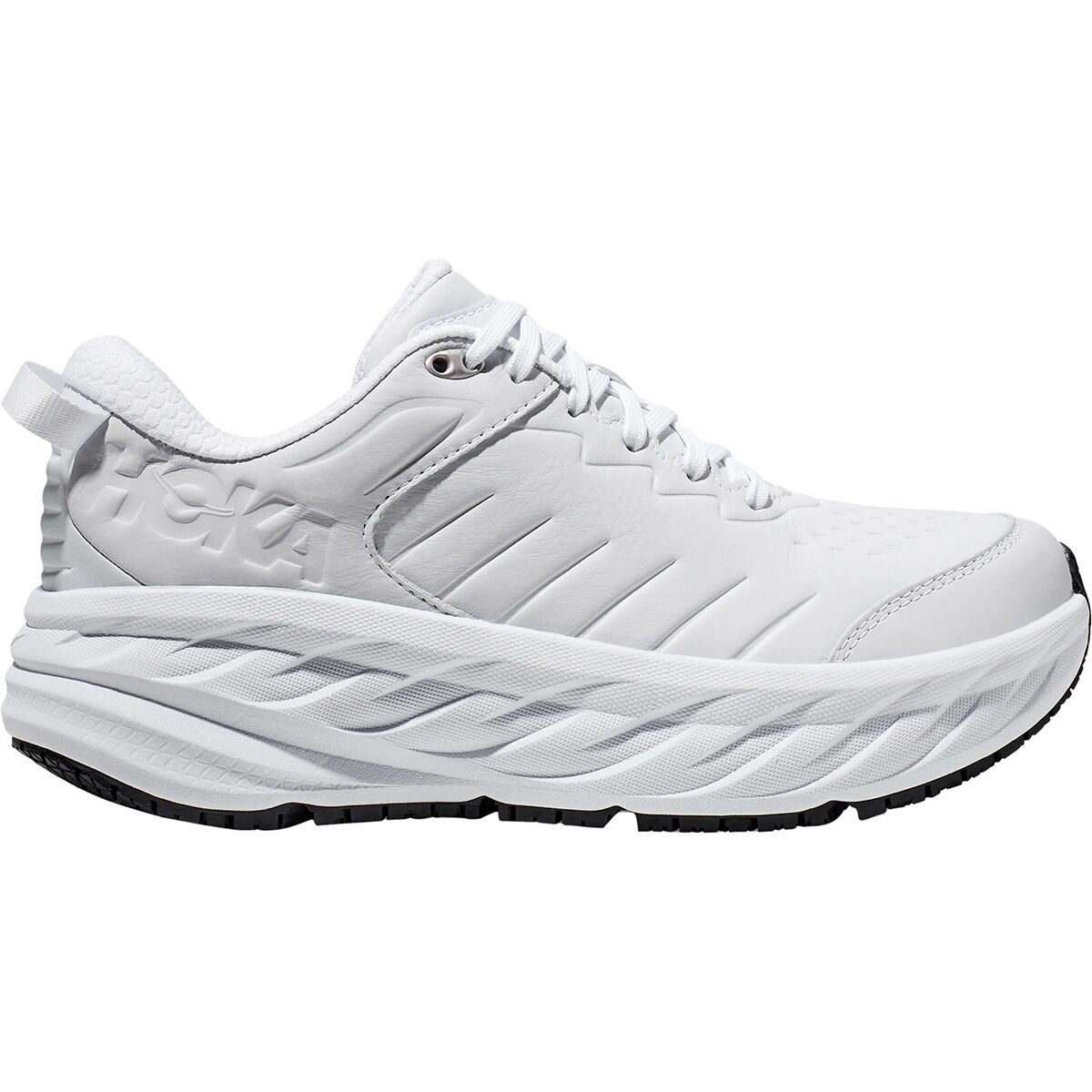
HOKA Bondi 8
Maximum cushioning with a wide, stable platform. Ideal for neutral heavy runners who prioritize comfort.
For heavy runners with neutral gait, the HOKA Bondi 8 provides exceptional cushioning without excessive support features. Despite its plush feel, HOKA's compression-molded EVA foam is surprisingly dense and durable - it maintains its properties well under higher loads, unlike some soft foams that bottom out quickly.
The Bondi's wide platform is a key advantage for heavy runners. It provides inherent stability through geometry rather than medial posts, making it excellent for neutral runners who need a secure platform without motion control. The Meta-Rocker promotes smooth gait transitions, reducing stress on joints that may already be handling significant loads.
Heavier owners report being impressed by the Bondi's durability. While some max-cushion shoes break down at 250-300 miles, owner reviews indicate the Bondi consistently maintains cushioning beyond 350 miles even for 220+ pound runners. The ride remains plush and supportive throughout its lifespan.
Why We Recommend It
- + Maximum cushioning without excess support
- + Wide, stable platform
- + Surprisingly durable foam
- + Meta-Rocker smooths transitions
- + Available in wide widths
Potential Drawbacks
- - Not for overpronators
- - Low 4mm drop takes adjustment
- - Higher price at $174.95
- - Heavy for faster running
Best Value: Saucony Ride 18
Best Budget-Friendly Option for Heavy Runners

Saucony Ride 18
Durable PWRRUN+ cushioning at an accessible price point. Excellent for heavy runners on a budget.
The Saucony Ride 18 proves you don't need to spend $170+ for a durable, supportive shoe. At $145, it's the most affordable shoe in our top picks, yet its PWRRUN+ foam holds up admirably under heavier loads. The foam is denser than many competitors' cushioning, providing both durability and responsive energy return.
At 9.5 oz, the Ride 18 is significantly lighter than the Beast or Bondi, making it more versatile for different types of runs. Heavy runners who want to occasionally pick up the pace will appreciate this. The 8mm drop is moderate and comfortable for most runners.
The broad base geometry provides good inherent stability for a neutral shoe, and the engineered mesh upper proves durable based on user reports. If you're a neutral heavy runner looking for the best value, the Ride 18 should be at the top of your list.
Why We Recommend It
- + Excellent value at $145
- + Durable PWRRUN+ foam
- + Lighter weight (9.5 oz)
- + Versatile for various paces
- + Responsive energy return
Potential Drawbacks
- - Not for overpronators
- - Less max cushion than Bondi
- - Limited width options
Other Excellent Options
ASICS Gel-Kayano 31
Best for: Durability + Stability
ASICS' legendary stability shoe is known for exceptional durability. The Gel-Kayano 31 features PureGEL technology in the heel for shock absorption and 4D Guidance System for stability. Heavy runners consistently report excellent longevity - many get 500+ miles. The FF BLAST+ foam is dense and supportive.
Drop: 10mm | Weight: 11.4 oz | Price: $180 | Widths: D, 2E, 4E
Brooks Adrenaline GTS 24
Best for: Moderate Stability + Value
If the Beast is too much support, the Adrenaline GTS 24 provides moderate stability with GuideRails technology. At $99.95 on sale, it's excellent value. The DNA LOFT cushioning is durable and responsive. A great choice for heavy runners with mild to moderate overpronation.
Drop: 12mm | Weight: 10.2 oz | Price: $99.95 | Widths: B, D, 2E, 4E
New Balance Fresh Foam X 1080v13
Best for: Wide Feet
New Balance's width options are unmatched - from B to 4E. The 1080v13's Fresh Foam X midsole provides plush cushioning with good durability, and the Hypoknit upper adapts to foot shape. If you have wide feet and struggle to find properly fitting shoes, start here.
Drop: 6mm | Weight: 10.8 oz | Price: $165 | Widths: B, D, 2E, 4E
HOKA Gaviota 5
Best for: Stability + Max Cushion
If you want HOKA's signature cushioning with stability features, the Gaviota 5 delivers. J-Frame technology controls overpronation while maintaining the plush, wide-platform ride HOKA is known for. The Meta-Rocker geometry promotes smooth transitions for heavy runners.
Drop: 5mm | Weight: 10.8 oz | Price: $174.95 | Widths: D, 2E
Brooks Glycerin 22
Best for: Premium Neutral Cushion
Brooks' flagship neutral cushioned shoe features DNA LOFT v3 foam that maintains its properties under higher loads. The 10mm drop is traditional and comfortable, and the plush heel collar provides excellent comfort. At $124.95 on sale, it's great value for a premium trainer.
Drop: 10mm | Weight: 10.6 oz | Price: $124.95 | Widths: B, D, 2E
Training Tips for Heavy Runners
Beyond footwear, these strategies help heavy runners train safely and effectively:
Progress Slowly
The 10% rule (increasing weekly mileage by no more than 10%) is especially important for heavier runners. Your joints and soft tissues need time to adapt to increased loads. Consider starting with run/walk intervals if you're new to running.
Prioritize Recovery
Allow adequate rest between hard efforts. Heavy runners may need extra recovery time since their bodies handle greater impact forces. Consider alternating run days with cross-training activities like cycling or swimming.
Choose Softer Surfaces
When possible, run on trails, grass, or tracks instead of concrete. Softer surfaces reduce impact forces significantly. Even running on asphalt is better than concrete sidewalks.
Strengthen Supporting Muscles
Strong glutes, core, and hip muscles help absorb impact and maintain proper running form. Include strength training 2-3 times per week, focusing on squats, lunges, deadlifts, and core work.
Monitor Shoe Wear
Check your shoes regularly for signs of breakdown - compressed midsoles, worn outsoles, or stretched uppers. Heavy runners often need to replace shoes sooner than lighter runners. Track your shoe mileage.
Consider Shoe Rotation
Rotating between two pairs of shoes allows foam to recover between runs and can extend the life of both pairs. Some heavy runners alternate between a cushioned daily trainer and a more supportive shoe.
Frequently Asked Questions
What are the best running shoes for heavy runners in 2026?
The Brooks Beast 24 is the best for heavy runners needing maximum support. For neutral heavy runners, the HOKA Bondi 8 provides exceptional cushioning with a stable platform. The ASICS Gel-Kayano 31 offers excellent stability and durability. Budget-conscious runners should consider the Saucony Ride 18.
How much should heavy runners expect to spend on running shoes?
Expect to spend $140-180 for quality running shoes. This investment pays off in durability and injury prevention. Bargain shoes often break down quickly under heavier use, potentially leading to injuries and costing more long-term.
How often should heavy runners replace their shoes?
Heavy runners typically need to replace shoes every 300-400 miles, compared to 400-500 miles for lighter runners. Signs it's time include visible midsole compression, worn outsole tread, new aches or pains, and less responsive cushioning.
Should heavy runners choose stability or neutral shoes?
This depends on your gait, not weight. Heavy runners with neutral gait should choose neutral cushioned shoes. Those who overpronate benefit from stability or motion control shoes. Get a gait analysis to determine your needs.
What features should heavy runners look for in running shoes?
Prioritize: maximum cushioning with dense, durable foam; wide platform for stability; robust outsole construction; reinforced upper materials; adequate arch support; and width options if needed.
Are maximalist shoes good for heavy runners?
Yes, maximalist shoes like HOKA Bondi are excellent for many heavy runners. The extra cushioning absorbs higher impact forces. However, ensure the foam is dense enough to support added weight - some ultra-soft foams compress too quickly.
Can heavy runners do long-distance running?
Absolutely. Many heavy runners complete marathons and ultramarathons. The keys are proper footwear, gradual training progression, adequate recovery, and attention to nutrition and hydration.
Should heavy runners use orthotics?
Orthotics can help heavy runners with specific biomechanical needs like significant overpronation. Quality shoes often provide adequate support, but custom orthotics from a podiatrist may benefit those with persistent pain or structural issues.
Related Running Resources
The Bottom Line
Running as a heavier athlete requires shoes that can handle increased impact forces without premature breakdown. The right footwear can make the difference between comfortable, injury-free running and constant aches and pains.
For heavy runners who overpronate, the Brooks Beast 24 ($170) is unmatched in its support and durability. Its motion control features handle even severe overpronation, and the construction stands up to 400+ miles of heavy use.
Neutral heavy runners will love the HOKA Bondi 8 ($174.95) for its maximum cushioning and surprisingly durable foam. The wide platform provides stability without restrictive support features.
For budget-conscious heavy runners, the Saucony Ride 18 ($145) delivers excellent durability and cushioning at a more accessible price point. It's proof that you don't need to spend $170+ to get quality performance.
Related 2026 Gear Guides
- Best Running Shoes 2026 — Main roundup
- Best for Flat Feet — Arch-support picks
- Best for Plantar Fasciitis — Heel-supportive picks
- Best for High Arches — Cushioned picks
- Best Trail Running Shoes — Off-road running