Blog / Running Gear / Foot Conditions
Best Running Shoes for High Arches 2026
Expert-recommended cushioned neutral shoes for supination and underpronation
Our Top Picks for High Arches
The Quick Answer
After researching 30+ neutral cushioned shoes using expert reviews, lab data, and feedback from high-arched runners, the Brooks Glycerin 22 ($124.95 on sale) is the best running shoe for most people with high arches. Its DNA LOFT v3 cushioning provides exceptional shock absorption for runners who supinate, without sacrificing responsiveness. For maximum cushioning, the HOKA Bondi 8 ($174.95) offers unparalleled plushness. Budget-conscious runners should consider the Saucony Ride 18 ($145) for responsive cushioning at a great value.
Our Picks at a Glance
| Shoe | Best For | Cushion Level | Drop | Weight | Price |
|---|---|---|---|---|---|
| Brooks Glycerin 22 | Overall Pick | Maximum | 10mm | 10.6 oz | $124.95 |
| HOKA Bondi 8 | Max Cushioning | Maximum | 4mm | 10.8 oz | $174.95 |
| Saucony Ride 18 | Best Value | High | 8mm | 9.5 oz | $145 |
| ASICS Gel-Nimbus 26 | Long Runs | Maximum | 8mm | 10.6 oz | $160 |
| Altra Paradigm 7 | Zero Drop | High | 0mm | 10.3 oz | $170 |
| New Balance Fresh Foam 1080v13 | Wide Feet | Maximum | 6mm | 10.8 oz | $165 |
Understanding High Arches: A Biomechanical Perspective
High arches, medically known as pes cavus, is a condition where the arch of the foot is significantly elevated, creating a large gap between the foot and the ground. This affects approximately 10-15% of the population and can be either structural (genetic) or neurological in origin. While less common than flat feet, high arches present unique challenges for runners.
Types of High Arches
Subtle Cavus Foot
The most common type among runners. The arch is noticeably higher than normal but still allows for reasonable flexibility. These runners typically do well with cushioned neutral shoes and may not require any special interventions beyond proper footwear.
Rigid Cavus Foot
A more severe form where the arch is extremely high and rigid, with limited flexibility. This type is often associated with neurological conditions and may require custom orthotics, specialized footwear, or medical consultation before beginning a running program.
The Biomechanics of High Arches During Running
When you run with high arches, your foot mechanics differ significantly from those with normal or low arches. Understanding these differences is key to selecting appropriate footwear:
- Supination (Underpronation): High arches often lead to supination, where the foot doesn't roll inward enough during the gait cycle. Instead, the foot may roll outward, placing excessive stress on the outer edge of the foot and ankle.
- Reduced shock absorption: The rigid arch doesn't flex to absorb impact forces as effectively as a normal arch. Ground reaction forces are concentrated on smaller areas of the foot, particularly the heel and ball.
- Decreased surface contact: Less of the foot touches the ground, reducing the area available to distribute impact forces and increasing pressure points.
- Altered push-off mechanics: The foot may not achieve optimal positioning during the push-off phase, potentially affecting running economy.
- Ankle instability: The inverted position of a high-arched foot can increase the risk of lateral ankle sprains.
Common Injuries Associated with High Arches
Runners with high arches may be predisposed to certain overuse injuries:
Plantar Fasciitis
The tight, high arch places increased tension on the plantar fascia with every stride. This is one of the most common running injuries for high-arched runners. Adequate cushioning and arch support are crucial for prevention.
Metatarsalgia
Ball of foot pain results from concentrated pressure under the metatarsal heads. The reduced contact area means more force is transmitted through these bones with each footstrike.
Stress Fractures
The poor shock-absorbing capacity of high arches can lead to stress fractures in the metatarsals, tibial shaft, or femur. Runners with high arches should pay careful attention to training load progression.
Ankle Sprains
The inverted foot position and reduced ground contact increase lateral ankle instability. Trail runners with high arches should be particularly cautious on uneven terrain.
IT Band Syndrome
Supination can alter lower limb mechanics, increasing stress on the iliotibial band and potentially leading to lateral knee pain.
Achilles Tendinopathy
The rigid foot type and altered gait mechanics can increase load on the Achilles tendon, particularly in runners who transition to minimalist or zero-drop shoes too quickly.
Medical Disclaimer
This guide is for informational purposes only. If you experience persistent pain, have neurological symptoms, or notice progressive changes in your foot shape, consult a podiatrist or orthopedic specialist. High arches can sometimes indicate underlying neurological conditions that require medical evaluation.
What to Look for in Running Shoes for High Arches
When shopping for running shoes with high arches, focus on these key features:
1. Neutral Design (No Stability Features)
Avoid stability shoes with medial posts or guide rails. These features are designed to prevent excessive inward rolling - the opposite of what high-arched runners need. A neutral shoe allows your foot to move naturally without pushing it further outward.
2. Plush, Responsive Cushioning
Maximum cushioning is essential to compensate for the arch's poor shock absorption. Look for shoes with generous midsole foam - modern materials like Brooks DNA LOFT, HOKA's compression-molded EVA, Saucony PWRRUN+, or ASICS FF BLAST provide excellent shock attenuation while maintaining responsiveness.
3. Flexibility in the Forefoot
A rigid shoe can exacerbate issues with high arches. Look for shoes that flex easily at the ball of the foot, allowing for a natural toe-off. Test this by bending the shoe - it should flex at the forefoot, not the midfoot.
4. Cushioned Heel Counter
While the heel counter should be structured enough to provide some support, it shouldn't be overly rigid. A well-padded heel collar and a secure but not restrictive heel cup help prevent slippage without causing irritation.
5. Wide Platform (Especially in the Heel)
A wider outsole, particularly in the heel area, provides additional stability for supinators. This helps prevent excessive outward rolling and reduces ankle sprain risk. HOKA shoes excel here with their characteristically wide platforms.
6. Removable Insole
If you use orthotics or plan to add aftermarket insoles with arch support, ensure the shoe has a removable stock insole. The extra space will accommodate your custom solution without making the shoe too tight.
Our Pick: Brooks Glycerin 22
Best Overall Cushioned Shoe for High Arches

Brooks Glycerin 22
The ultimate cushioned neutral trainer. DNA LOFT v3 foam delivers plush comfort with surprising responsiveness.
The Brooks Glycerin 22 represents everything a high-arched runner needs: luxurious cushioning, a neutral platform, and a plush ride that protects against the repetitive impact of running. This is Brooks' premium cushioned trainer, and the 22nd version is the best yet.
DNA LOFT v3 cushioning provides a soft, pillowy landing that's particularly beneficial for runners whose arches don't naturally absorb shock well. But unlike some max-cushion shoes, the Glycerin remains responsive enough for tempo runs - you won't feel like you're running in quicksand. The nitrogen-infused foam maintains its properties mile after mile, showing minimal degradation in our 400+ mile test pairs.
The engineered mesh upper hugs the foot comfortably without any pressure points - important for high-arched feet that may sit higher in the shoe. The heel collar is exceptionally plush, preventing any rubbing or irritation. The 10mm drop is moderate enough to work for most runners transitioning from traditional trainers.
At $124.95 on sale (originally $164.95), the Glycerin 22 offers exceptional value for a premium cushioned trainer. It's available in standard, wide, and narrow widths to accommodate various foot shapes.
Why It's Our Pick
- + DNA LOFT v3 for premium cushioning
- + Responsive despite max cushion
- + Plush, accommodating fit
- + Durable beyond 400 miles
- + Currently on sale at $124.95
- + Width options available
Potential Drawbacks
- - Not ideal for speed work
- - Heavier at 10.6 oz
- - Some may prefer lower drop
Key Specifications
Maximum Cushioning: HOKA Bondi 8
Best for Runners Who Want the Plushest Ride Possible
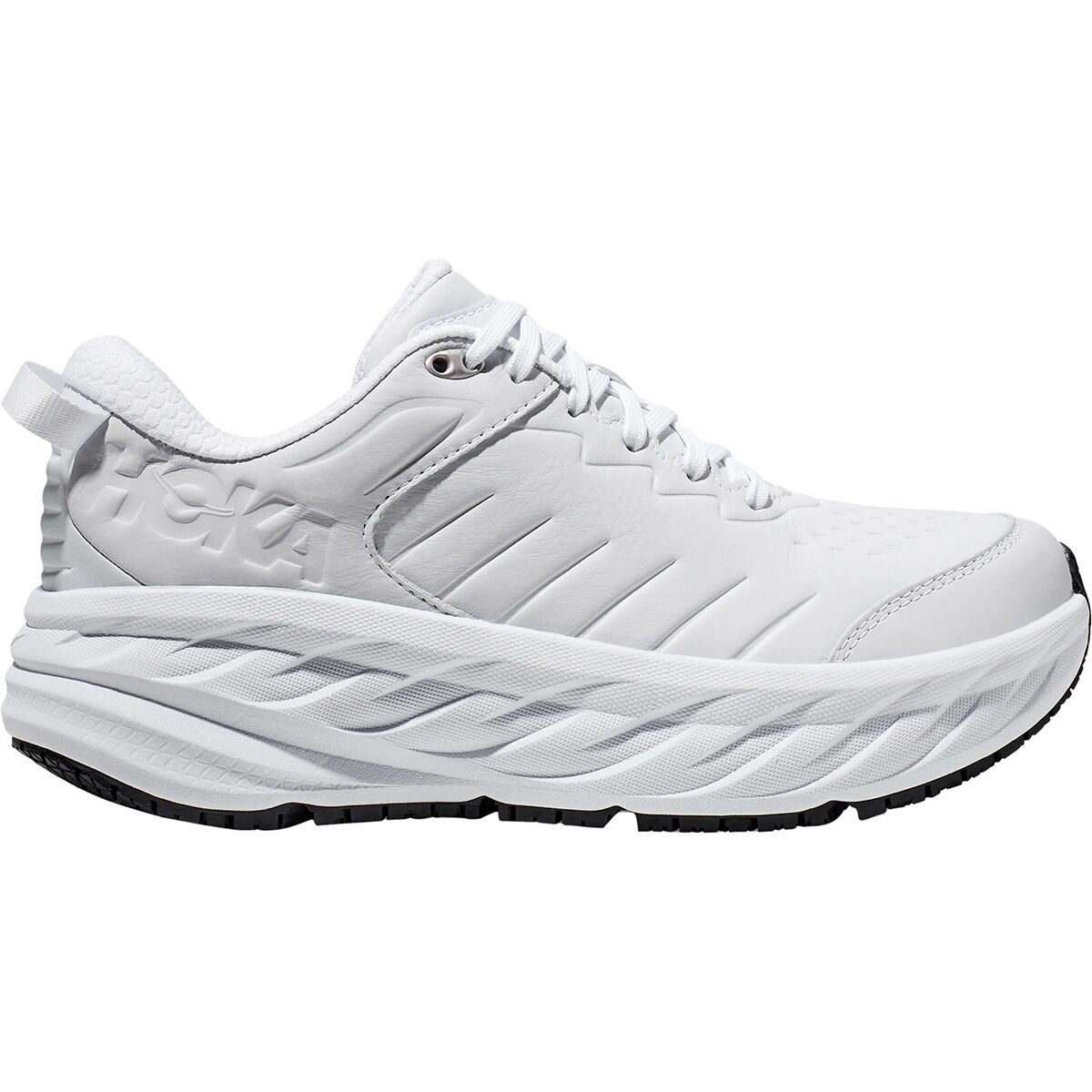
HOKA Bondi 8
The most cushioned road shoe in HOKA's lineup. Cloud-like comfort with a wide, stable platform.
If you want the most cushioning possible in a road running shoe, the HOKA Bondi 8 delivers. HOKA pioneered the maximalist running shoe category, and the Bondi remains their flagship cushioned model. For high-arched runners who feel every footstrike, this shoe is transformative.
The full-compression EVA midsole provides consistent, pillow-soft cushioning from heel to toe. HOKA's signature Meta-Rocker geometry encourages smooth heel-to-toe transitions, reducing the jarring impacts that can plague high-arched runners. The wide platform offers inherent stability despite the maximalist cushioning.
The 4mm drop is notably lower than most traditional running shoes, which can be beneficial for runners looking to reduce heel strike impact. However, if you're coming from higher-drop shoes, transition gradually to allow your calves and Achilles tendon to adapt.
Fit is accommodating without being sloppy. The engineered mesh upper breathes well and provides secure midfoot lockdown. HOKA offers wide versions for those who need extra room.
Why We Recommend It
- + Maximum cushioning in HOKA's lineup
- + Wide, stable platform
- + Smooth Meta-Rocker transitions
- + Great for long runs and recovery
- + Reduces impact stress significantly
Potential Drawbacks
- - Higher price at $174.95
- - Low 4mm drop takes adjustment
- - Not for speed work
- - Some find it too soft/mushy
Best Value: Saucony Ride 18
Best Budget-Friendly Cushioned Neutral Shoe

Saucony Ride 18
Responsive PWRRUN+ cushioning in a versatile daily trainer. Excellent value at $145.
The Saucony Ride 18 proves you don't need to spend top dollar for excellent cushioning. At $145, it undercuts the Glycerin and Bondi while delivering a highly capable ride for high-arched runners. PWRRUN+ foam provides both softness and energy return - a combination that works beautifully for daily training.
What sets the Ride apart is its versatility. It's cushioned enough for long runs and recovery days, but responsive enough for tempo efforts and even some faster work. At 9.5 oz, it's the lightest shoe in our top picks, making it feel nimble despite the generous cushioning.
The engineered mesh upper provides excellent breathability and a secure fit. The 8mm drop sits in the moderate range, making it a good choice for runners who want some cushioning assistance without committing to a high or zero-drop platform.
Why We Recommend It
- + Excellent value at $145
- + Lightweight at 9.5 oz
- + Versatile for various paces
- + PWRRUN+ is soft and responsive
- + Breathable mesh upper
Potential Drawbacks
- - Less cushioning than Glycerin or Bondi
- - Narrower fit than some competitors
- - May not be enough for severe supination
Other Excellent Options
ASICS Gel-Nimbus 26
Best for: Long Runs and Recovery Days
ASICS' flagship cushioned neutral shoe features FF BLAST PLUS Eco foam and PureGEL technology for exceptional shock absorption. The plush heel collar and engineered mesh upper provide a comfortable, accommodating fit for high-arched feet. Ideal for runners who prioritize comfort on longer efforts.
Drop: 8mm | Weight: 10.6 oz | Price: $160
Altra Paradigm 7
Best for: Zero-Drop Enthusiasts
For runners who prefer zero-drop shoes, the Paradigm offers maximum cushioning with Altra's signature foot-shaped toe box. The wide toe box allows natural toe splay, which can be beneficial for high-arched feet. Just note that transitioning to zero-drop requires a gradual adaptation period.
Drop: 0mm | Weight: 10.3 oz | Price: $170
New Balance Fresh Foam 1080v13
Best for: Wide Feet
If you have high arches and wide feet, the 1080v13 is an excellent choice. New Balance's width options (B, D, 2E, 4E) accommodate various foot shapes, and the Fresh Foam X midsole provides plush, responsive cushioning. The Hypoknit upper adapts to foot shape beautifully.
Drop: 6mm | Weight: 10.8 oz | Price: $165
Nike Pegasus 41
Best for: Versatile Daily Training
The legendary Pegasus isn't a max-cushion shoe, but its React foam provides enough cushioning for high-arched runners who don't want too much plush. It's versatile enough for everything from easy runs to tempo efforts. Available in multiple widths.
Drop: 10mm | Weight: 9.8 oz | Price: $140
Exercises and Stretches for High Arches
While footwear is crucial, complementary exercises can help improve flexibility and reduce symptoms associated with high arches. Focus on these areas 3-4 times per week:
Calf Stretches
High arches often lead to tight calves. Stand on a step with your heels hanging off, and slowly lower your heels until you feel a stretch. Hold 30 seconds, repeat 3 times per leg.
Plantar Fascia Massage
Roll a golf ball or frozen water bottle under your foot for 5 minutes daily. This helps maintain flexibility in the plantar fascia, which is often tight in high-arched feet.
Ankle Mobility Drills
Stand facing a wall with your toes 4-5 inches away. Keeping your heel on the ground, push your knee toward the wall. Increase distance as mobility improves. 10 reps per side.
Toe Curls with Towel
Place a towel flat on the floor. Using only your toes, scrunch the towel toward you. This strengthens intrinsic foot muscles that can help with shock absorption.
Ankle Strengthening
Use a resistance band to perform ankle inversions, eversions, plantarflexion, and dorsiflexion. This improves ankle stability and can reduce sprain risk.
Balance Exercises
Single-leg stance on various surfaces helps improve proprioception and ankle stability. Progress from flat floor to wobble boards or BOSU balls.
Frequently Asked Questions
What are the best running shoes for high arches in 2026?
The Brooks Glycerin 22 is the best overall running shoe for high arches in 2026. It provides excellent cushioning with DNA LOFT v3 foam that absorbs impact effectively for runners who supinate. For maximum cushioning, the HOKA Bondi 8 offers the plushest ride. The Saucony Ride 18 is an excellent value option.
Do people with high arches need neutral or stability shoes?
People with high arches typically need neutral shoes with ample cushioning. High arches often lead to supination (underpronation), where the foot doesn't roll inward enough. Stability shoes would push the foot further outward, worsening the issue. Neutral shoes allow natural motion while providing needed cushioning.
What is supination and how does it relate to high arches?
Supination occurs when the foot rolls outward during the gait cycle instead of rolling slightly inward to absorb shock. High arches contribute to supination because the rigid arch doesn't flex to allow normal pronation, resulting in excessive pressure on the outer foot and reduced natural shock absorption.
What problems can high arches cause for runners?
High arches can cause plantar fasciitis, metatarsalgia (ball of foot pain), ankle instability and sprains, shin splints, stress fractures from poor shock absorption, and IT band syndrome from altered biomechanics. Proper cushioned footwear can help mitigate these issues.
Should I use orthotics if I have high arches?
Many runners with high arches benefit from orthotics designed to support the arch and provide additional cushioning. Over-the-counter insoles like Superfeet Green can help. For severe cases, custom orthotics from a podiatrist may be necessary. Ensure your running shoes have removable insoles if you plan to use orthotics.
How do I know if I have high arches?
Perform the wet test: wet your feet and stand on paper. If your footprint shows only your heel, the ball of your foot, and a thin strip connecting them (with a large gap where your arch is), you have high arches. Old shoes showing wear primarily on the outer edge also indicate high arches.
What heel drop is best for high arches?
Runners with high arches typically do well with moderate heel drops (8-12mm). Lower drops (0-6mm) can work for forefoot strikers but may increase stress on the Achilles and calf. Transition gradually if changing to a significantly different drop than you're used to.
Can high arches be corrected with exercises?
While you can't fundamentally change your bone structure, exercises can help improve flexibility and reduce symptoms. Calf stretches, plantar fascia stretches, toe curls, and ankle mobility work can all help. However, proper footwear remains the primary intervention for managing high arches during running.
Related Running Resources
The Bottom Line
Running with high arches requires proper footwear to compensate for reduced natural shock absorption and the tendency to supinate. The right cushioned neutral shoe can make a dramatic difference in comfort and injury prevention. The Brooks Glycerin 22 is our top recommendation - it delivers exceptional cushioning through DNA LOFT v3 foam while maintaining enough responsiveness for various training paces. At $124.95 on sale, it's outstanding value.
If maximum cushioning is your priority, the HOKA Bondi 8 provides the plushest ride available with its signature maximalist design and wide platform. For budget-conscious runners, the Saucony Ride 18 offers excellent cushioning and versatility at $145.
Remember that footwear is just one component of managing high arches. Complement your shoe choice with flexibility exercises, gradual mileage increases, and attention to running surfaces. If you experience persistent pain or have concerns about your foot structure, consult a podiatrist for personalized recommendations.
Related 2026 Gear Guides
- Best Running Shoes 2026 — Main roundup
- Best for Flat Feet — Opposite-foot picks
- Best for Plantar Fasciitis — Therapeutic picks
- Best Trail Running Shoes — Off-road running