Table of Contents
Heart rate is a window into your body's response to training. While pace tells you how fast you're going, heart rate reveals how hard your body is working to maintain that pace. On a hot day, up a hill, or when fatigued, the same pace requires vastly different effort—and heart rate captures that.
This guide covers everything you need to know about heart rate training for runners: selecting the right monitor, establishing accurate zones, and using HR data to train smarter and avoid overtraining.
The gear these numbers assume
Every pace, zone and power figure on this page assumes something is measuring it. These are the three that cover running, cycling and the threshold work in between.
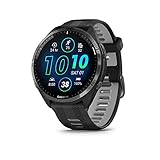 Garmin Forerunner 965
Multisport with the training-load and threshold metrics most of these calculations assume you can actually see day to day.
Check Backcountry → Check price on Amazon → COROS APEX 2 Series GPS Watch
Sapphire titanium and the longest battery in its class, which is the deciding feature once sessions run past a few hours.
Check Backcountry → Check price on Amazon → Favero Assioma Uno Power Meter Pedal
Single-sided pedal power, the cheapest honest way to start training with watts instead of estimating from heart rate.
Check Backcountry → Check price on Amazon →As an Amazon Associate we earn from qualifying purchases, at no extra cost to you. Prices change, so check before buying.
1. Why Train with Heart Rate?
Benefits of Heart Rate Training
What HR Shows
- • Internal effort: How hard your body is actually working
- • Fatigue state: Elevated HR at same pace = tired
- • Environmental stress: Heat, altitude, humidity effects
- • Fitness changes: Same pace at lower HR = fitter
What Pace Shows
- • External output: How fast you're moving
- • Race relevance: Races are timed, not HR'd
- • Consistency: No lag or variability issues
- • Specificity: Better for race-pace training
When HR Training Excels
Easy and Recovery Runs
HR ensures you're actually running easy, even when you feel good and want to push. Many runners run their easy days too hard—HR keeps you honest.
Hot Weather Running
On hot days, the same pace requires much higher effort. HR tells you to slow down before you overheat or bonk.
Hilly Terrain
Hills destroy pace-based training. HR lets you maintain consistent effort regardless of gradient.
Base Building Phases
Aerobic development requires consistent Zone 2 work. HR ensures you're building your aerobic engine, not just accumulating junk miles.
2. Choosing a Heart Rate Monitor
Chest Strap vs. Optical (Wrist) Sensors
| Feature | Chest Strap | Optical (Wrist) |
|---|---|---|
| Accuracy | Excellent (±1 bpm) | Good for steady-state (±5-10 bpm) |
| Interval Accuracy | Excellent | Poor (lag and spikes) |
| Comfort | Takes getting used to | Very comfortable |
| Convenience | Extra device to wear | Built into watch |
| Cold Weather | Works well | Struggles with cold skin |
| Battery | 1+ year (coin cell) | N/A (watch battery) |
| Best For | Serious training, intervals, racing | Casual training, steady runs |
Our Recommendation
For most runners doing structured training, a chest strap is worth the minor inconvenience. The accuracy during intervals, tempo runs, and races is significantly better. Use wrist-based HR for easy runs where precision matters less. Top chest strap options: Polar H10, Garmin HRM-Pro Plus, Wahoo TICKR.
Optical Sensor Accuracy Tips
If using wrist-based HR, maximize accuracy with these tips:
- ✓ Tight fit: Watch should be snug (but not uncomfortable) about 1-2 finger widths above wrist bone
- ✓ Clean sensor: Sweat, dirt, and sunscreen degrade readings
- ✓ Warm up first: Blood flow improves accuracy; wait 5 min before trusting readings
- ✓ Avoid tattoos: Ink can interfere with optical readings
- ✓ Right arm position: Keep wrist stable; excessive arm swing causes spikes
3. Finding Your Heart Rate Zones
Step 1: Determine Your Max Heart Rate
Accurate zones require knowing your actual max HR. The 220-minus-age formula is often wrong by 10-20 bpm.
Field Test Method
- 1. Warm up 10-15 minutes easy
- 2. Find a hill (4-6% grade, 2-3 min long)
- 3. Run 3 x 3-minute hard efforts up the hill
- 4. 2-minute easy jog recovery between
- 5. Third interval should be all-out
- 6. Your peak HR ≈ max HR
Race-Based Method
Your highest HR from a recent all-out 5K or 10K race is a good approximation of max HR.
Look at the peak value from the last 1-2 minutes of an all-out effort—this is typically very close to your true max.
Step 2: Calculate Your Zones
Use your max HR to calculate training zones. Here's a common 5-zone system:
| Zone | % of Max HR | Feel | Purpose |
|---|---|---|---|
| Zone 1 | 50-60% | Very easy, recovery | Active recovery, warm-up |
| Zone 2 | 60-70% | Comfortable, conversational | Aerobic base building |
| Zone 3 | 70-80% | Moderate, steady | Tempo, marathon pace |
| Zone 4 | 80-90% | Hard, uncomfortable | Threshold, 10K-half pace |
| Zone 5 | 90-100% | Very hard, max effort | VO2max intervals, 5K pace |
Example: Max HR of 185 bpm
- Zone 1: 93-111 bpm
- Zone 2: 111-130 bpm
- Zone 3: 130-148 bpm
- Zone 4: 148-167 bpm
- Zone 5: 167-185 bpm
Alternative: Lactate Threshold Heart Rate (LTHR)
Some coaches prefer using LTHR instead of max HR for zone calculation. LTHR is your average HR during a 30-minute all-out time trial (use last 20 minutes). It's more trainable and may give more accurate zones for threshold work. See our Lactate Threshold Guide for details.
4. Training in Each Zone
Easy/Aerobic Running
This should comprise 70-80% of your weekly running. The purpose is building aerobic capacity, fat oxidation, and recovery without accumulating fatigue.
Signs You're Doing It Right
- • Can easily hold a conversation
- • Could maintain this pace for hours
- • Finish feeling refreshed, not tired
Common Mistakes
- • Running too fast (Zone 3 creep)
- • Ignoring HR on "good feeling" days
- • Starting too fast, then slowing
Tempo/Marathon Pace
"Comfortably hard"—you can speak in short sentences but not hold a full conversation. Marathon pace for most runners. Use for tempo runs and marathon-specific training.
Caution: Zone 3 is often called "no man's land"—too hard to recover from like easy running, not hard enough for significant threshold adaptations. Don't spend too much time here unless specifically training for marathon.
Threshold Training
Hard but sustainable for 20-60 minutes. This is your lactate threshold zone—the boundary between sustainable and unsustainable effort. Critical for improving race performance.
- • Tempo runs: 20-40 minutes continuous at Zone 4
- • Cruise intervals: 3-4 x 10 minutes with short rest
- • Race effort: Approximately 10K to half marathon pace
VO2max Intervals
Very hard—you can only say a few words. This zone develops your maximal aerobic capacity. Used for interval training.
- • Typical workouts: 5 x 3-5 minutes with equal recovery
- • HR lag: Takes 2-3 minutes to reach Zone 5; don't wait for HR to spike before you're already working hard
- • Limit volume: No more than 5-8% of weekly mileage at this intensity
5. Common HR Training Mistakes
1. Using Inaccurate Max HR
Zones based on 220-age are often 10-20 bpm off. All your training will be at wrong intensities. Do a proper field test or use race data.
2. Ignoring HR Lag
HR takes 1-3 minutes to respond to effort changes. During intervals, start at target pace—don't wait for HR to climb. For cool-downs, HR stays elevated even as you slow down.
3. Not Adjusting for Conditions
Heat, altitude, sleep, stress, and caffeine all affect HR. Accept that the same effort may produce different HR readings on different days. That's the point—HR shows true stress.
4. Obsessing Over Every Beat
HR fluctuates. Don't panic if you're 2-3 bpm above your zone ceiling. Focus on averages and trends, not moment-to-moment readings. Aim for the middle of your target zone.
5. Using HR for All Workouts
HR lag makes it less useful for short intervals and sprints. For 400m repeats or hill sprints, use pace or effort. HR works best for steady-state runs and longer intervals.
6. Advanced HR Metrics
Resting Heart Rate (RHR)
Your RHR, measured first thing in the morning before getting up, is a key indicator of recovery and fitness. Track it daily.
Lower Than Usual
Well recovered, or improving fitness over time
5-10+ bpm Higher
Poor sleep, stress, dehydration, illness, or overtraining. Consider an easy day or rest.
Heart Rate Variability (HRV)
HRV measures the variation in time between heartbeats. Higher HRV generally indicates better recovery and readiness to train. Many GPS watches and apps now track HRV.
- • High HRV: Well recovered, ready for hard training
- • Low HRV: Stressed, fatigued, or under-recovered
- • Trend matters: Your personal baseline is what counts, not absolute numbers
Cardiac Drift
During long runs, HR gradually increases even at constant pace—this is cardiac drift, caused by dehydration, heat, and glycogen depletion.
Using Drift as a Tool
Minimal drift (<5%) over a long run suggests good fitness and hydration. Significant drift (10%+) indicates you may need to slow down, hydrate more, or improve aerobic fitness.
7. Frequently Asked Questions
Is a chest strap more accurate than a wrist-based heart rate monitor?
Yes, chest straps are generally more accurate, especially during high-intensity exercise and intervals. They measure electrical signals directly from your heart, while optical sensors measure blood flow through your skin. Optical sensors can lag and struggle with rapid HR changes, dark skin tones, tattoos, cold weather, and certain arm movements. For serious training, a chest strap is recommended.
How do I find my maximum heart rate for training zones?
The most accurate method is a field test: after warming up, run 3x3 minute hard intervals up a hill with 2-minute recoveries, going all-out on the third interval. Your peak HR is approximately your max. Formula estimates (220-age) are often inaccurate by 10-20 bpm. Alternatively, your highest HR from a recent all-out race effort is a good approximation.
Why does my heart rate spike at the start of runs?
Initial HR spikes are normal and caused by the "cardiovascular drift" as your body responds to exercise. Adrenaline, dehydration, heat, and inadequate warm-up can exaggerate this. If using optical sensors, poor contact or movement can also cause false readings. After 5-10 minutes of easy running, HR should stabilize. A proper warm-up helps reduce the initial spike.
Should I train by heart rate or by pace?
Both have value. Heart rate reflects internal effort and adjusts for factors like heat, fatigue, and hills. Pace measures external output. For easy and recovery runs, heart rate is excellent for preventing overtraining. For intervals and tempo runs, pace targets with HR confirmation works well. Many coaches recommend HR for base building and pace for race-specific work.
What does it mean if my heart rate is higher or lower than usual?
Elevated resting or exercise HR (5-10+ bpm above normal) can indicate fatigue, dehydration, stress, illness, or overtraining. Lower than usual HR at the same effort may indicate improved fitness or cooler conditions. Track your morning resting HR to spot trends. If elevated HR persists with fatigue, consider extra rest. Heart rate variability (HRV) provides even more insight into recovery status.
Related Articles
Related Calculators
Use our free calculators to optimize your heart rate training: