Understanding Maximum Heart Rate
Maximum heart rate (MHR) is the highest heart rate you can achieve during all-out physical exertion. It's a key metric for setting training zones and monitoring exercise intensity. Our comparison of max heart rate formulas looks at which calculator method is most accurate. MHR naturally decreases with age due to physiological changes.
Maximum Heart Rate Formulas Explained
1. Basic Formula (220 - Age)
- Most Common: Widely used but has limitations
- Accuracy: ±10-12 beats per minute standard deviation
- Best For: General population, initial estimates
- Limitation: Doesn't account for individual variation
2. Tanaka Formula (208 - 0.7 × Age)
- Research-Based: Based on large meta-analysis
- Accuracy: More accurate than basic formula
- Best For: Trained athletes and older adults
- Advantage: Better for ages 40+
3. Gelish Formula (207 - 0.7 × Age)
- Similar to Tanaka: Slight variation in constant
- Accuracy: Comparable to Tanaka method
- Best For: General athletic population
- Use Case: Alternative to Tanaka formula
4. Fox Formula (Male/Female Specific)
- Gender-Specific: Different formulas for men and women
- Male: 220 - Age
- Female: 226 - Age
- Consideration: Accounts for gender differences
How to Use Your Maximum Heart Rate
Once you know your estimated MHR, you can:
- Set Training Zones: Calculate heart rate training zones
- Monitor Intensity: Ensure you're training at the right effort
- Track Fitness: Monitor changes over time
- Safety: Avoid overexertion during exercise
Limitations of Estimated Max HR
- Individual Variation: Formulas are population averages
- Fitness Level: Training status can affect MHR
- Genetics: Natural variation between individuals
- Medication: Some medications can affect heart rate
Testing Your Actual Max HR
For the most accurate measurement, consider a supervised max HR test:
- Professional Test: VO2 max test at sports lab
- Field Test: Supervised incremental exercise test
- Race Data: Analyze heart rate from all-out efforts
- Safety First: Always consult a doctor before max testing
Featured at Backcountry: 15% off first order
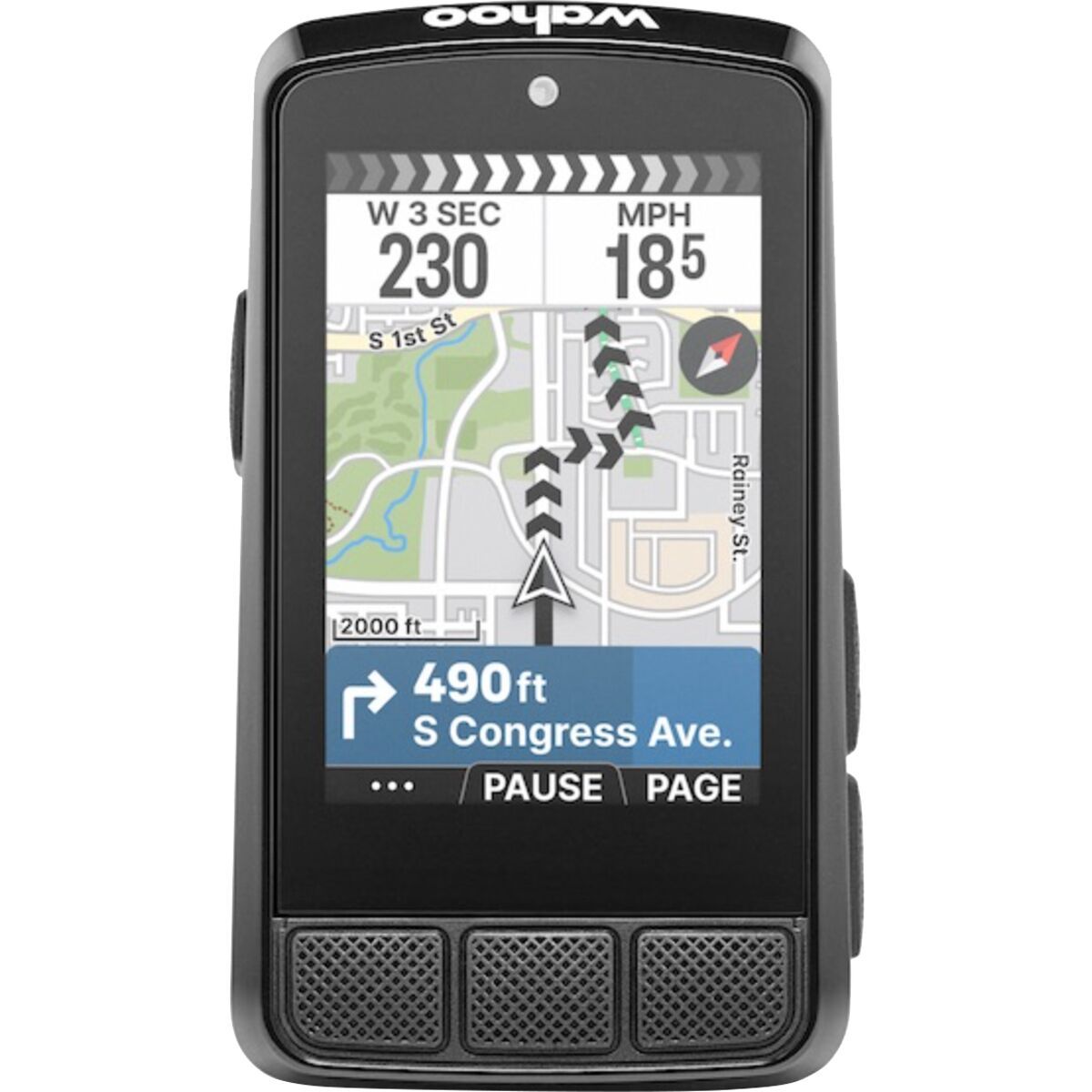
Wahoo ELEMNT BOLT 3
Pair with any ANT+ or Bluetooth HR monitor. Displays training zones in real time.
Frequently Asked Questions
What is the most accurate max heart rate formula?
The Tanaka formula (208 - 0.7 × age) is considered most accurate for adults, with an error margin of ±10 bpm. The traditional 220-age formula overestimates for young people and underestimates for older adults. For best accuracy, perform a field test.
How do I find my true maximum heart rate?
The most accurate method is a graded exercise test to exhaustion, supervised by a professional. DIY field tests include: 3-minute all-out effort after warm-up, hill repeats to exhaustion, or noting the highest HR achieved during a race. Lab testing is the gold standard.
Does max heart rate decrease with age?
Yes, max heart rate decreases approximately 0.7-1.0 bpm per year after age 20. A 20-year-old might have a max HR of 200, while a 60-year-old might have 160. However, individual variation is significant - some athletes maintain higher max HRs with training.
Why is my max heart rate different from the formula?
Formulas predict population averages with standard deviation of 10-12 bpm. Genetics, fitness level, altitude, medications, and testing conditions all affect actual max HR. If your observed max differs significantly, use your tested value for training zones.