For decades, cyclists avoided the weight room, fearing it would add bulk and slow them down. Modern sports science has proven the opposite: properly designed strength training improves power output, climbing ability, time trial performance, and injury resilience. This comprehensive guide shows you exactly how to build cycling-specific strength without compromising your on-bike performance.
Key Insight
Research shows that adding strength training to cycling programs improves time to exhaustion by 8-12%, increases cycling economy by 3-5%, and enhances sprint power by 3-10%—all without adding significant body mass when properly programmed.
Why Cyclists Need Strength Training
The evidence for strength training in cycling has become overwhelming. Multiple peer-reviewed studies demonstrate clear performance benefits across all cycling disciplines.
Performance Benefits
- Improved power output: Stronger muscles produce more force with each pedal stroke
- Enhanced cycling economy: Reduced oxygen cost at any given power output
- Better time trial performance: Maintain power late in races when competitors fade
- Superior climbing: Higher power-to-weight ratio and sustained power on climbs
- Increased sprint capacity: More peak power for decisive moments
- Delayed fatigue: Muscles working at lower percentage of maximum capacity
Injury Prevention Benefits
Cycling is a repetitive motion sport with significant injury risk, particularly for the lower back, knees, and hips. Strength training addresses these vulnerabilities:
- Muscle balance: Corrects imbalances created by pedaling's limited range of motion
- Joint stability: Strengthens supporting structures around knees and hips
- Bone density: Cycling is non-weight-bearing; strength training maintains bone health
- Postural strength: Supports proper cycling position for hours
- Resilience: Stronger tissues recover faster and resist overuse injuries
Key Muscle Groups for Cycling
Understanding which muscles drive cycling performance helps you prioritize your strength training effectively.
Primary Movers
Quadriceps
The primary power producers during the downstroke. Responsible for knee extension during the power phase (12 o'clock to 5 o'clock).
Key exercises: Squats, leg press, step-ups
Glutes
Hip extension powerhouse. Critical for high-power efforts, climbing, and maintaining position on the saddle.
Key exercises: Deadlifts, hip thrusts, Bulgarian split squats
Hamstrings
Assist hip extension and provide knee flexion during the upstroke. Often underdeveloped in cyclists.
Key exercises: Romanian deadlifts, Nordic curls, leg curls
Calves
Stabilize the ankle and assist power transfer through the foot. Important for smooth pedal technique.
Key exercises: Calf raises, single-leg calf raises
Stabilizers and Support Muscles
- Core muscles: Provide stable platform for leg power, prevent energy leakage
- Hip flexors: Lift the leg during the upstroke phase
- Lower back: Maintains cycling position, often fatigues on long rides
- Upper back and shoulders: Support aero position, absorb road vibration
- Arms and grip: Control steering, especially important for mountain biking
Essential Exercises for Cyclists
Focus on compound movements that train multiple muscle groups through functional movement patterns. Isolation exercises have their place but shouldn't dominate your program.
Lower Body Compound Exercises
Back Squat
The king of lower body exercises. Develops quadriceps, glutes, and core stability simultaneously.
Execution:
Barbell on upper back, squat to parallel or below, drive through heels
Cycling benefit:
Direct power transfer to pedaling, climbing strength
Romanian Deadlift (RDL)
Targets the posterior chain—glutes and hamstrings—often neglected in cyclists.
Execution:
Hinge at hips, slight knee bend, lower weight to mid-shin, squeeze glutes to rise
Cycling benefit:
Hip power, hamstring strength, lower back protection
Bulgarian Split Squat
Single-leg exercise that mimics the unilateral nature of cycling. Addresses imbalances.
Execution:
Rear foot elevated, front leg does the work, controlled descent and drive
Cycling benefit:
Single-leg power, balance, injury prevention
Step-Ups
Functional single-leg exercise with direct application to climbing power.
Execution:
High box (knee height), drive through stepping leg, control descent
Cycling benefit:
Hill climbing power, glute activation
Leg Press
High-load leg training with reduced spinal stress. Good for building volume safely.
Execution:
Full range of motion, feet shoulder-width, controlled throughout
Cycling benefit:
Raw leg strength, recovery-friendly option
Core Training for Cyclists
A strong core is essential for cycling—it provides the stable platform from which your legs generate power. Without core stability, energy leaks from your kinetic chain, and your lower back bears excessive stress.
Anti-Extension Exercises
These exercises train your core to resist spinal extension, mimicking the demands of maintaining an aero position.
Plank
Hold rigid position, engage entire core, breathe normally
Sets: 3 | Hold: 30-60 seconds
Dead Bug
Alternate arm/leg extension while pressing lower back into floor
Sets: 3 | Reps: 8-12 each side
Ab Wheel Rollout
Roll out while maintaining rigid spine, use core to pull back
Sets: 3 | Reps: 8-12
Hollow Body Hold
Arms overhead, legs extended, press lower back to floor
Sets: 3 | Hold: 20-40 seconds
Anti-Rotation Exercises
Train your core to resist rotation—essential for maintaining efficient pedaling mechanics without wasted lateral movement.
Pallof Press
Cable or band resistance, press straight out, resist rotation
Sets: 3 | Reps: 10-12 each side
Bird Dog
Opposite arm/leg extension from all fours, maintain stable hips
Sets: 3 | Reps: 8-12 each side
Hip Flexor Strength
Hip flexors lift your leg during the upstroke. Strong hip flexors contribute to a smooth, powerful pedal stroke.
- Hanging leg raises: Build hip flexor strength through full range of motion
- Captain's chair leg raises: Supported version if hanging is difficult
- Lying leg raises: Floor-based option for beginners
- Mountain climbers: Dynamic hip flexor training with core engagement
Periodization for Cycling
Strength training should vary throughout the year to complement your cycling periodization. Heavy strength work belongs in the off-season, while race season calls for maintenance and power work.
Annual Periodization Model
Phase 1: Anatomical Adaptation (4-6 weeks)
Early off-season. Prepare tissues for heavier training.
- • Volume: 3 sets × 12-15 reps
- • Intensity: 50-60% 1RM
- • Focus: Movement quality, full range of motion
- • Sessions per week: 2-3
Phase 2: Maximum Strength (6-8 weeks)
Mid off-season. Build peak strength levels.
- • Volume: 4-5 sets × 4-6 reps
- • Intensity: 75-85% 1RM
- • Focus: Progressive overload, compound lifts
- • Sessions per week: 2-3
Phase 3: Power Conversion (4-6 weeks)
Late off-season/early base. Convert strength to power.
- • Volume: 3-4 sets × 3-5 reps
- • Intensity: 60-70% 1RM with speed emphasis
- • Focus: Explosive movements, rate of force development
- • Sessions per week: 2
Phase 4: Maintenance (Race Season)
Competition period. Maintain strength without fatigue.
- • Volume: 2-3 sets × 4-6 reps
- • Intensity: 70-80% 1RM
- • Focus: Retain strength gains, avoid interference
- • Sessions per week: 1 (max 2)
Scheduling Strength and Cycling
How you schedule strength training around cycling significantly impacts both recovery and performance. Poor scheduling leads to accumulated fatigue and compromised bike workouts.
Scheduling Principles
- Same-day stacking: Do strength on hard cycling days to consolidate stress, leave easy days truly easy
- Sequence matters: Prioritize cycling if it's the main workout; strength comes second
- Recovery timing: Allow 6+ hours between cycling and strength when same-day
- Pre-key workout buffer: 48-72 hours between heavy leg day and key bike sessions
- Never before: Don't do heavy legs before important cycling workouts
Sample Weekly Schedules
| Day | Off-Season | Race Season |
|---|---|---|
| Monday | Strength (full body) | Easy ride + Core |
| Tuesday | Cycling (intervals) | Cycling (intervals) |
| Wednesday | Strength (lower focus) | Strength (maintenance) |
| Thursday | Cycling (tempo) | Cycling (tempo/threshold) |
| Friday | Strength + easy ride | Rest or easy spin |
| Saturday | Long ride | Racing or group ride |
| Sunday | Rest or easy spin | Long ride |
Sample Strength Programs
Off-Season Full Body Workout
Workout A (2x per week)
1. Back Squat: 4 sets × 6 reps @ 75-80% 1RM
2. Romanian Deadlift: 3 sets × 8 reps
3. Bulgarian Split Squat: 3 sets × 8 each leg
4. Calf Raises: 3 sets × 15 reps
5. Plank: 3 sets × 45 seconds
6. Pallof Press: 3 sets × 10 each side
Workout B (1x per week)
1. Deadlift: 4 sets × 5 reps @ 80% 1RM
2. Step-Ups: 3 sets × 10 each leg
3. Leg Press: 3 sets × 10 reps
4. Nordic Curl: 3 sets × 6-8 reps (assisted if needed)
5. Dead Bug: 3 sets × 12 each side
6. Hanging Leg Raises: 3 sets × 10-12 reps
Race Season Maintenance Workout
Quick Maintenance Session (1x per week, 30-40 min)
1. Back Squat: 3 sets × 5 reps @ 75% 1RM
2. Romanian Deadlift: 2 sets × 8 reps
3. Step-Ups: 2 sets × 8 each leg
4. Plank: 2 sets × 45 seconds
5. Bird Dog: 2 sets × 8 each side
Equipment Guide
You don't need a full gym to train effectively. Here's what's most valuable for cycling-specific strength training.
Essential Equipment
Must-Have for Home Gym
- 2026 Updated Adjustable Dumbbell Set of 2 - Versatile for most exercises
- Resistance Bands - Warm-up, activation, Pallof press
- BalanceFrom 3-in-1 Foam Plyometric Jump Box for Home Gym - Step-ups, box jumps, elevated split squats
- Amazon Basics Cast Iron Kettlebell for Strength Training - Swings, goblet squats, Turkish get-ups
Advanced Equipment
For Serious Home Gym
- CAP Barbell 160 lb Economy - Essential for serious strength work
- ULTRA FUEGO Power Cage - Safe squatting and pressing
- Vinsguir Ab Roller Wheel - Core strength tool
- POWER GUIDANCE Barbell Squat Pad - Comfortable hip thrusts
Frequently Asked Questions
How often should cyclists do strength training?
During the off-season, 2-3 strength sessions per week is optimal. During the racing season, reduce to 1-2 maintenance sessions per week to avoid interference with cycling-specific training. Each session should last 45-60 minutes, focusing on compound movements.
Will strength training make me too bulky for cycling?
No, when programmed correctly for cycling. Endurance cyclists should use moderate weights (60-80% 1RM), moderate reps (6-12), and focus on compound movements. This builds functional strength without significant hypertrophy. Combined with cycling volume, muscle gain will be minimal while power output improves.
What are the best exercises for cyclists?
The most effective exercises for cyclists are: Squats (back squat, front squat), Deadlifts (conventional or Romanian), Single-leg exercises (Bulgarian split squats, step-ups), Hip hinges (Romanian deadlifts), Core stability (planks, dead bugs, Pallof press), and Hip flexor strength (hanging leg raises). These target the primary cycling muscles while improving stability.
Should I lift heavy or light as a cyclist?
It depends on your training phase. During the off-season strength phase, lift heavy (75-85% 1RM, 4-6 reps) to build maximum strength. During the race season, shift to lighter, explosive work (60-70% 1RM, 3-5 reps with speed) to maintain power without excessive fatigue. Always prioritize quality over quantity.
How do I schedule strength training around cycling?
Perform strength training on the same day as hard cycling sessions, ideally after the ride with at least 6 hours between, or on easy/rest days. Never do heavy leg strength before key bike workouts. Allow 48-72 hours before your next hard cycling session after heavy leg day.
Do I need a gym membership or can I train at home?
You can achieve significant results at home with basic equipment: adjustable dumbbells, a kettlebell, resistance bands, and a box for step-ups. However, a gym provides access to barbells and heavier weights, which are beneficial for the maximum strength phase. Many cyclists alternate between home and gym training.
Build Strength, Build Speed
Strength training is no longer optional for serious cyclists. The research is clear: properly programmed gym work improves power, economy, and injury resilience without adding unwanted mass.
Start with the fundamentals—squats, deadlifts, and core work—and progress gradually. Periodize your strength training to peak at the right times, and schedule it intelligently around your cycling. The payoff comes on climbs, in time trials, and in the final kilometers when fresher legs make the difference.
Your competitors who skip the gym will wonder how you're riding stronger late in races. Your secret? You've built a foundation of strength that transforms every pedal stroke into forward momentum.
Featured at Backcountry — 15% off first order
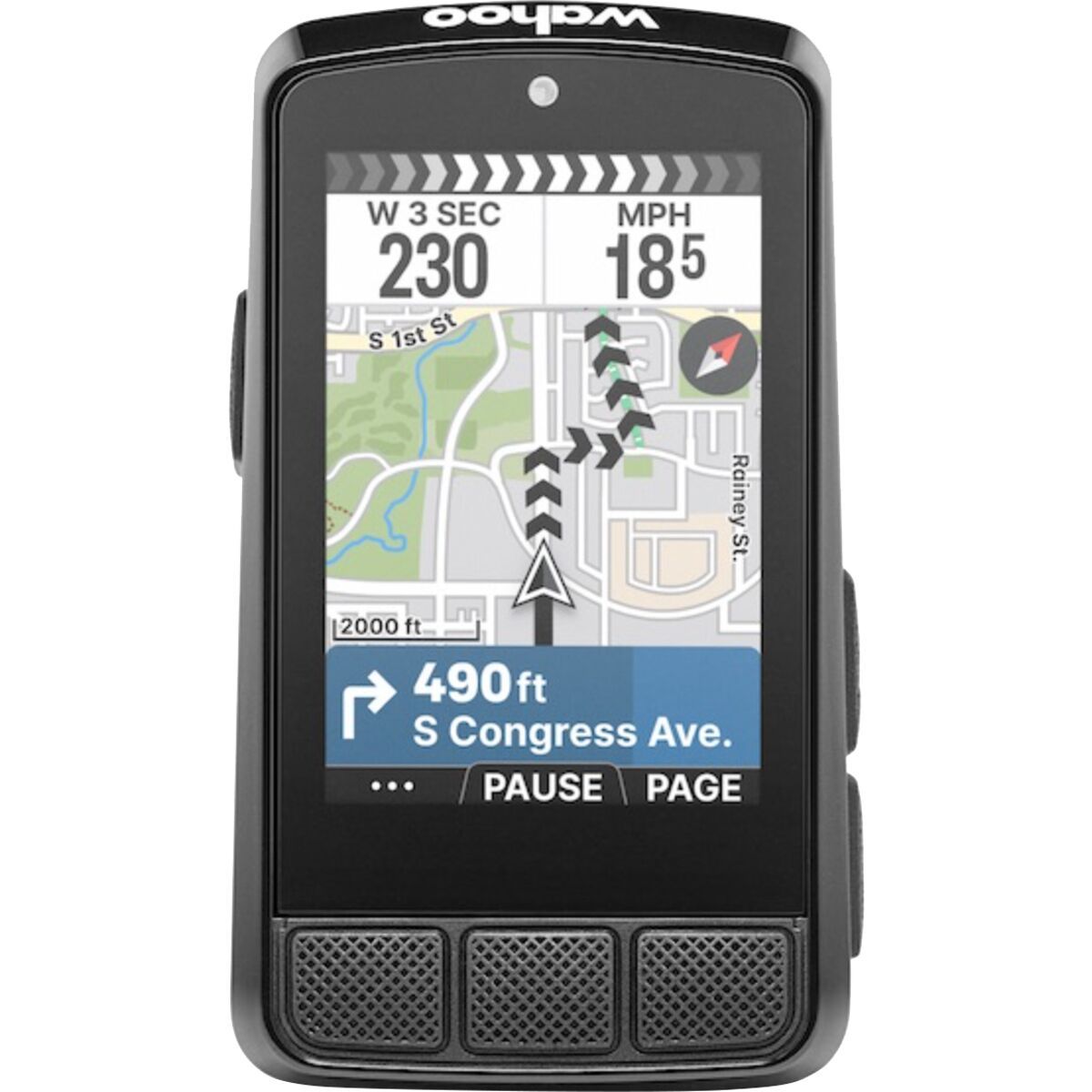
Wahoo ELEMNT BOLT 3
Track your rides with Wahoo's compact GPS — the bike computer we use daily.