1. Overview: The Great Debate
The treadmill vs outdoor running debate has been ongoing for decades. The truth? Both are valid training tools with distinct advantages. Understanding when and how to use each optimizes your training.
The Bottom Line
Neither is inherently "better." The best option depends on:
- Your goals: Race preparation favors outdoor; general fitness works on both
- Weather conditions: Extreme heat, cold, or ice favor treadmill
- Safety: Dark hours, high-traffic areas favor treadmill
- Workout type: Specific workouts may favor one or the other
- Mental preference: Some love treadmills; others hate them
Common Misconceptions
Myths
- "Treadmill running doesn't count"
- "You can't get fit on a treadmill"
- "Treadmills are always easier"
- "Outdoor running is always better"
- "Treadmill pace = outdoor pace"
Truths
- Cardiovascular benefits are equivalent
- Elite runners use treadmills regularly
- Incline treadmill can be harder than outdoor
- Each has unique advantages
- 1% incline approximates outdoor effort
2. Physiological Differences
While running is running, there are measurable differences in how your body works on a treadmill versus outdoors.
Key Physiological Differences
- No wind resistance: Outdoors, you push against air; treadmill eliminates this
- Belt assistance: Moving belt slightly assists leg turnover
- Stable surface: No terrain variation or stabilization demands
- Temperature control: No cooling from wind; may run hotter indoors
- Consistent grade: No subtle elevation changes
Muscle Activation
| Muscle Group | Treadmill | Outdoor |
|---|---|---|
| Hamstrings | Slightly less (belt assists) | Full engagement |
| Glutes | Moderate | Higher (propulsion) |
| Stabilizers | Lower (stable surface) | Higher (varied terrain) |
| Quadriceps | Similar | Similar |
| Calves | Similar | Similar |
Cardiovascular Load
Heart rate and VO2 response are nearly identical between treadmill and outdoor running at equivalent efforts:
- Studies show less than 5% difference in VO2 at matched intensities
- Heart rate can run 5-10 bpm higher on treadmill due to heat
- Lactate response is essentially equivalent
- Aerobic adaptations transfer fully between modalities
3. Pros and Cons Comparison
Treadmill Running
Pros
- Weather-independent
- Safe (no traffic, lighting)
- Precise pace control
- Softer surface (usually)
- Entertainment options
- Bathroom/water accessible
- Great for controlled workouts
- Hill simulation on flat terrain
Cons
- Mentally boring for many
- No wind cooling (hot)
- Doesn't simulate race conditions
- Less stabilizer muscle work
- Gym cost or equipment expense
- Unchanging scenery
- May develop "treadmill gait"
- No downhill training
Outdoor Running
Pros
- Race-specific training
- Natural cooling from wind
- Varied terrain strengthens stabilizers
- Mental engagement/scenery
- Free (no equipment needed)
- Vitamin D exposure
- Natural pace variability
- Downhill training possible
Cons
- Weather dependent
- Safety concerns (traffic, dark)
- Less precise pace control
- Harder surfaces often
- No bathroom access
- Route planning required
- Pollution exposure in cities
- Carrying water/gear
4. Pace & Effort Equivalencies
A common question: how does treadmill pace translate to outdoor running? The answer involves understanding the differences and making adjustments.
The 1% Incline Rule
Research suggests setting your treadmill to 1% incline compensates for:
- Lack of wind resistance (worth ~1-2% energy cost)
- Belt assistance (minimal but measurable)
- Perfectly flat surface advantage
Caveat: This applies to paces around 7:00-9:00/mile. Slower paces need less adjustment; faster paces may need more.
Pace Conversion Guidelines
| Outdoor Pace | Treadmill (0%) | Treadmill (1%) |
|---|---|---|
| 10:00/mile | ~10:15-10:20/mile | ~10:00/mile (equivalent) |
| 8:00/mile | ~8:10-8:15/mile | ~8:00/mile (equivalent) |
| 7:00/mile | ~7:10-7:15/mile | ~7:00/mile (equivalent) |
| 6:00/mile | ~6:10-6:20/mile | ~6:05/mile (close) |
Use Heart Rate for True Equivalence
Rather than matching pace, match effort using heart rate or perceived exertion:
- Easy runs: Same heart rate zone on both
- Tempo runs: Target same HR or RPE regardless of pace shown
- Intervals: Adjust pace until effort matches outdoor equivalent
- Note: Treadmill HR may run 5-10 bpm higher due to heat - this is normal
5. Effective Treadmill Workouts
The treadmill excels for certain workout types. Its precise pace and incline control allows workouts that are difficult to replicate outdoors.
Progressive Tempo
Increase speed every mile or two for a ladder-style tempo run.
Example: 2 miles at 7:30, 2 miles at 7:15, 2 miles at 7:00, 2 miles at 6:45
Hill Simulation
Create any hill profile even if you live somewhere flat.
Example: 6x 3 min at 6% incline with 2 min flat recovery
Cruise Intervals
Threshold-pace repeats with short recovery.
Example: 4x 8 min at threshold pace with 2 min easy jog
Race Simulation
Program the treadmill to simulate a race course profile.
Example: Match the elevation profile of your goal race
Treadmill-Specific Tips
- Fan: Point a fan at yourself to simulate wind cooling
- Hydrate: You'll sweat more indoors - keep water handy
- Entertainment: Music, podcasts, TV can help pass time
- Vary incline: Don't always run flat - mix in incline changes
- Don't hold rails: This changes your gait and reduces workout effectiveness
6. Outdoor Running Advantages
For race preparation and overall running development, outdoor running offers benefits that treadmills can't fully replicate.
Race-Specific Training
- Pacing skills: Learning to run even splits without a belt
- Terrain adaptation: Handling hills, turns, varied surfaces
- Wind management: Racing into/with wind
- Mental toughness: Pushing through without distraction
- Course familiarity: Training on actual race routes
Physical Development
Stabilizer Strength
Uneven surfaces, turns, and terrain changes build ankle, knee, and hip stabilizer muscles that treadmills don't challenge.
Proprioception
Reading and reacting to terrain develops neuromuscular coordination and injury prevention skills.
Downhill Running
Treadmills can't effectively simulate downhill running, which requires different muscle engagement and technique.
Natural Gait
Running outdoors allows your natural stride without the constraint of matching a belt speed.
7. When to Use Each
Making smart choices about when to use treadmill vs outdoor running optimizes your training.
Use Treadmill When
- Weather extremes: Heat over 85°F, cold below 10°F, ice, severe storms
- Safety concerns: Dark hours, dangerous traffic, high-crime areas
- Controlled workouts: Precise pace/incline work
- Recovery from injury: Softer surface, controlled conditions
- Hill training: When you live somewhere flat
- Time efficiency: No route planning, immediate start
- Travel: Hotel gym access
Run Outdoors When
- Race preparation: Final 4-6 weeks before goal race
- Long runs: Mental training for race-day focus
- Good weather: When conditions are comfortable
- Mental freshness: When you need variety
- Terrain practice: Training for trail or hilly races
- Group runs: Social running opportunities
- Exploration: New routes, traveling
8. Hybrid Training Approach
The most effective approach for many runners combines both modalities strategically.
Sample Hybrid Week
Seasonal Adjustments
- Summer: Early AM outdoor, midday treadmill if needed
- Winter: More treadmill, outdoor when conditions allow
- Race season: Prioritize outdoor running
- Base building: Either works - choose based on preference
The gear these numbers assume
Every pace, zone and power figure on this page assumes something is measuring it. These are the three that cover running, cycling and the threshold work in between.
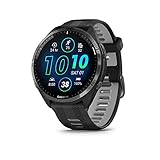 Garmin Forerunner 965
Multisport with the training-load and threshold metrics most of these calculations assume you can actually see day to day.
Check Backcountry → Check price on Amazon → COROS APEX 2 Series GPS Watch
Sapphire titanium and the longest battery in its class, which is the deciding feature once sessions run past a few hours.
Check Backcountry → Check price on Amazon → Favero Assioma Uno Power Meter Pedal
Single-sided pedal power, the cheapest honest way to start training with watts instead of estimating from heart rate.
Check Backcountry → Check price on Amazon →As an Amazon Associate we earn from qualifying purchases, at no extra cost to you. Prices change, so check before buying.
9. Frequently Asked Questions
Why do I feel like I run faster on the treadmill than outdoors?
Without wind resistance, terrain changes, and with the belt assisting your stride, treadmill running is genuinely easier at the same displayed pace. Use the 1% incline and/or adjust pace expectations accordingly.
Can I train for a marathon entirely on a treadmill?
It's possible but not ideal. You'll build the cardiovascular fitness, but you'll miss race-specific skills like pacing without feedback, handling wind and terrain, and the mental challenge of outdoor running. Include outdoor long runs in the final 6-8 weeks if possible.
Why do I find treadmill running so boring?
The stationary position, unchanging scenery, and lack of sensory variety make time pass slowly. Try: TV/movies, podcasts, music playlists, structured workouts with pace changes, virtual running apps, or accepting that some discomfort is mental training.
Is running on a treadmill bad for running form?
Extended exclusive treadmill use can develop a slightly different gait pattern. Some runners "bounce" more or develop shorter strides. Mix in outdoor running regularly to maintain natural running mechanics. Don't hold the rails.
How can I make treadmill running more bearable?
Structured workouts with pace/incline changes make time pass faster than steady running. Entertainment (TV, music, podcasts) helps. Some runners cover the display and focus on feel. Virtual platforms like Zwift add gamification elements.
📊 Optimize Your Training
Use our free calculators to plan your runs:
We review it on its own too, in full detail: the NordicTrack Commercial 2450 and its decline capability.