Blog / Running Gear / Watches
Best Watch for VO2 Max Tracking 2026
Our Top VO2 Max Watch Picks
Quick Comparison
| Product | Best for | Budget tier | Buy |
|---|---|---|---|
| Garmin Forerunner 265 | Most runners who want training status and HRV | Under $500 | Amazon → |
| Garmin Forerunner 165 | First running watch on a smaller budget | Under $250 | Amazon → |
| Garmin Forerunner 570 | Runners who want a smaller premium case and calls from the wrist | Under $1,000 | Amazon → |
| Garmin Forerunner 965 | Marathoners and triathletes who want maps and battery | Under $1,000 | Amazon → |
| Garmin Forerunner 970 | Runners and triathletes who want every feature | Under $1,000 | Amazon → |
Tiers show the price band when this page was updated, not a quoted price.
A VO2 max number on a watch is one of the most searched fitness stats, and our VO2 max by age chart is the place to see what your number means. This page covers the watches that estimate it. Garmin lists VO2 max as one of the indicators behind its training status on the Forerunner 570, and the same family of Forerunners reports training status, HRV status and recovery time. Each pick below is a running watch with built-in GPS and wrist heart rate, which is what the estimate is built from.
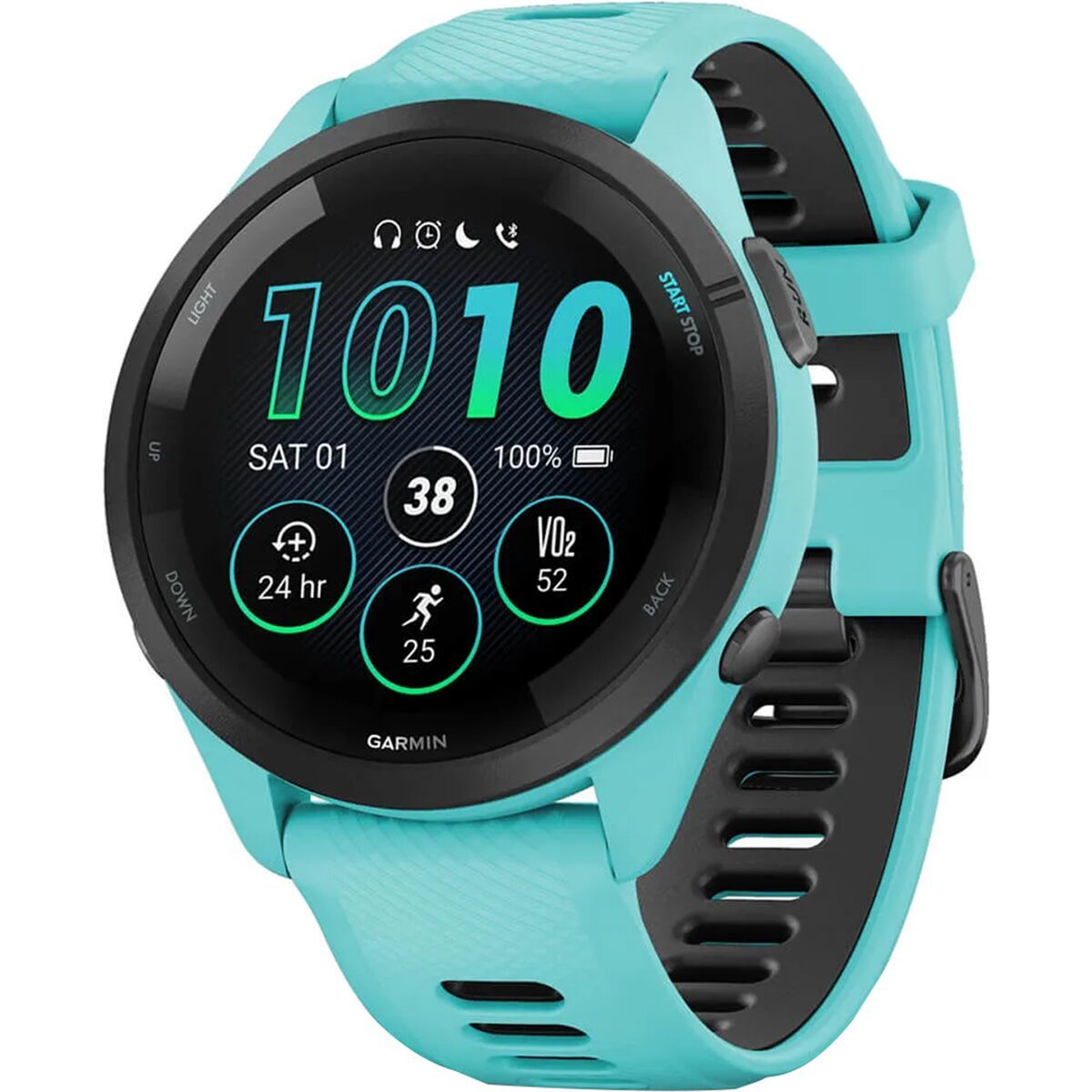
Garmin Forerunner 265
The Forerunner 265 is the watch we would point most runners to. Garmin lists a brilliant AMOLED touchscreen with button controls, up to 13 days of battery in smartwatch mode and up to 20 hours in GPS mode, multi-band GNSS with SatIQ, and training readiness built from sleep, recovery, training load and HRV status.
- ✓ AMOLED touchscreen with buttons, 46 mm
- ✓ Training readiness, training status and HRV status
- ✓ Multi-band GNSS with SatIQ
- ✓ Up to 13 days smartwatch battery, 20 hours GPS
- ✓ 30+ built-in activity profiles
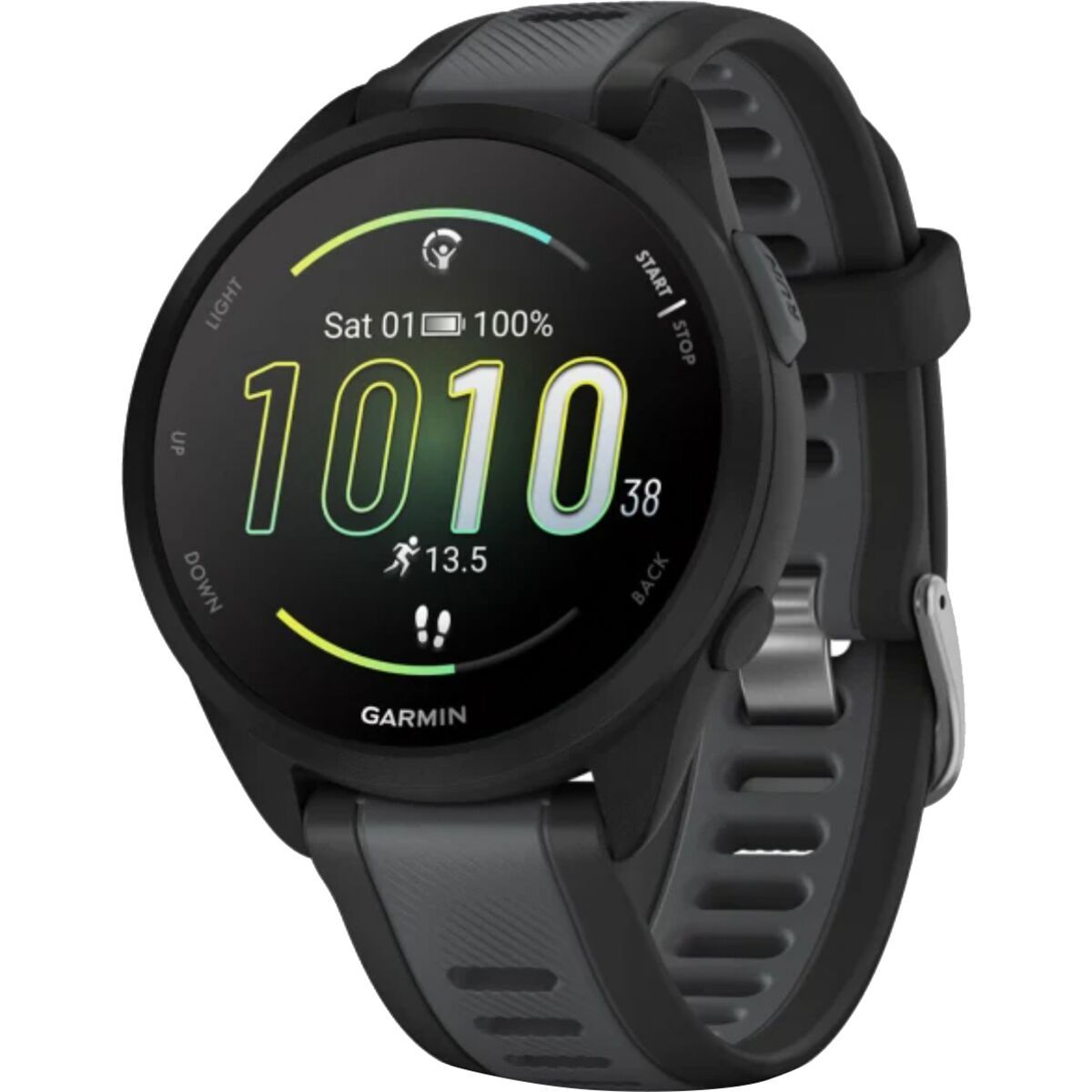
Garmin Forerunner 165
The Forerunner 165 is the lower-cost way into Garmin training metrics. The listing describes a 43 mm AMOLED touchscreen watch with built-in GPS, wrist heart rate, up to 11 days of battery in smartwatch mode and up to 19 hours in GPS mode, a morning report with HRV status, and daily suggested workouts that adapt to performance and recovery.
- ✓ 43 mm AMOLED touchscreen with buttons
- ✓ Built-in GPS and wrist heart rate
- ✓ Morning report with HRV status
- ✓ Up to 11 days smartwatch battery, 19 hours GPS
- ✓ Garmin Coach and race adaptive plans

Garmin Forerunner 570
The Forerunner 570 is the newer middle option. Garmin lists its brightest AMOLED display, a 42 mm aluminum case for smaller wrists, a microphone and speaker for phone calls, training readiness, and training status that uses HRV status, recent exercise history and VO2 max. It carries up to 10 days of smartwatch battery and 18 hours of GPS.
- ✓ 42 mm aluminum case, brightest AMOLED
- ✓ Training status uses HRV, history and VO2 max
- ✓ Phone calls from the watch via built-in mic and speaker
- ✓ Garmin Coach running and triathlon plans
- ✓ Up to 10 days smartwatch, 18 hours GPS
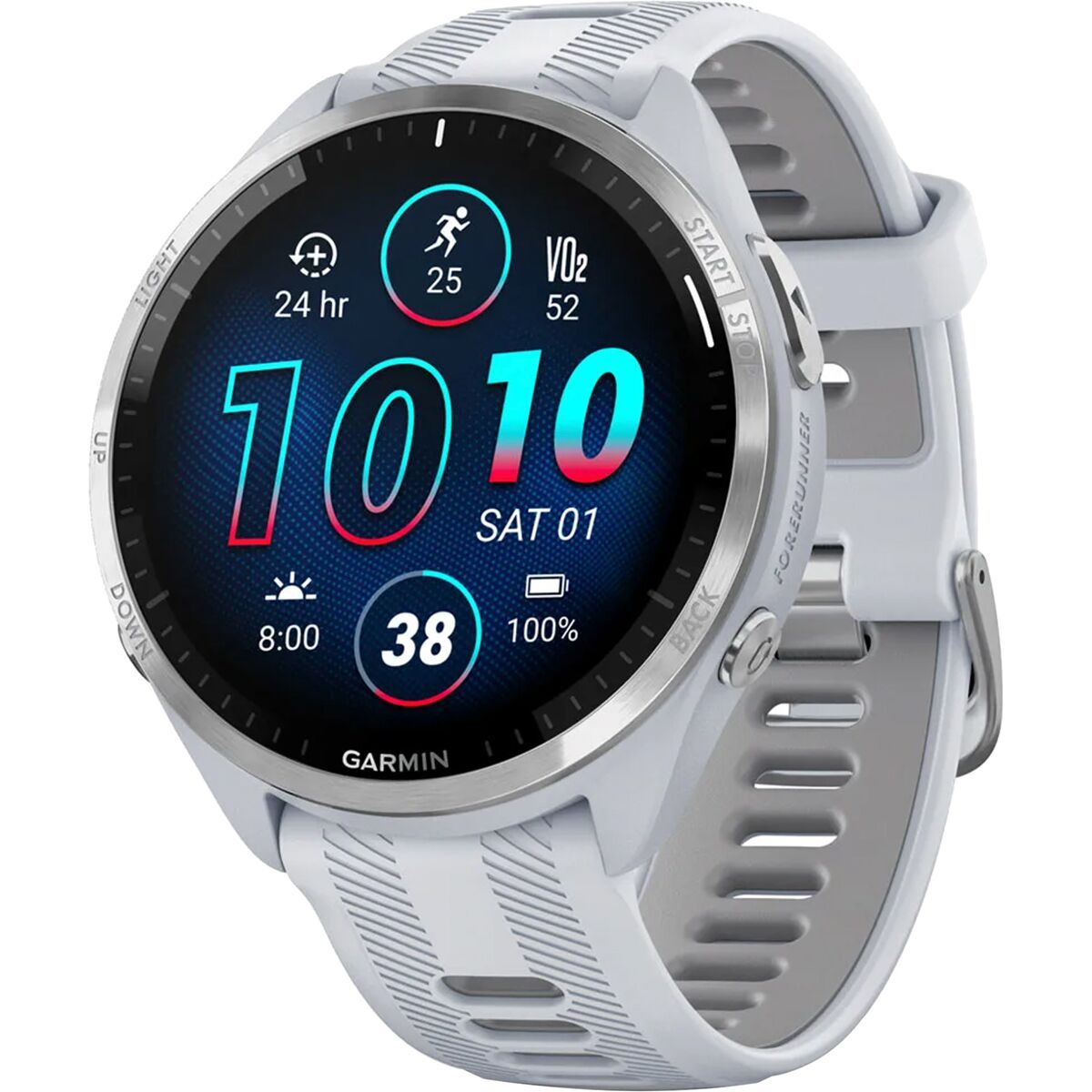
Garmin Forerunner 965
The Forerunner 965 adds full-color built-in maps and a titanium bezel. The listing gives up to 23 days of battery in smartwatch mode and up to 31 hours in GPS mode, multi-band GNSS, multisport profiles for triathlon, duathlon and swimrun, and wrist-based running dynamics and running power.
- ✓ Built-in full-color maps
- ✓ Up to 23 days smartwatch, 31 hours GPS
- ✓ Titanium bezel, 47 mm
- ✓ Triathlon, duathlon and swimrun profiles
- ✓ Wrist-based running dynamics and power
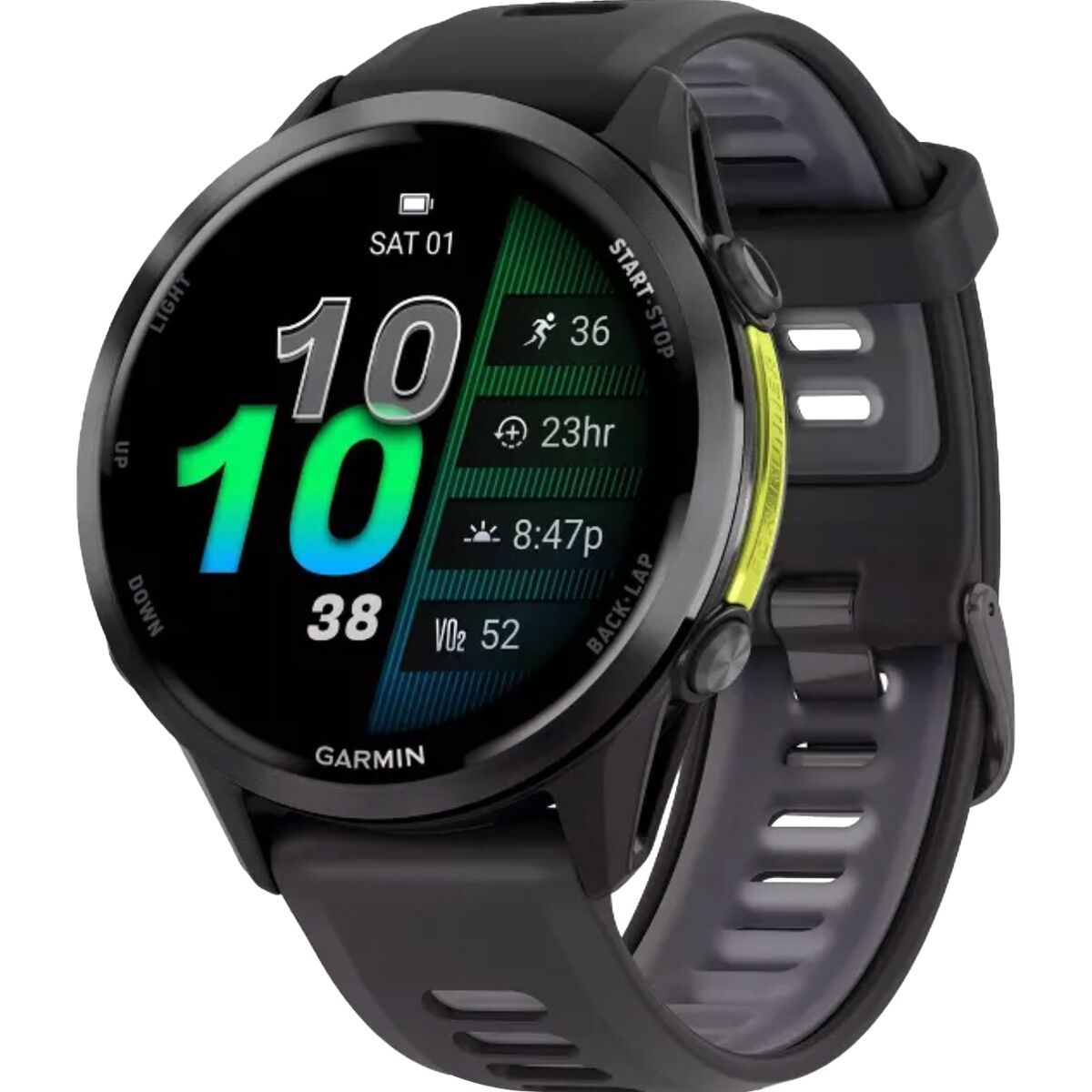
Garmin Forerunner 970
The Forerunner 970 is the top of the list. Garmin lists a titanium bezel with a sapphire lens, a built-in flashlight, maps with round-trip routing, up to 15 days of smartwatch battery and 26 hours in GPS, an ECG app where available, and running economy and step speed loss that need an HRM 600 monitor, sold separately.
- ✓ Titanium bezel, sapphire lens, LED flashlight
- ✓ Maps with round-trip routing
- ✓ Up to 15 days smartwatch, 26 hours GPS
- ✓ ECG app (not available in all countries)
- ✓ Running economy needs an HRM 600 (sold separately)
What a Wrist VO2 Max Number Is
VO2 max is the maximum rate at which your body can use oxygen during hard exercise, and it is one of the best-known markers of aerobic fitness. A lab measures it with a mask and a graded test. A watch estimates it, usually by comparing your heart rate to your pace or power on steady runs. Garmin states on its listings that the metrics it presents are intended to be a close estimation, and that is the right way to read them.
That means the number is useful for tracking your own trend over months, and less useful for comparing yourself to a friend or to the tables. Hills, heat, a loose strap, stress and illness move the estimate. If you want a one-off figure without a watch, use our VO2 max calculator, the Cooper test calculator or the VO2 max estimation calculator, and compare it with the age-based Cooper test results chart.
How to Get a Useful VO2 Max From Your Watch
- Enter your age, weight and height correctly in the watch profile. They feed the estimate.
- Wear the watch snug above the wrist bone, and consider a chest strap such as those in our heart rate monitor guide for hard efforts.
- Run outdoors with GPS on steady or moderately hard runs of at least 10 to 20 minutes. Short walks and stop-start runs give the watch little to work with.
- Look at the trend over four to eight weeks, not one run. Compare like with like: same route, similar weather.
- Use the number to set heart rate zones and to judge whether your training is working, not as a grade.
How to Choose Between These Watches
Every watch on this list tracks the same core data. The differences are comfort, battery, maps and price.
- Budget. The Forerunner 165 is the lowest tier here and covers GPS, wrist heart rate and the morning report. It does not list the extra recovery and readiness features of the 265.
- Training depth. The 265, 570, 965 and 970 list training readiness, which blends sleep, recovery, training load and HRV status.
- Battery. The 965 lists the longest GPS battery life on this page, at up to 31 hours. If you run ultras or long triathlons, start there.
- Maps. Built-in maps are listed on the 965 and 970. If you run the same routes, you may not need them.
- Size. The 165 (43 mm) and 570 (42 mm option) suit smaller wrists. The 265 is 46 mm and the 965 and 970 are 47 mm.
Beyond the Watch
A watch gives you the number, and the rest of the picture comes from the work. To see how a VO2 max estimate relates to your pace, see our VO2 max training guide and how fast VO2 max can realistically improve. To pick the right shoes for those runs, see our best running shoes for beginners and best running shoes 2026. If you want other options, our best running watches, GPS watches under $200 and Garmin vs Coros guides cover more brands.
Frequently Asked Questions
What is the best watch for VO2 max?
The Garmin Forerunner 265 is the best choice for most runners: it has GPS, wrist heart rate, training status and training readiness at a mid tier. The Forerunner 165 is the lower-cost pick, and the 965 and 970 add maps and longer battery life.
How accurate is the VO2 max on a watch?
It is an estimate based on heart rate and pace or power, not a lab measurement. It is good for tracking your own trend over weeks and months and less reliable for single runs or comparing with other people. Garmin describes its data as intended to be a close estimation.
Do I need a chest strap for VO2 max?
Not always. Wrist heart rate works for steady runs. A chest strap can be more reliable for hard intervals and cold weather, and it can improve the data feeding the estimate.
Can a watch tell me my VO2 max if I only walk?
Walking and easy jogging give the watch little to work with. The estimate needs enough effort for your heart rate to rise, so it works best with steady or moderately hard outdoor runs.
What is a good VO2 max for my age?
It depends on age, sex and training. See our VO2 max by age and sport norms chart, and use the VO2 max calculator for a quick estimate.
Which Garmin has the best battery life?
Among the watches on this page, the Forerunner 965 lists the longest battery life: up to 23 days in smartwatch mode and up to 31 hours in GPS mode.